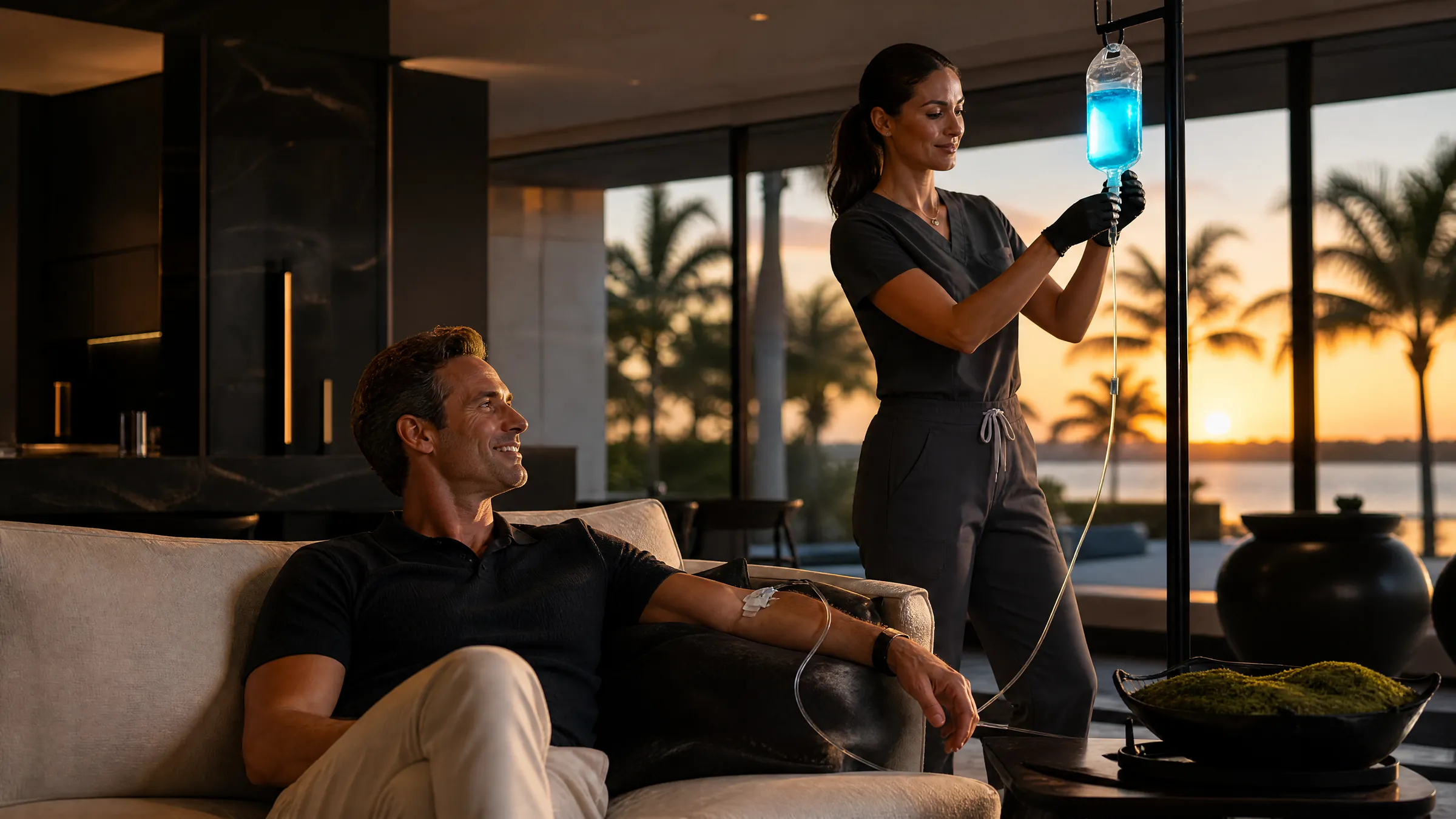
Our nurse Kayla has a client in Wellington — call him Chris, 44, rides motocross, has the scars to prove it — who booked and cancelled three times before she ever met him. When she finally arrived, he opened the door, pointed at her kit bag, and said, with complete sincerity: "I have jumped a dirt bike over a house. I am terrified of that."
Chris is not unusual. Roughly one in four adults carries real needle aversion, most hide it, and a meaningful slice of everyone who's ever read our menu and closed the tab did so for exactly this reason. So this is the guide for that reader — no toughening-up speech, just the facts that actually help, from nurses who've talked a thousand Chrises through it.
The fact that changes everything
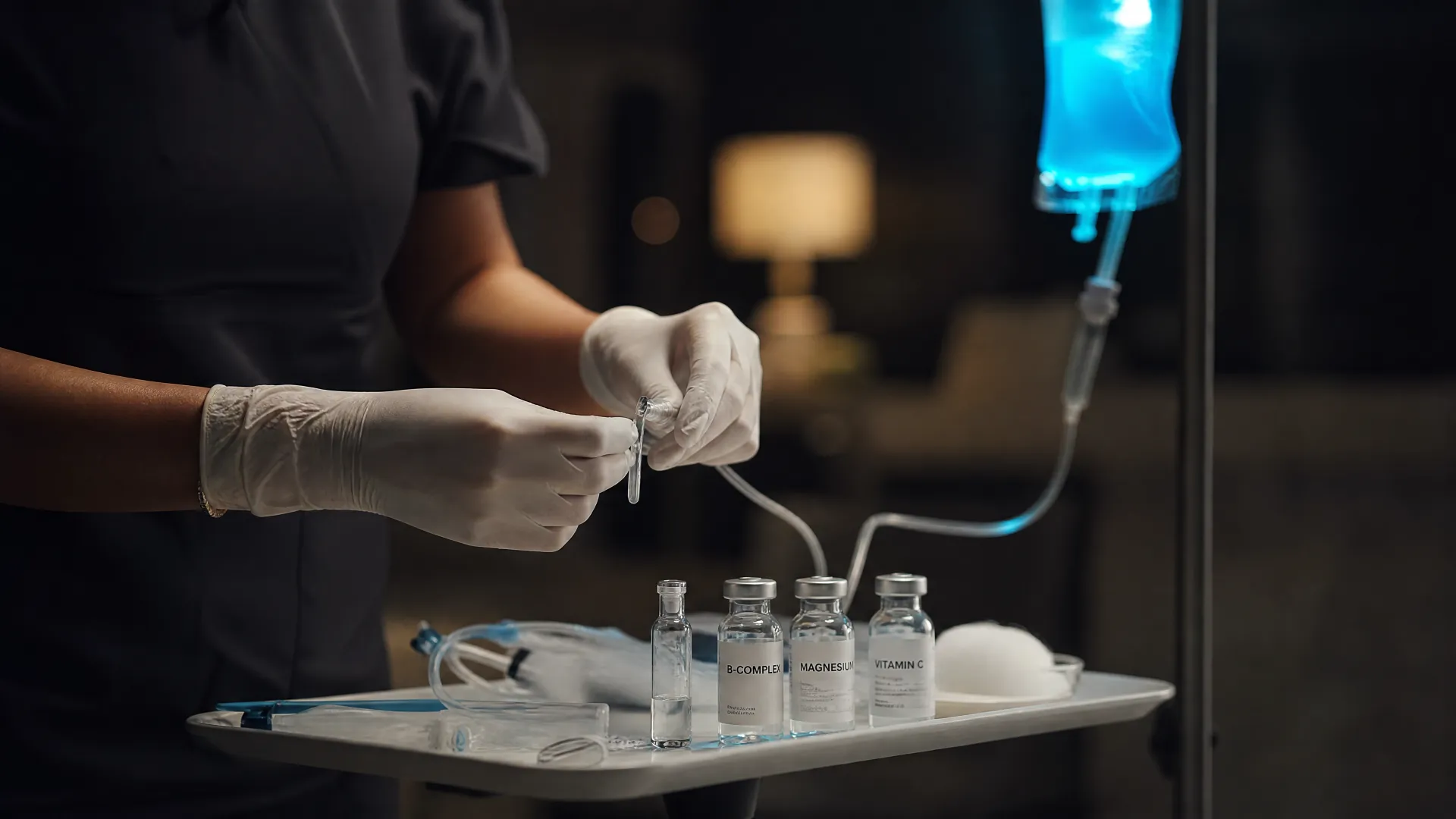
Here's what almost every needle-phobic person has wrong, and what Kayla told Chris on his doorstep: there is no needle in your arm during the drip. The needle's only job is to guide a tiny, soft, flexible catheter into the vein — a process of about two seconds — and then the needle comes out entirely and goes in the sharps box. What stays for the hour is a bendy plastic straw thinner than a phone-charger wire, taped flat, unfelt. The scary mental image — sitting for an hour with steel in your vein — is fiction. Two seconds of pinch buys an hour of nothing.
"I have jumped a dirt bike over a house. I am terrified of that." — every fourth adult, approximately
What the two seconds actually feel like
A quick pinch — sharper than a poke, briefer than a bee sting, milder than a flu shot for most people. Wellness IVs use small-gauge catheters, and an RN who places lines every working day is, at this one skill, better than almost anyone who's ever hurt you with a needle at a busy clinic. First-timers' most common review, verbatim: "…that was it?"
The anxious-client playbook (ask for all of it)
- Say the words. "I'm bad with needles" reshapes the visit: slower pace, more warning or zero warning (your choice), narration or distraction (your choice).
- Lie down. The lightheaded vasovagal wobble hates horizontal. Starting flat on your own couch beats every clinic chair ever made.
- Look away, exhale. The stick lands on the out-breath; watching is optional and not recommended for you.
- Freeze spray exists. Ask, and the pinch drops to nearly nothing.
- Being home matters more than you'd think. No waiting room dread-marination, no audience, your own blanket, your dog doing moral support. Anxiety is contextual — this context is the good one.
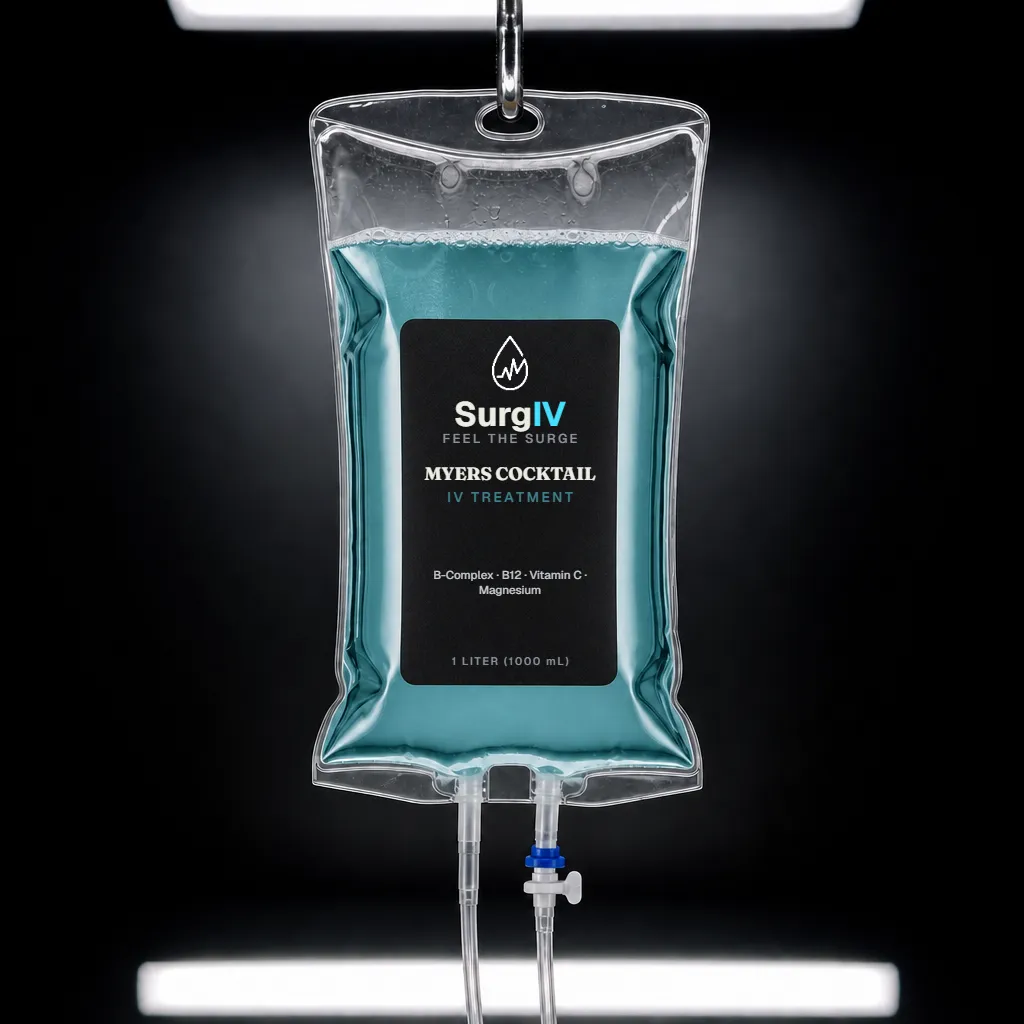
Gentlest first session
Myers Cocktail $249
Tell us it's your first — the nurse plans the whole visit around it.
B-Complex · B12 · Vitamin C · Magnesium
How Chris's story ended
Chris looked away, exhaled, and said "wait, when?" — the stick had already happened. He watched golf for an hour with a Myers' running and texted Kayla's dispatch afterward asking how membership worked. He's been monthly for a year, still calls the kit bag "the scary bag," and now talks his motocross buddies through their first sessions — which, our nurses report, is the single most reliable pipeline of new needle-phobic clients we have.
Two seconds of brave. The rest is a couch. Tell us it's your first and we'll take it from there.
This article is for general education and is not medical advice. IV therapy at SurgIV is administered by registered nurses under physician-written protocols, with a health screening before your first visit. Talk to your doctor about what is right for you.