3:40 AM, a closed bar on Clematis Street. A bartender we'll call Reyna, 31, sits on a barstool she's finally allowed to use, counting a drawer with feet she stopped feeling around midnight. Ten hours on the mats. Roughly 400 drinks poured, four glasses of water drunk — she counted once, for irony. Her body is exhausted; her nervous system is doing a drum solo. This is the bartender's nightly paradox, and she names it to the empty room: "Dead tired and wide awake. Pick ONE." The traditional industry solution is eight feet away, on the shelf, and it works — the way payday loans work.
The shift, itemized
A closing shift is a physical event the daytime world never audits: eight to ten hours of standing and pivoting on concrete — a musculoskeletal load nurses and line cooks would recognize; motion without meals — service grazing at best, the blood-sugar rollercoaster run in a loud room; professional dehydration — hot, packed, pouring liquid for strangers all night while drinking almost none (Reyna's 400-to-4 ratio is the industry standard, not the exception); and the finale, the part civilians never guess: service adrenaline — a slammed Saturday runs you on sustained sympathetic drive for hours, and last call doesn't come with an off switch. Which is exactly where the shift drink waits.
The shift drink is the most understandable bad habit in hospitality: it genuinely works as a wind-down — by selling tomorrow's sleep to buy tonight's descent.
The 4 AM descent, done properly
The replacement ritual, built from the career vets: 45 minutes of deliberate descent — real food first (the shift never fed you), shower, screens dimmed, the same sequence nightly so the body learns the cue; blackout sleeping quarters, non-negotiable for daylight sleep — the shift-work master rules apply to hospitality in full; anchor hours — same sleep window even on nights off, because the Monday flip-flop is what makes bar schedules feel like weekly jet lag; caffeine cut by mid-shift; and the shift drink demoted from structure to occasion — the single change the 40-year-old veterans most consistently credit.
The industry kit
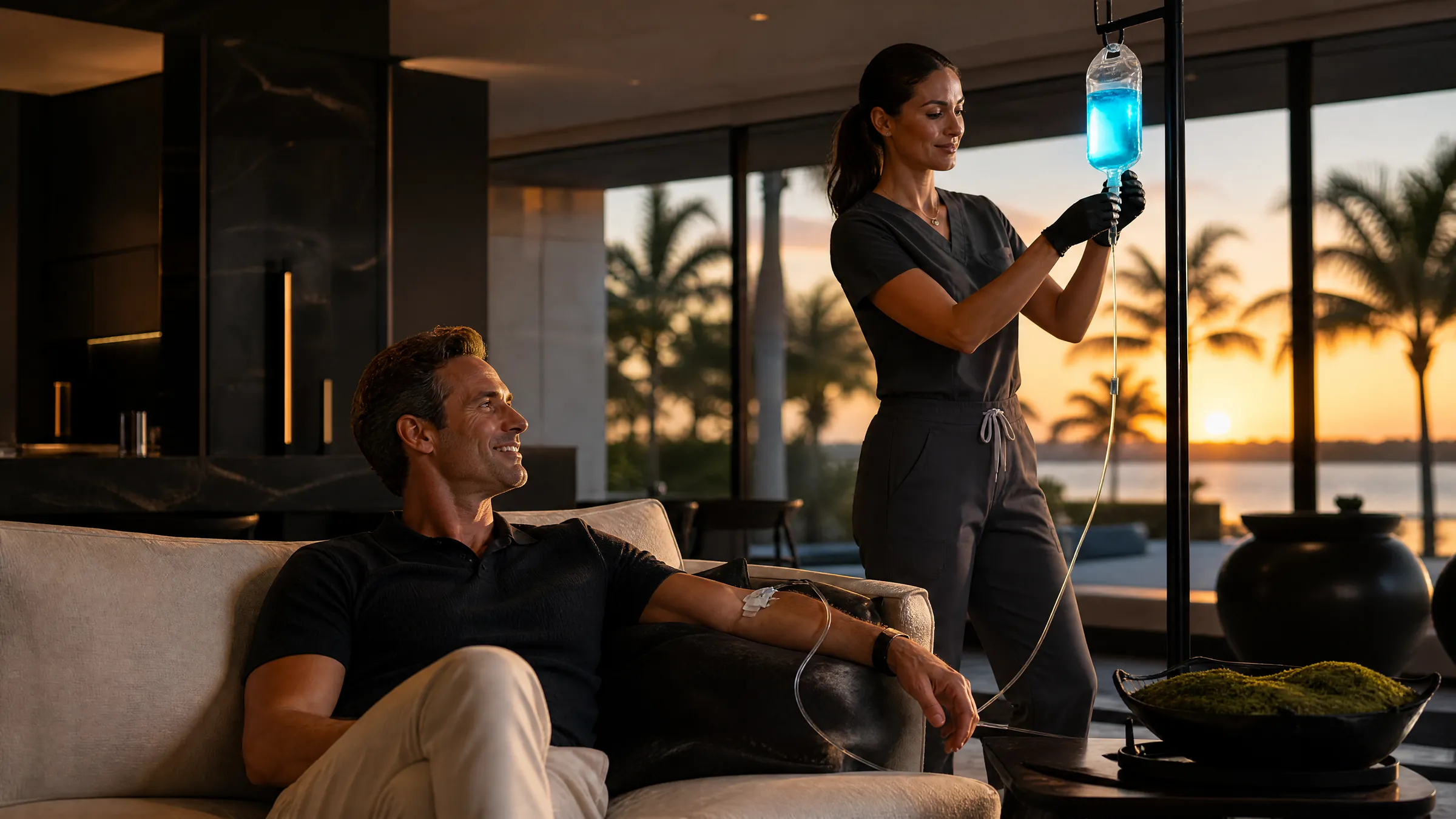
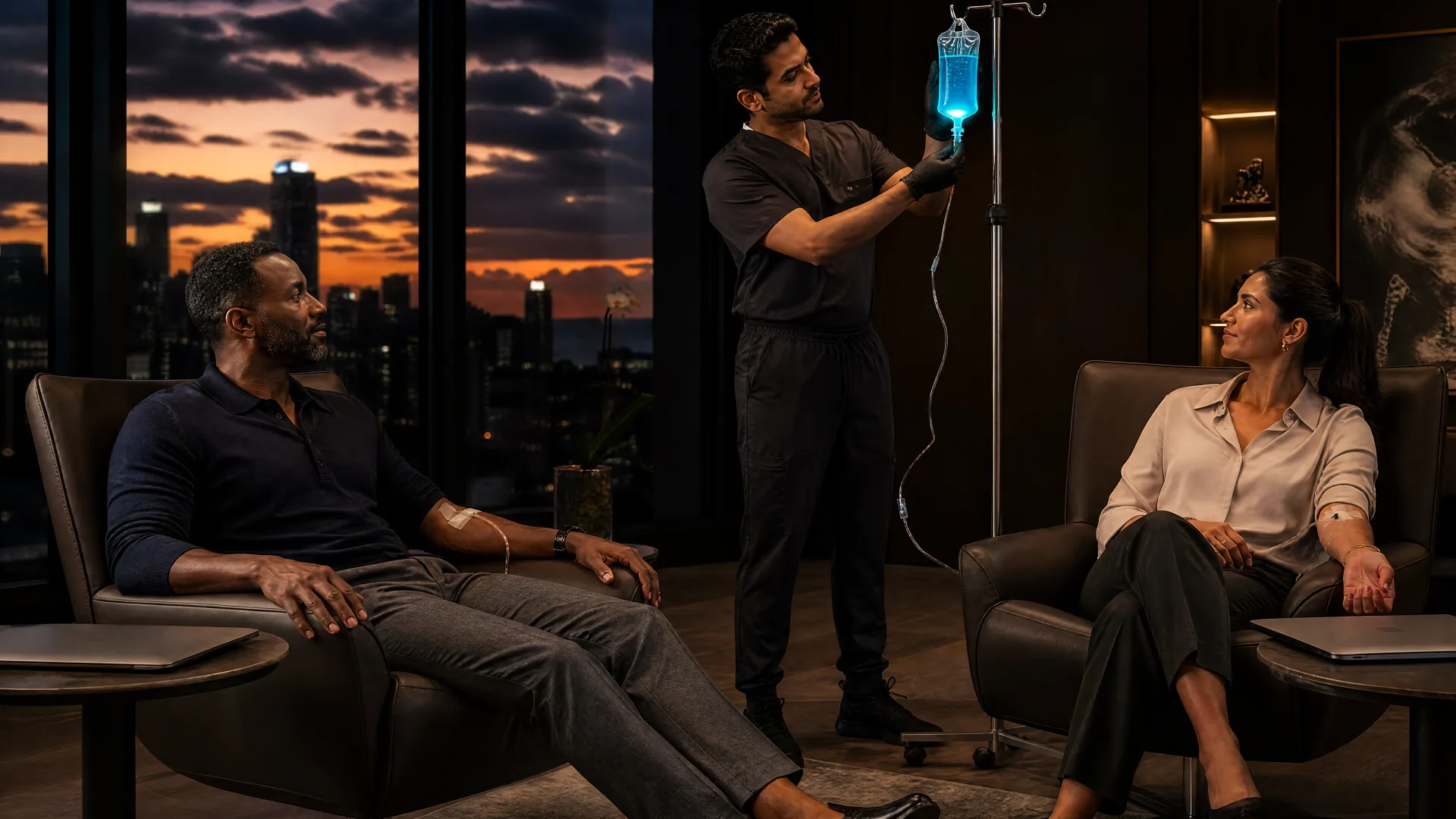
Behind the bar: shoes and mats treated as professional tools (they are), a water rule — one glass per hour, kept at the well, enforced like a pour count; real food before service. Between the weekend runs — Thursday-through-Saturday closes, hospitality's true work week: genuine recovery instead of Sunday unconsciousness — rehydration with electrolytes done properly, and the industry's growing habit: a daytime recovery session on the Monday "weekend," fluids and B vitamins restocking what three closes spent, scheduled in the afternoon because the industry's morning is everyone else's lunch. The whole-house version covers the kitchen too.
Industry infrastructure
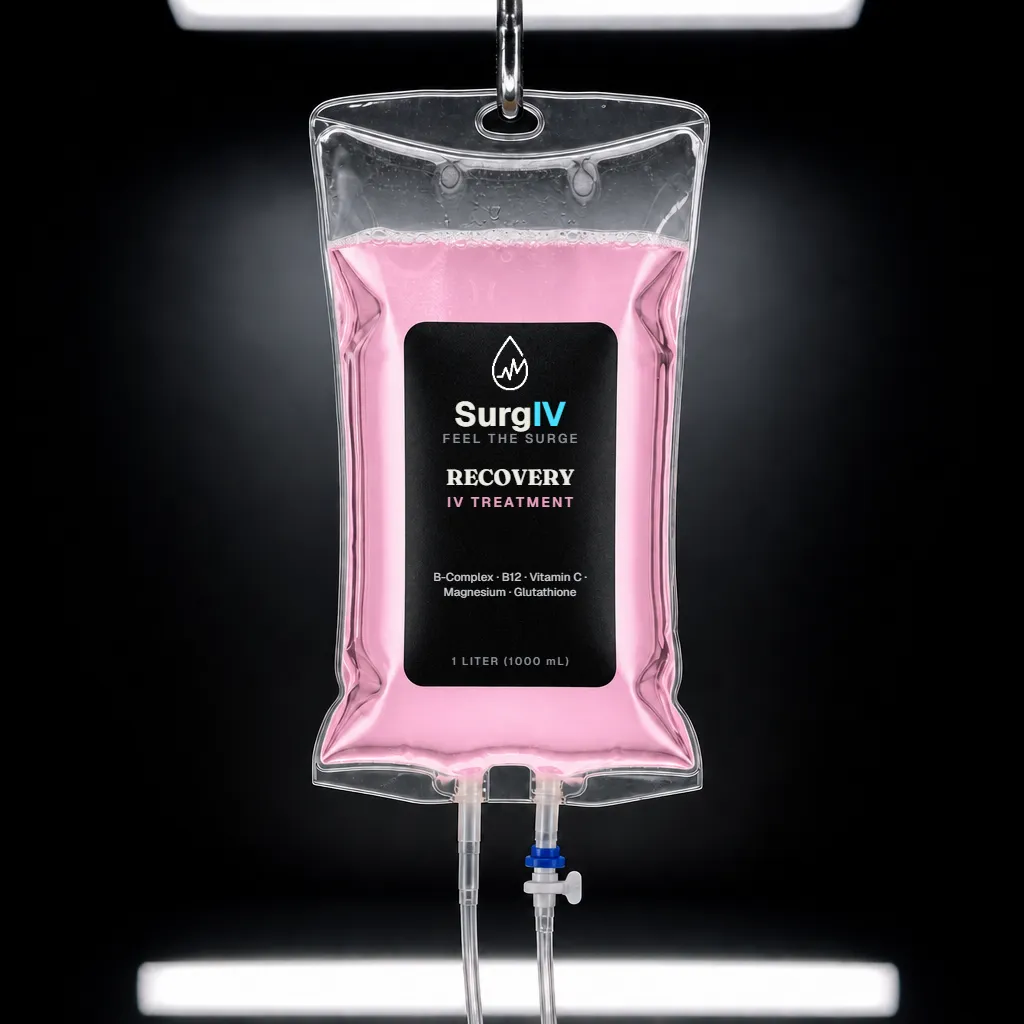
Recovery $299
Daytime sessions for night-schedule bodies — the reset between weekend runs.
B-Complex · B12 · Vitamin C · Magnesium · Glutathione
Reyna, sustainable at last call
New system: meal at 5 before service, the hourly water glass ("I tend myself now, one bar guest of one"), the 45-minute descent, blackout curtains, Monday drips after big weekends. The drum solos quieted; the feet returned. Her advice to the new hire, delivered while stacking chairs: "The job takes the night. Don't let it take the morning too. Water on the hour, food before doors, and never let the wind-down live on the shelf."
This article is for general education and is not medical advice. IV therapy at SurgIV is administered by registered nurses under physician-written protocols, with a health screening before your first visit. Talk to your doctor about what is right for you.