9:50 PM, a wedding reception at a Palm Beach venue. A woman we'll call Sloane, 34, bridesmaid, is two glasses of champagne into the evening — two — and can feel the headache assembling behind her right eye like a band doing soundcheck. Across the table, her friend is four glasses of cabernet deep and radiant. Sloane, to the friend, over the DJ: "HOW. You're at four. I'm at two and my skull has a support act warming up." The friend shrugs the shrug of the unjustly spared. The answer isn't fairness. It's carbonation.
The bubbles' head start
Champagne's famous speed is measurable physiology: carbon dioxide accelerates alcohol absorption. The bubbles speed gastric emptying — moving alcohol out of the stomach and into the small intestine, absorption's fast lane, sooner than a flat drink manages. Studies running carbonated versus flat versions of the same beverage clocked meaningfully faster blood-alcohol rises with the fizz. So Sloane's two glasses spiked harder and sooner than her friend's slow cabernet — a sharper peak, arriving mid-party, and with it the early-onset vascular headache that sparkling drinkers know by name. Same mechanisms as every alcohol headache — dehydration, vasodilation — just on an express schedule.
The cabernet takes the local train. The champagne takes the express. Same destination — the bubbles just deliver you there while the party's still on.
The double-hit and the fine print
Two aggravators stack on the speed: the sugar — sweeter sparkling wines (and cheaper ones, which often carry more residual sugar) add the sugar-alcohol combination that many heads bill extra for; and the refill trap — the perpetually-topped flute is counting's natural enemy, which is why champagne occasions produce so many "I only had two... I think" mornings. The label fine print: quality matters at the margins (production shortcuts, sugar levels), but the CO2 absorption effect applies to a $12 prosecco and a vintage alike. Physics doesn't read labels, and neither does Sloane's right eye.
Toasting on your own terms
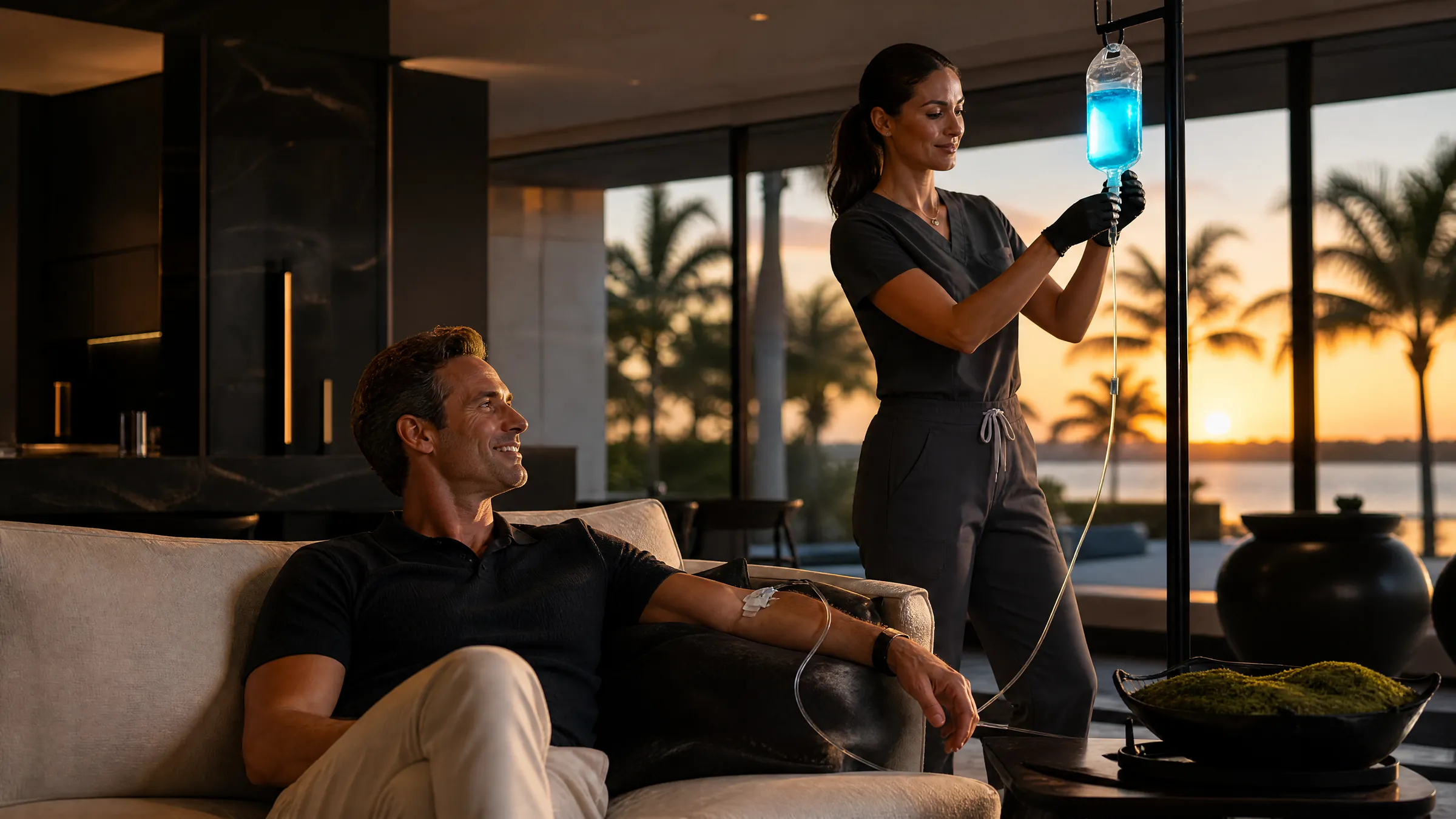
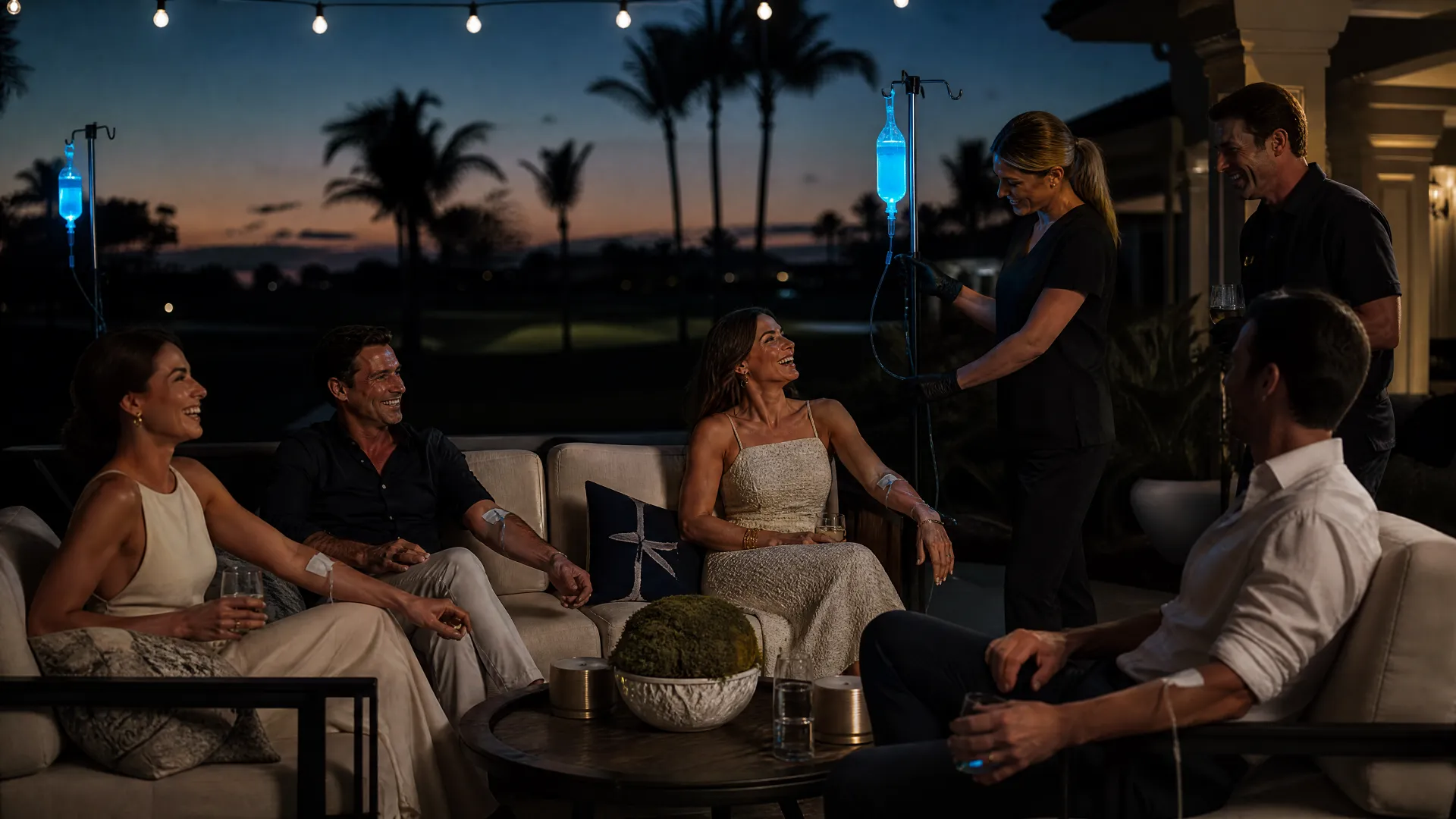
The countermeasures all target the spike: eat before and during — food is the great absorption buffer, and the canapé pass is strategy; water between every flute, non-negotiable on sparkling nights; guard the count against the topping-up waiter; and front-load the still options if the night is long, saving the bubbles for the actual toasts. For the calendar's sparkling summits — wedding weekends, galas, the midnight pour itself — the county's standing recovery infrastructure applies: pre-booked morning sessions, fluids and headache support, the express train's toll settled in 45 minutes.
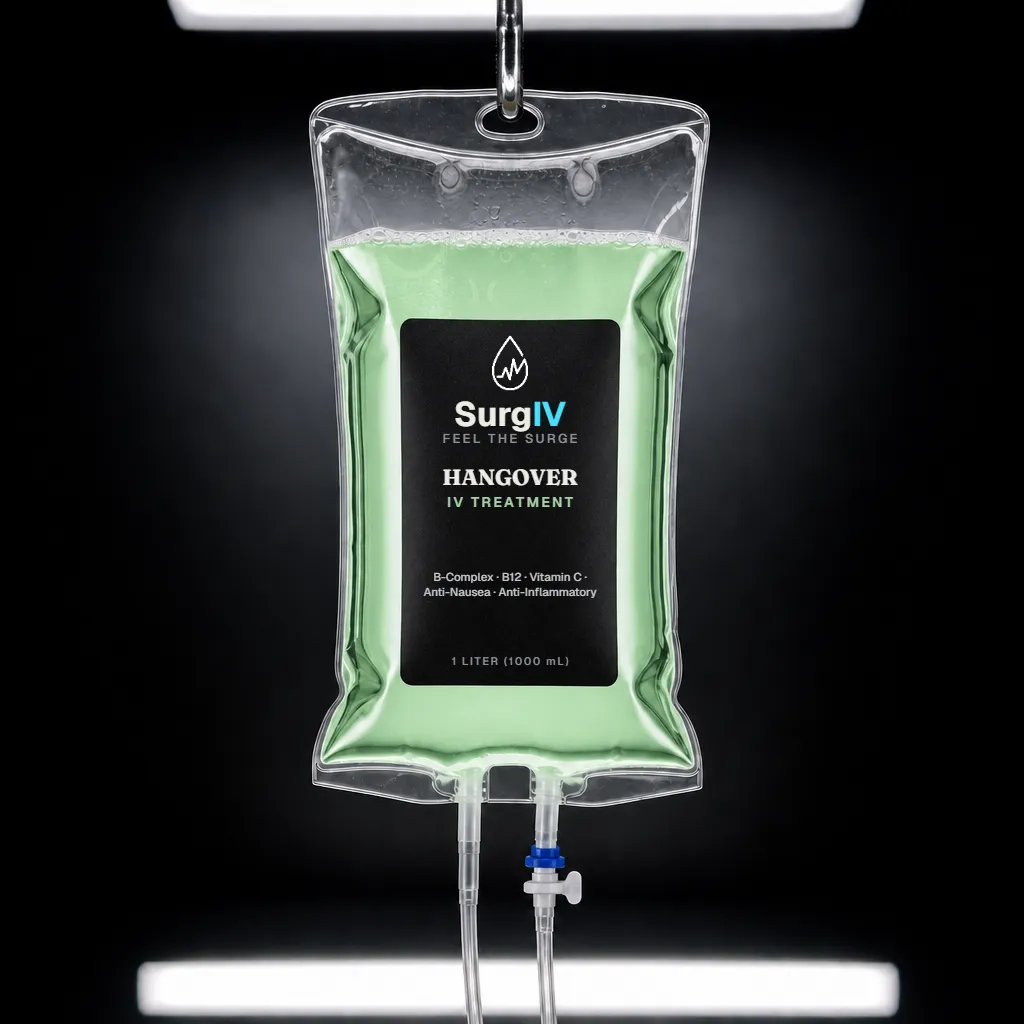
For the morning after the toasts
Hangover $249
Weddings, galas, New Year's — the sparkling calendar has a recovery plan.
B-Complex · B12 · Vitamin C · Anti-Nausea · Anti-Inflammatory
Sloane, express-literate
At the next wedding — there are five this year; it's that age — she ran the protocol: canapés embraced, water enforced, flutes guarded from the topping waiter, bubbles reserved for the two actual toasts. The band behind her eye never made it past soundcheck. Her toast advice, now offered to every fellow bridesmaid: "The champagne isn't stronger. It's FASTER. Board the express with a full stomach or don't board at all."
This article is for general education and is not medical advice. IV therapy at SurgIV is administered by registered nurses under physician-written protocols, with a health screening before your first visit. Talk to your doctor about what is right for you.