
The text arrived at our dispatch line from a client we'll call Tony, 41, three weeks into his first creatine run and deeply spooked: "Started creatine, gained 3 pounds in a week, calves cramped at pickleball twice, and my gym friend says creatine dehydrates you. Do I quit? Is my kidney exploding? Please advise."
Tony's kidney was fine, his supplement choice was excellent, and his gym friend was — like most gym friends on this topic — half-remembering something backwards. But the questions deserve the full answer, because creatine is simultaneously the best-proven supplement in the store and the one whose water homework nobody explains — least of all in Florida.
What creatine actually does with your water
First, the credential: creatine's evidence base is a monument — decades of research supporting strength, power, training volume and muscle retention (the over-40 defense project's best supplement dollar), with newer research probing cognitive benefits. It works partly by increasing phosphocreatine energy stores in muscle — and partly through the mechanism that spooked Tony: creatine is osmotically active, pulling extra water INTO muscle cells. That's the week-one scale jump (2–4 pounds of intramuscular water — feature, not flaw: hydrated muscle cells signal growth and perform better). Now the crucial reframe of the gym myth: creatine doesn't remove water from your body — it relocates it. Your muscles become a bigger reservoir... drawing from the same total supply. Unless you raise the supply.
Creatine doesn't dehydrate you. It builds a bigger reservoir and waits to see if you'll fill it.
Where the homework comes due (hello, Florida)
Skip the intake raise and the math plays out exactly as Tony experienced: total water unchanged, more of it parked in muscle, and the rest of the system — plasma volume, the electrolyte grid, the cooling budget — running on a thinner margin. In a temperate climate, that's subtle. In a dew-point state where the baseline already runs a standing deficit, it's Tony's calves at pickleball: the cramping research largely acquits creatine itself (controlled studies show no increase, some show less), but the acquittal assumes the water homework got done. Creatine plus unchanged drinking plus Florida sweat is a tighter margin everywhere the water didn't go — presenting as cramps, heavier heat sessions, and the 'creatine dehydrates you' folklore being reborn in every gym, forever.
The companion protocol
The homework, itemized: raise the baseline — roughly 16–24oz daily above your norm during regular use, more during a loading week; electrolytes on training days — the new stored water needs minerals to hold, and Florida training was already a mineral event; respect the transition weeks — the first month is when the reservoir fills and the margin is thinnest (Tony's cramps were textbook week-three); and the deep-deficit reset when the summer stacks anyway — the Recovery IV's full liter is the fastest way to refund the systemic margin a loaded, sweating athlete runs thin, which is why the creatine users among our members treat it as the companion service. (The standing disclaimers, honored: healthy kidneys assumed — creatine and kidney disease is a doctor conversation; and the scale jump is water, tell your ego.)
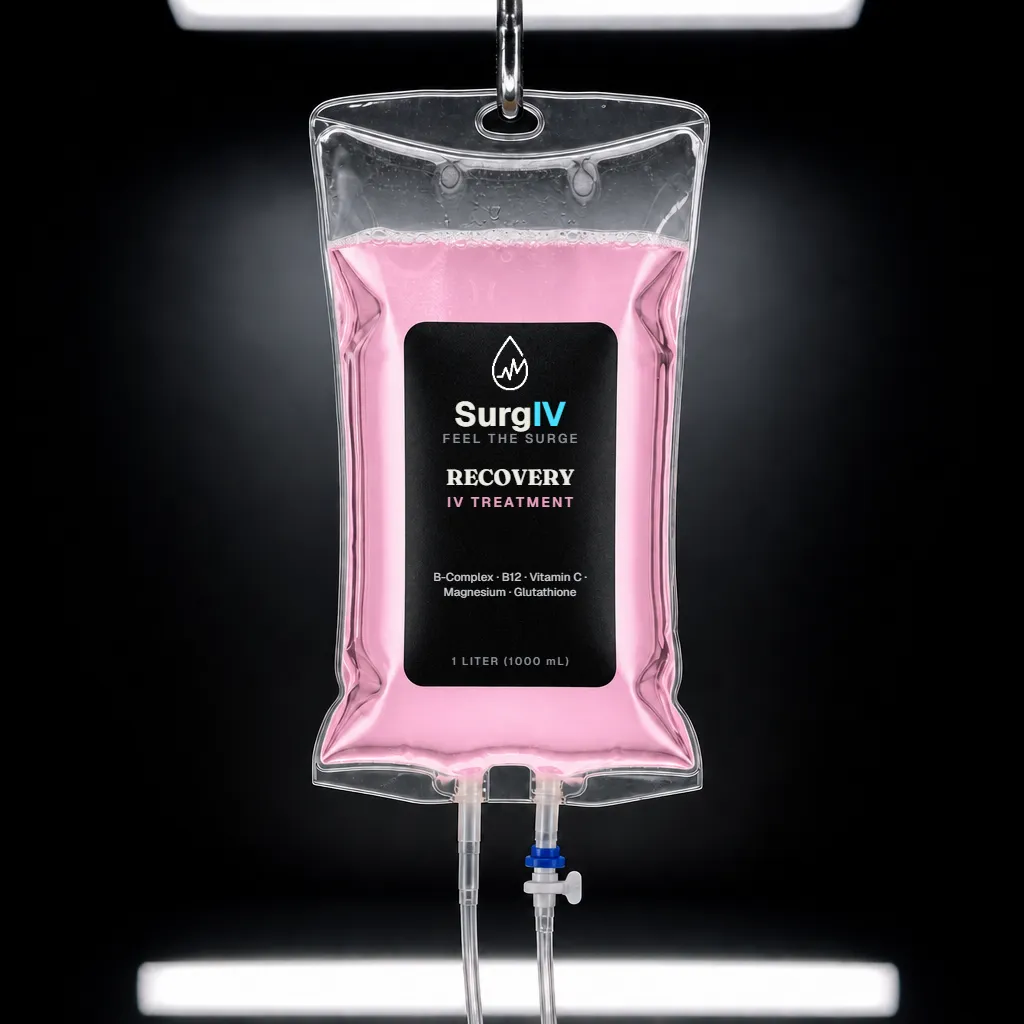
The creatine user's top-up
Recovery $299
Fluids and electrolytes at full volume — the companion protocol for the loaded athlete.
B-Complex · B12 · Vitamin C · Magnesium · Glutathione
Tony, un-spooked
The revised regimen: creatine continued ("apparently I'm keeping the three pounds — they're MUSCLE WATER, Karen"), a marked bottle upgraded to the loaded-athlete size, electrolytes at pickleball, and zero cramps since week four. His follow-up text closed the case file properly: "So the supplement was fine, the water was the assignment, and my gym friend owes me an apology he'll never deliver. Florida difficulty rating: everything." Correct on all counts. Do the homework; keep the monument.
This article is for general education and is not medical advice. IV therapy at SurgIV is administered by registered nurses under physician-written protocols, with a health screening before your first visit. Talk to your doctor about what is right for you.