Somewhere in the last five years, recovery became a lifestyle category with a bigger menu than most restaurants: three minutes at -110°C, twenty at 80°C, red panels, cold plunges, compression boots, and a drip bar on every third corner. If you took every enthusiast's advice you'd need a second job to fund it and a third to schedule it.
So here's the organizing distinction that makes the whole menu legible — the one nobody selling a single modality will draw for you: everything on that menu is either a signal or a supply.
Signals: stress that asks for adaptation
Cryotherapy and cold plunges deliver an acute stressor — vasoconstriction, a norepinephrine spike, an inflammation-modulating rebound. Sauna delivers heat stress — heart-rate elevation, heat-shock protein expression, and some genuinely impressive long-term observational data from Finnish cohorts. Red light aims photons at tissue with early-stage but interesting evidence around cellular energetics. Different mechanisms, same category: they're all asks. Controlled stress that requests your cells respond, adapt, rebuild — like training itself, the original signal.
Signals work. But notice what a signal cannot do: it delivers no materials. The adaptation it requests — repaired tissue, new capacity, cleaned-up inflammation — is construction work, and construction is billed in fluids, amino acids, minerals, vitamins, antioxidants, and cellular energy.
A signal is a work order. It's only as good as the warehouse it's sent to.
Supplies: what the response is built from
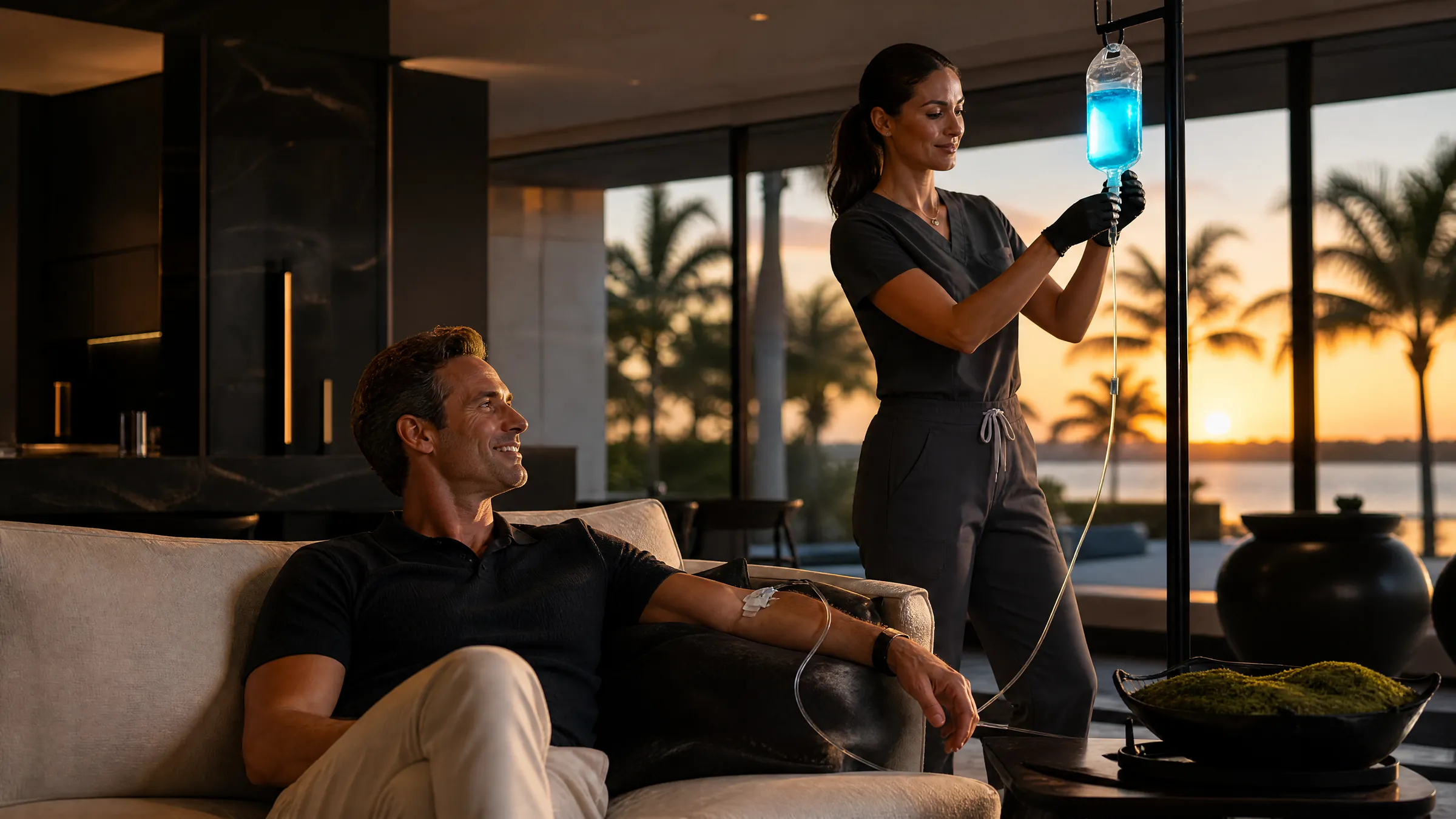
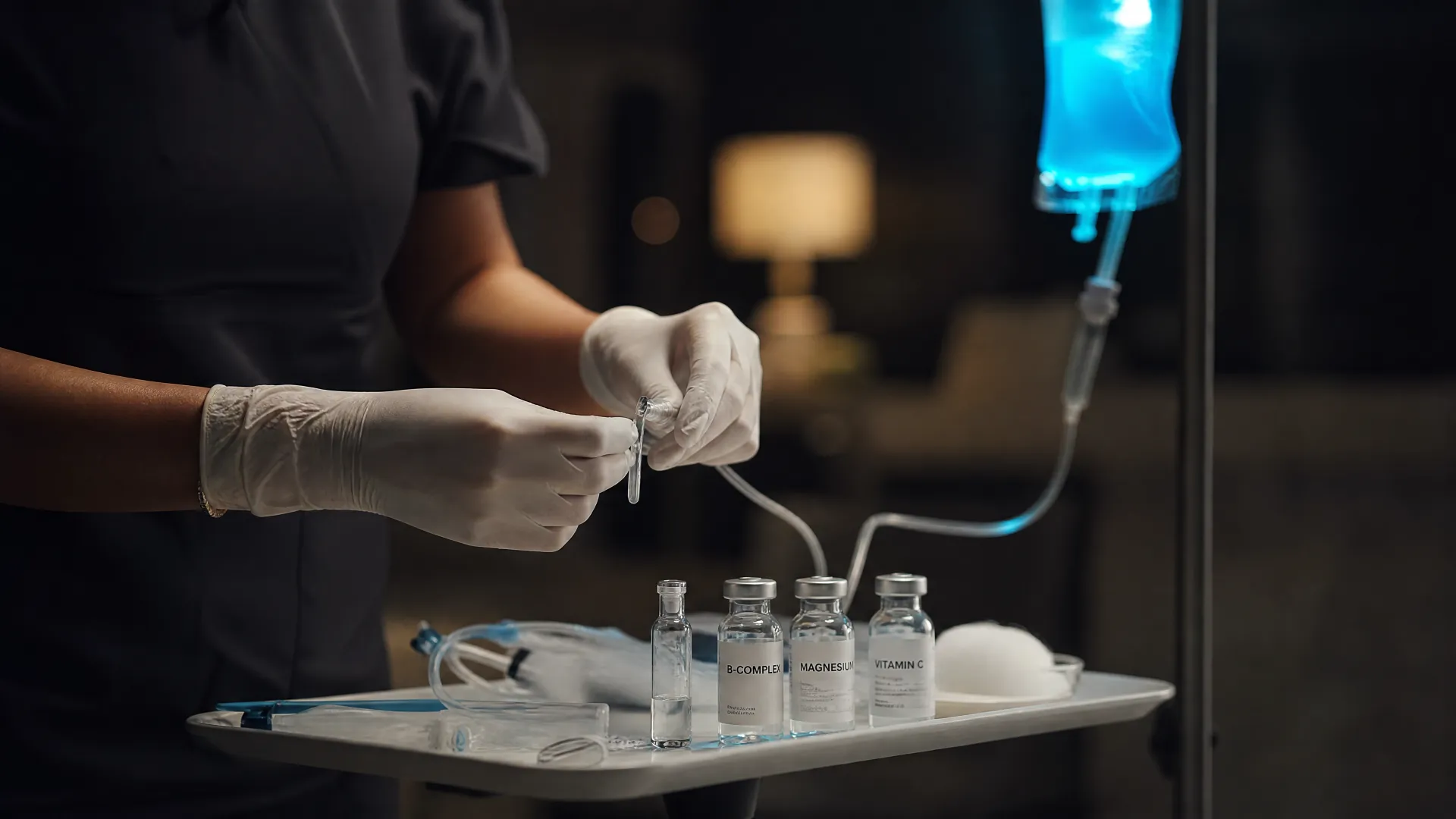
This is the other half of the map, and it's chronically neglected because it isn't novel: hydration and electrolytes (the medium every reaction runs in), B vitamins (the energy cofactors), aminos (the building material), glutathione (the cleanup crew), magnesium and zinc (the enzymatic gatekeepers), and NAD⁺ (the energy budget the whole operation draws against — the one that declines with age). IV therapy lives entirely on this side: it doesn't ask your body for anything. It stocks the shelves — at 100% absorption, which is the whole point of the route.
Why stacks fail — and how to build yours
Here's the failure mode we see in enthusiastic biohackers: five signals, zero supply plan. Train hard, plunge daily, sauna nightly — a stack of eloquent work orders sent to an empty warehouse, yielding fatigue with excellent branding. The reverse failure exists too: perfect nutrition, no stimulus, nothing to adapt to. The stacks that actually compound pair one or two signals you'll do consistently with a supply schedule that funds them.
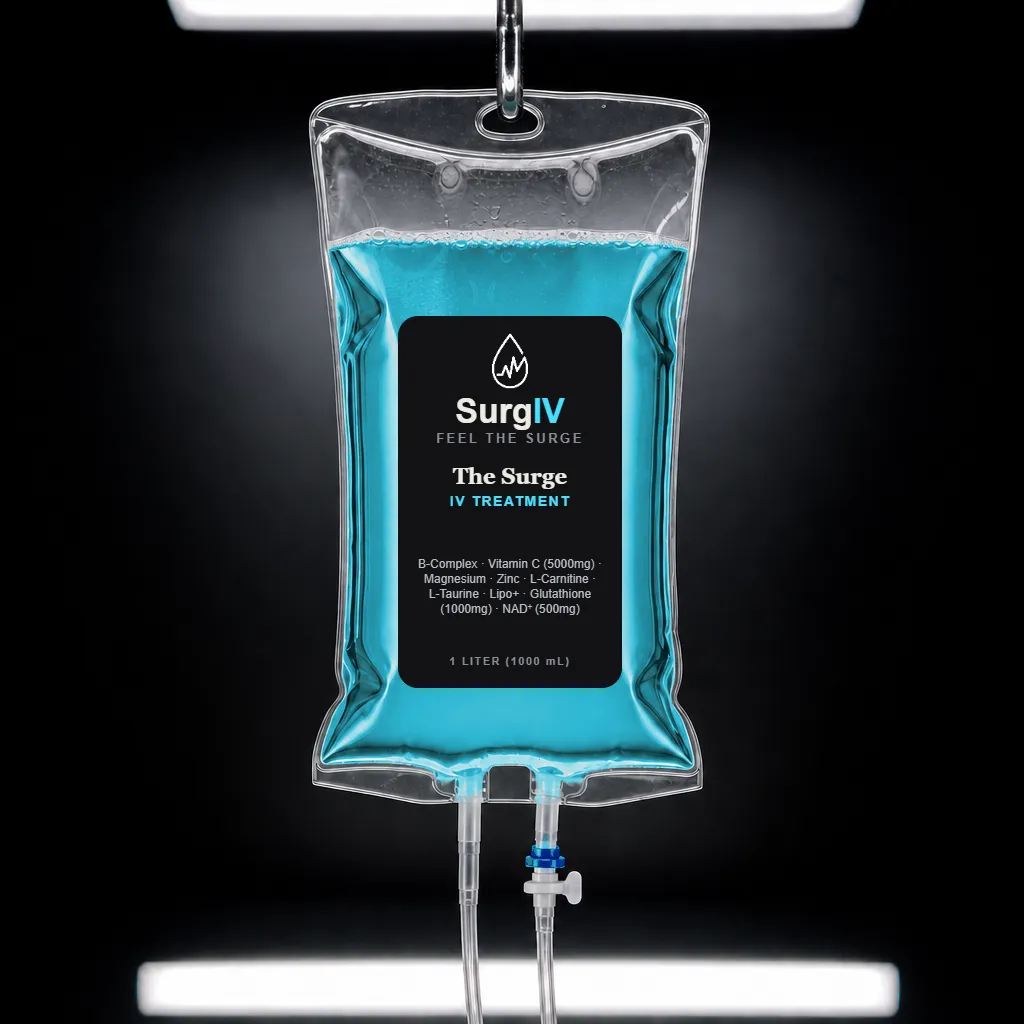
The supply side of your stack.
The Surge $899
Whatever you signal with — cryo, sauna, light — the response runs on materials. The Surge delivers them at 100%.
IV Bag: B-Complex · Vitamin C (5000mg) · Zinc · Magnesium · L-Carnitine · L-Taurine · Lipo+ + more
The honest budget version
If you're allocating from scratch: sleep is the free multiplier nothing replaces. Training is the signal with the deepest evidence. After those, our unsurprising-but-defensible take: fund the supply side before adding a third signal — because supplies are the only category on the menu that makes everything else on the menu work better. That's the role The Surge plays in our members' stacks: the weekly-to-monthly anchor under whatever signals they love. Map your stack against the two categories, and the gaps identify themselves.
This article is for general education and is not medical advice. IV therapy at SurgIV is administered by registered nurses under physician-written protocols, with a health screening before your first visit. Talk to your doctor about what is right for you.