
Saturday, 6:02 AM, a gas station parking lot on A1A in Juno Beach. Two dozen riders in matching kit are clipping in for the ritual: the shop ride, sixty-plus miles, ocean left shoulder going north, and the great unspoken lie of Florida cycling — the tailwind out that everyone enjoys and nobody accounts for, until the turnaround reveals its twin brother: the headwind home, delivered at mile 45, in full sun, to a group that spent its matches showing off in the tailwind.
A rider we'll call Tom, 52 — strong, steady, the guy who pulls too long because pulling is his personality — will finish today's ride triumphant, inhale a café con leche at the coffee stop, drive home glowing... and spend Sunday as a husk on his couch, wondering why a ride that felt great cost him the weekend. Tom's problem isn't fitness. It's accounting.
The Florida century's double ledger
A long hot ride runs two separate depletion accounts, and confusing them ruins riders:
- The fluid account. Summer riding costs a large bottle every 30–40 minutes — 8 to 12 bottles across a century, with the sodium to hold it. Most riders carry two and drink one and a half. The deficit compounds silently behind the airflow (moving at 20mph, sweat evaporates instantly — the wind-hides-the-sweat trick on wheels), announcing itself only as the mysterious heart-rate drift: same watts, five more beats, then ten.
- The glycogen account. The bonk — carbohydrate bankruptcy — is its own separate crisis: sudden power collapse, wobbly lines, and the peculiar emotional fragility veteran riders joke about (crying at mile 80 over nothing is a glycogen event, not a feelings event). Eating on schedule — something every 30–45 minutes — is the only prevention; hunger, like thirst, reports too late at ride pace.
The tailwind out is a loan. The headwind home is the collections department.
Saturday afternoon decides Sunday
Here's the part Tom kept missing: the ride's full bill — two or three liters still owed after everything he drank, plus glycogen restoration, plus the muscle repair from three hours of pulls — posts overnight. Finish-line adrenaline and coffee mask it; then the repair shift runs all night on empty shelves through dehydration-shallowed sleep, and Sunday wakes up pre-billed. The settlement window is Saturday afternoon: real food within the hour (the glycogen account restocks fastest early), fluids with sodium measured against the scale (weigh before and after — every pound is half a liter owed), and, for the big days, the move the county's pelotons have institutionalized — the Recovery IV as a post-ride group session at the coffee-stop host's house: full liter, electrolytes, aminos for the rebuild, the ride re-narrated at escalating wattages. Sunday's ride gets Saturday-morning legs, and the weekend stays a two-day sport.
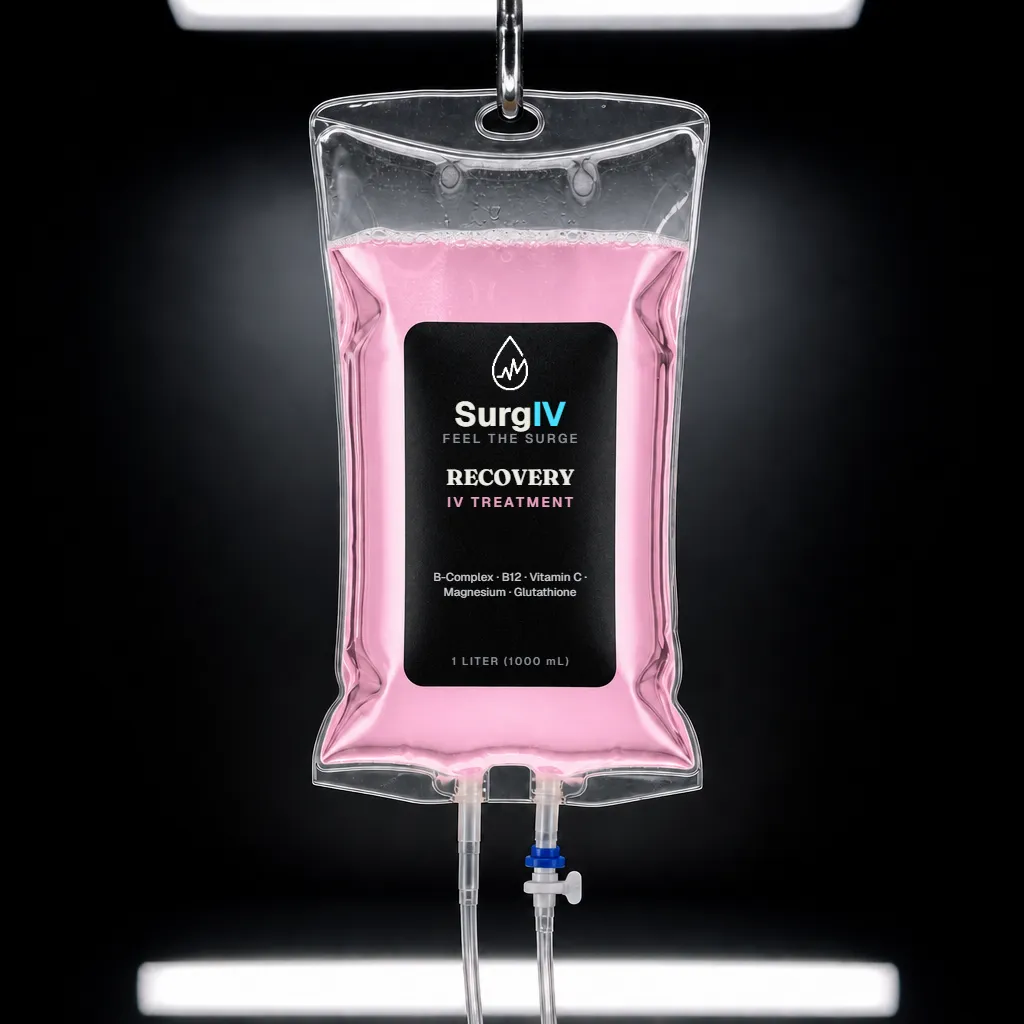
The post-century pit stop
Recovery $299
Fluids, electrolytes and aminos after the big miles — legs for Sunday included.
B-Complex · B12 · Vitamin C · Magnesium · Glutathione
Tom, reformed
Tom's crew now runs the standing 1 PM Saturday booking — four riders, one nurse, a rotation of hosting houses selected by café quality. His Sunday-husk era is over; his pulls remain too long, because some things are personality. His summary, delivered mid-drip: "Turns out the ride doesn't end at the coffee stop. It ends when you've paid for it. Might as well pay in an air-conditioned living room."
This article is for general education and is not medical advice. IV therapy at SurgIV is administered by registered nurses under physician-written protocols, with a health screening before your first visit. Talk to your doctor about what is right for you.