
The phone call that starts this story is one that thousands of Palm Beach County adult children will make this summer. A client we'll call Linda, 54, made hers on a Tuesday in August: her mother, 82, sharp as a blade her whole life, had seemed "fuzzy" on their morning call — repeated a question, lost the thread of a story about the neighbor. By afternoon, the fuzziness had a wobble attached. Linda's first fear, the one every adult child carries loaded: this is the beginning of the decline. The urgent care's actual finding, two hours later: her mother was significantly dehydrated. Fluids, observation, home by dinner — sharp as ever by Thursday, mortified at the fuss, insisting throughout that she "drinks plenty."
She believes she does. That's the trap. Here's what every adult child of a Florida parent needs to know about the most common, most reversible, most misread health event of elder summers.
Why aging rewires the hydration math
Four changes stack against older adults, and none of them announce themselves:
- The thirst signal fades. This is the cruel one: the aging brain's thirst detection blunts substantially — the body runs dry and doesn't report it. "I drink when I'm thirsty" — the strategy that worked for eight decades — quietly stops being safe, because thirsty stops arriving.
- The reserve shrinks. Total body water declines with age; the same losses that a 40-year-old absorbs push an 80-year-old toward the edge faster. Smaller tank, same Florida sun.
- The kidneys conserve less. Aging kidneys concentrate urine less efficiently — losing more water to produce the same waste removal.
- The medicine cabinet helps the wrong side. Diuretics ('water pills'), many blood pressure medications, laxatives — staples of the over-75 pharmacy — all accelerate fluid loss by design or side effect.
"I drink plenty" — the sincere, dangerous motto of every dehydrated elder, reported by a thirst signal that retired years ago.
The watchlist (tape it inside a cabinet)
Because the thirst alarm is offline, the family becomes the monitoring system — and the signs to watch aren't the ones you'd guess: New confusion is the headline. Dehydration is one of the most common reversible causes of sudden fogginess, repeated questions, and 'off' behavior in older adults — and it's routinely misread as cognitive decline, which means families grieve what a liter of fluids would fix. Any sudden mental change deserves same-day medical attention, with hydration on the suspect list. The supporting cast: dizziness on standing (the head-rush, higher stakes — it's a falls mechanism), dark or scant urine, dry mouth and tongue, unusual weakness, headaches, constipation. And the escalation line, non-negotiable: significant confusion, fainting, no urination 8+ hours, or fluids not staying down = doctor or ER today — elders decompensate fast, and the wait-and-see window that's safe at 40 doesn't exist at 82.
Prevention that respects their dignity
The strategies that work with (not on) an independent parent: schedule, not thirst — fluids attached to existing rituals (a full glass with pills, with each meal, at the 3 PM show) beat 'drink more, Mom' by miles; make it appealing — many elders drink little water because they dislike it; broths, fruit, decaf iced tea and electrolyte drinks all count (the food-based hydration route shines here); audit the summer — AC working, outings scheduled off the furnace hours, the outage plan including the elders first; and ask the doctor the medication question — 'do any of Mom's prescriptions affect her fluids?' is a five-minute conversation that reframes the whole watchlist. When prevention loses anyway — the bug, the heat week, the post-hospital rebuild — screened at-home IV hydration spares the depleted elder the ER afternoon, with the critical caveat our protocols enforce: cardiac and kidney conditions change the math, so screening and physician coordination lead. For the complex patient, their doctor drives; we support.
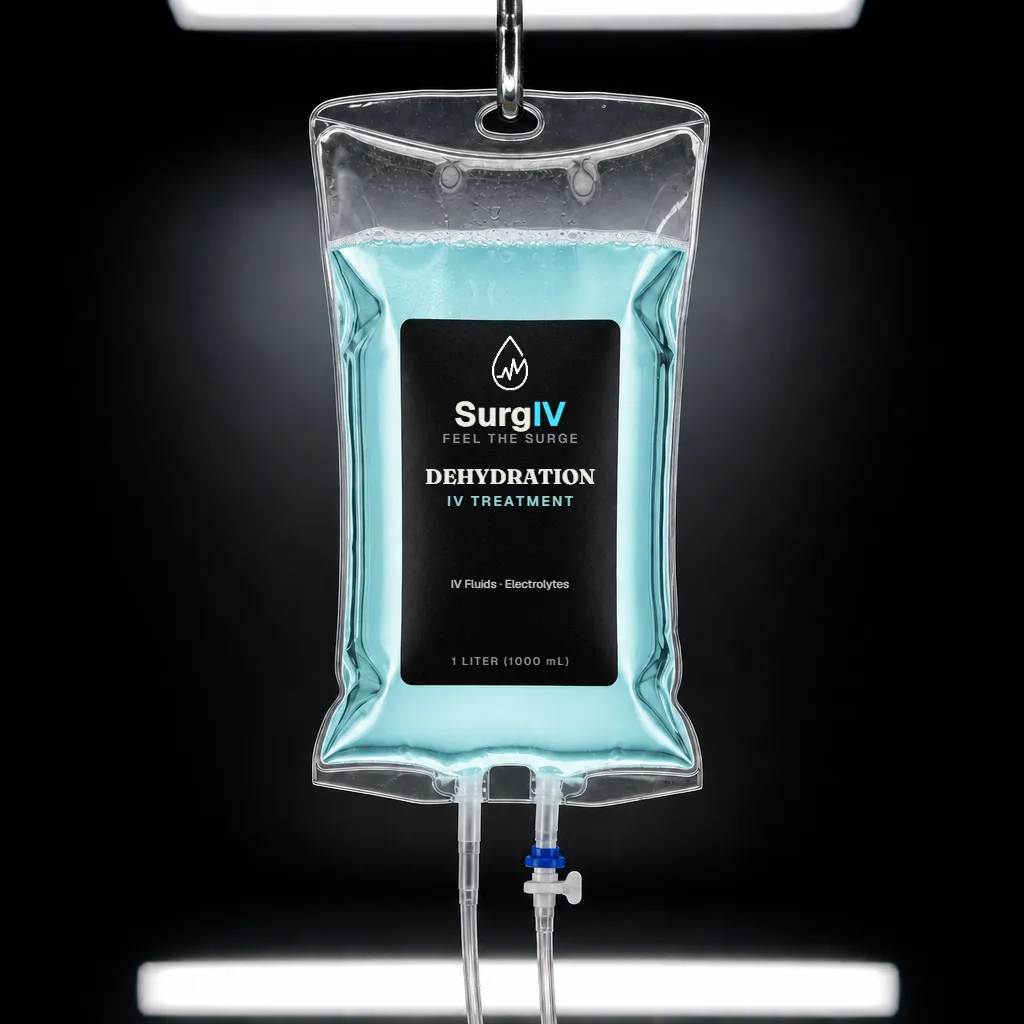
Gentle support, at their home
Dehydration $199
Screened, physician-protocol hydration for the parent who 'doesn't want a fuss' — fuss not included.
IV Fluids · Electrolytes
Linda's system
The post-Tuesday protocol at her mother's condo: a marked carafe filled each morning ("she calls it my surveillance pitcher; she also empties it"), fluids tied to her pill schedule and her 4 PM program, and — for the brutal weeks and any post-illness rebuild — a screened home session with a nurse her mother now hosts like a social call. The fuzzy Tuesday hasn't recurred. Her mother's official position remains that it was all a fuss about nothing. Her mother also, Linda notes, finishes the pitcher daily now — which is how you win this one: quietly, with the dignity intact and the tank full.
This article is for general education and is not medical advice. IV therapy at SurgIV is administered by registered nurses under physician-written protocols, with a health screening before your first visit. Talk to your doctor about what is right for you.