
4:35 PM, a driveway in Tequesta, a boat on its trailer still dripping. A spearfisherman we'll call Cole, 36, sits on his tailgate in a half-peeled wetsuit, holding a hogfish he's too tired to clean. Four hours of drops on the ledges off Jupiter — good current, better fish — and Cole, who deadlifts 400 and runs a business, has been flattened by a day of swimming around holding his breath. His text to his dive buddy: "why am I more wrecked than leg day. we were FLOATING." Floating. Cole, buddy. Let's audit what the ledge actually charged.
The dive-day stack
Nobody was floating — five systems were paying out simultaneously: immersion diuresis — hours of water pressure shifting blood centrally, kidneys exporting on the swimmer's invisible schedule; thermal load — even 84-degree water pulls body heat relentlessly, and the metabolic cost of compensating runs all day, unnoticed; genuine exertion — finning against current at depth, hauling gear and anchor, the hunt's repeated max efforts; boat sun between drops — the exposure double collected during every surface interval; and, for the breath-hold crowd specifically, the bill spearos know best: repeated CO2-tolerance work plus hunt adrenaline, a combination that produces the deepest post-day fatigue in water sports. Cole's leg-day comparison isn't wrong. It's just missing four of the five line items.
The ledge doesn't charge you like a gym. It charges you like five small utilities, all metered, none visible, due at the tailgate.
The safety clause divers already half-know
For the tank divers on the boat, hydration graduates from comfort to protocol: dehydration thickens blood and is a recognized contributing risk factor for decompression sickness — dive medicine treats pre- and post-dive fluids as part of the safety stack, alongside profiles and surface intervals, and compressed air's bone-dry breathing adds an internal drain civilians never guess at. Boundary, stated plainly: any post-dive symptoms in DCS territory — joint pain, unusual fatigue-plus-tingling, dizziness — are DAN-and-ER matters, immediately, never wellness territory; and the no-fly windows after diving are law, not suggestion. This blog covers the recovery of legal, symptom-free dive days only.
The surface-interval protocol
At the dock: rinse, then electrolytes immediately — the day exported minerals with the fluid, and the two-currency rule applies at sea double; real protein within the hour (the hogfish counts, once cleaned). The multi-day trips — mini-season, the annual dive weekend, tournament stretches: the compounding math every water discipline meets — day three run on day one's arrears is slower, colder, and measurably less safe — settled between days with the full restock: fluids, electrolytes, the works, delivered to the rental or the dock house while the gear dries. Hydration is dive equipment. Service it like the regulator.
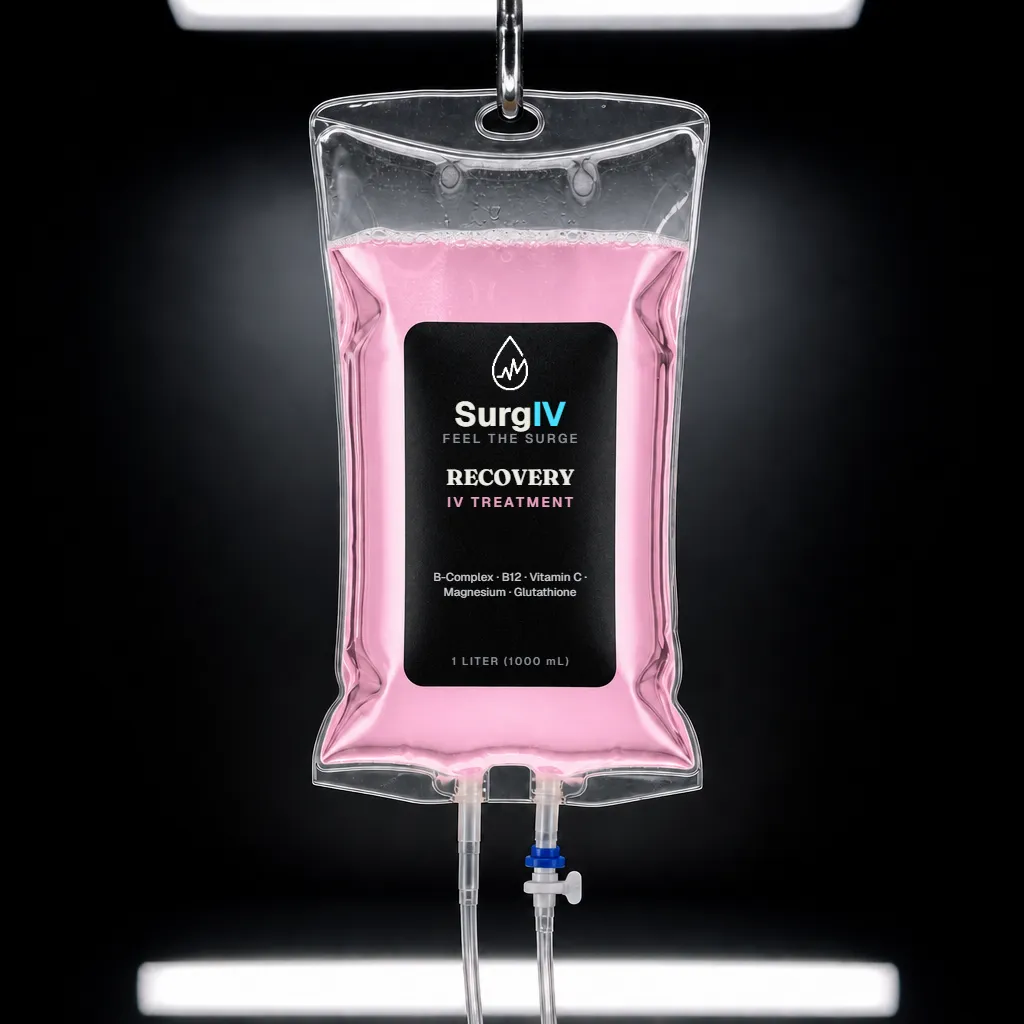
Between dive days
Recovery $299
Hydration is dive-safety equipment. Restock it like gear.
B-Complex · B12 · Vitamin C · Magnesium · Glutathione
Cole, mini-season
This year's trip ran the protocol: dock electrolytes, real dinners, the between-days crew session at the Jupiter rental. Day three — historically the trip's slow, cold, quit-early day — produced limits by noon and a crew still sharp enough to argue about whose fish was bigger. Cole's tailgate verdict, hogfish cleaned this time: "We service every piece of gear on this boat except the divers. Fixed that. Day three's a different sport with a full tank."
This article is for general education and is not medical advice. IV therapy at SurgIV is administered by registered nurses under physician-written protocols, with a health screening before your first visit. Talk to your doctor about what is right for you.