
Kitchen, 7:15 AM, anywhere in Palm Beach County. A man we'll call Greg, 47, crouches at the bottom drawer for the good frying pan, stands up with it — and the room politely dissolves. Gray static at the edges, a high faint ring, one hand finding the counter with the practiced smoothness of a man who has done this maneuver hundreds of times. Three seconds later the world reboots. Greg makes the eggs. Greg has never once mentioned this to anyone, because Greg — like millions — has filed the head-rush under "thing my body does."
Let's unfile it. The stand-up gray-out has a name, a mechanism, an everyday cause that's extremely fixable, and a short list of versions that deserve a doctor. Two minutes covers all of it.
The mechanism: gravity vs. plumbing
The moment you stand, gravity yanks roughly half a liter of blood downhill into your legs and gut. Your brain — which tolerates zero interruptions in supply — depends on an instant counter-move: vessels clamp, heart rate bumps, pressure holds. That reflex (the baroreflex, for the curious) normally executes so fast you never know it ran. The gray-out is the reflex running late — a two-second brownout while the pumps catch up. Occasional and brief, it's common enough to be nearly universal. The interesting question is what makes it frequent — and the answer, most of the time, is embarrassingly simple: the reservoir is low.
The head-rush is your brain's two-second power flicker. The generator is fine — the fuel tank is usually just low.
Why volume is the everyday culprit
Blood volume is substantially a hydration number — plasma is mostly water — and a body running the standard Florida deficit is running a low reservoir all day. Less volume means the standing reflex has less to redistribute, and the brownouts multiply: worse in the morning (overnight losses put you at the daily low), worse after workouts and boat days, dramatically worse in summer — because heat also dilates vessels for cooling, so the clamp-down starts from a floppier baseline. If your head-rushes cluster in exactly those windows, you've basically diagnosed yourself: it's the tank, and the fix is the unglamorous real-rehydration protocol — fluids with electrolytes (sodium is what lets you hold the volume; the grid matters), and, when the deficit is deep or the pattern entrenched, the full-liter reset that restores the reservoir in one sitting. Clients are routinely surprised that the stand-up test — crouch, stand, note the static — improves the same day. It's not magic; it's volume.
The doctor's list (respect it)
Some versions of this symptom are medicine, not hydration, and the line matters: actual fainting (once is a doctor visit; with injury, urgent), dizziness with chest pain or palpitations, episodes that persist despite genuine rehydration, a pattern that started with a new medication (blood-pressure meds are the classic — talk to the prescriber; never self-adjust), or steady worsening in older adults, where orthostatic hypotension is a real falls risk that deserves proper workup. The everyday version bends visibly to fluids within days. The medical version doesn't — and that non-response is itself the useful signal to escalate.
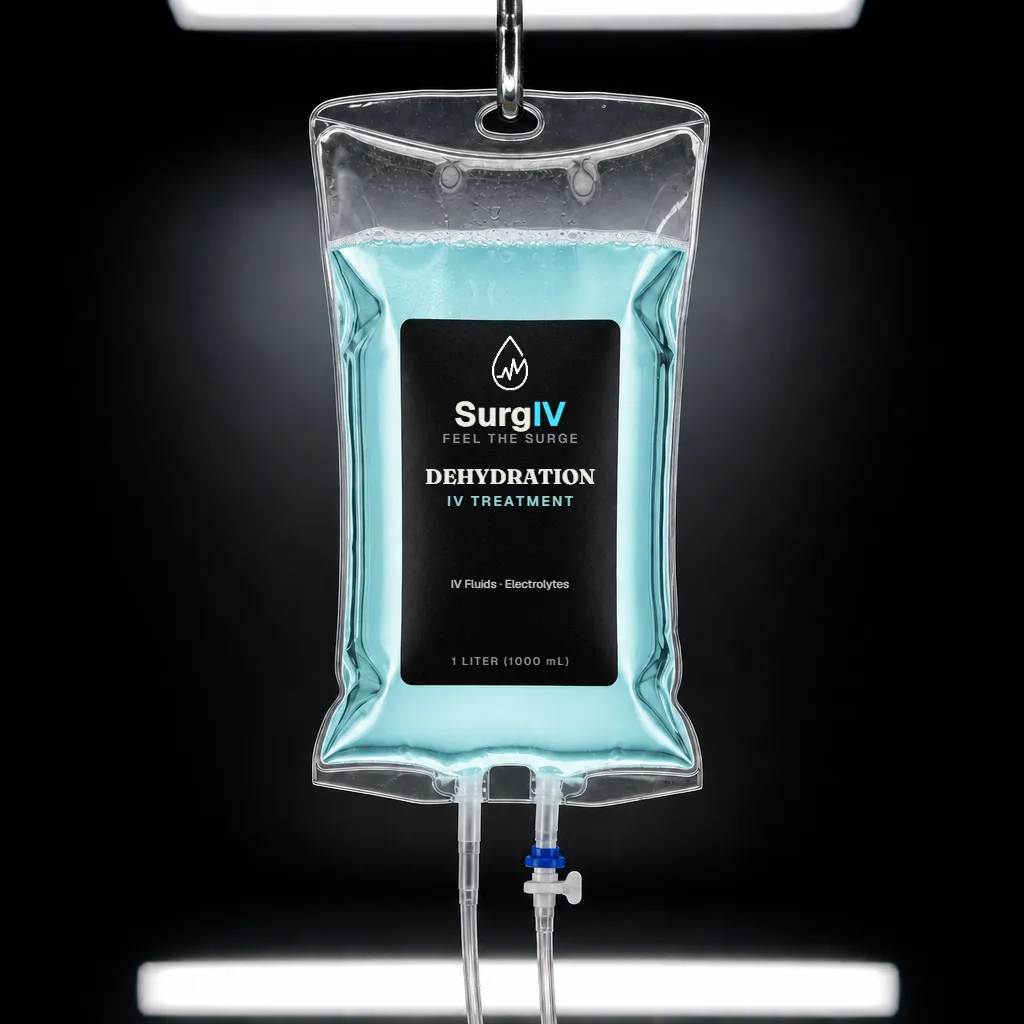
Refill the reservoir
Dehydration $199
A full liter with electrolytes — blood volume is a hydration number.
IV Fluids · Electrolytes
Greg, upright
Greg mentioned the counter-grab exactly once — to our nurse, mid-drip, as an afterthought during a post-boat-day booking — and got the volume explanation above. Console water bottle, electrolytes after sweat days, one monthly top-up in summer: the frying-pan maneuver now completes without special effects. His review: "Forty-seven years old and nobody ever told me the head static was a fluid gauge. I thought it came with the body." It does — as a warning light, not a feature.
This article is for general education and is not medical advice. IV therapy at SurgIV is administered by registered nurses under physician-written protocols, with a health screening before your first visit. Talk to your doctor about what is right for you.