
"Electrolytes" might be the most successful marketing word in beverage history — a word everyone trusts and almost nobody can define. It sells sports drinks, powders, and enhanced waters by the billion. So let's actually define it, because underneath the marketing is one of the most genuinely important systems in your body: the minerals that run your electrical grid.
The literal electricity part
Electrolytes are minerals that carry an electrical charge when dissolved in water — and your body runs on that property. Every nerve impulse, every heartbeat, every muscle contraction is executed by charged minerals moving across cell membranes: sodium and potassium trading places to fire a nerve signal, calcium triggering the contraction, magnesium letting it release. This isn't wellness poetry — it's the actual mechanism. You are, electrochemically speaking, a saltwater machine, and the grid has four principal operators:
- Sodium — the fluid-balance boss; where sodium goes, water follows. Also the mineral you sweat out fastest and most visibly (the white shirt-stain is sodium).
- Potassium — sodium's inside partner; muscle function, heart rhythm, the other half of every nerve signal.
- Magnesium — the release-and-recover mineral (its own full story here).
- Calcium — contraction, signaling, and about a thousand cellular side jobs.
How the grid browns out
Sweat isn't water — it's diluted electrolyte solution, and Florida extracts it by the liter: training, golf, boat days, or just existing outdoors in August. Illness drains the grid faster still. And here's the failure mode almost nobody knows: replacing heavy mineral losses with plain water makes the ratio worse — you're diluting what's left. It's why the marathoner cramping at mile 20 and the flu patient who "drank plenty of water" both feel wrecked: the tank has volume, but the grid has no charge. Symptoms of a browning-out grid: cramps and twitches, headache, fatigue disproportionate to effort, dizziness on standing, brain fog, and — at real depletion — heart palpitations (that one's a doctor visit, not a drip).
Plain water refills the tank. It does nothing for the wiring.
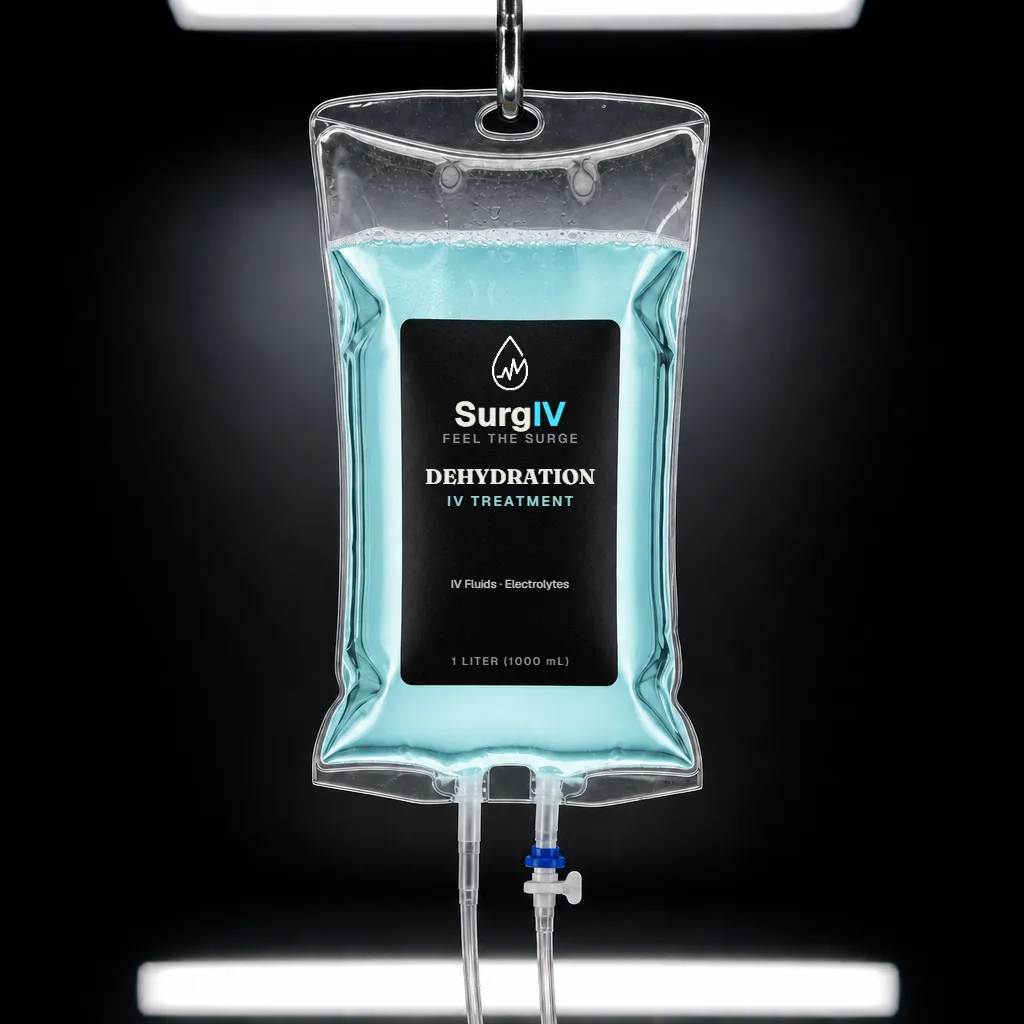
The grid, restored.
Dehydration $199
A balanced liter — fluids and the mineral set your nerves and muscles actually run on.
IV Fluids · Electrolytes
Matching the fix to the deficit
Honest tiering: for daily life and moderate workouts, food plus water covers you — a normal diet is mineral-rich, and the sports-drink industry has thoroughly over-solved this tier. For heavy single-day losses — the two-hour July session, the boat Saturday, the stomach bug — the deficit outruns what your gut can absorb per hour, and that's the specific case for a balanced IV liter: fluids and the mineral set, restored to circulation in one sitting, ratios handled by a clinical solution rather than guesswork. The grid comes back online the fast way — usually before the bag's done.
Next time the word "electrolytes" sells you something, you'll know what you're actually buying: charge for the saltwater machine. Just make sure the dose matches the drain.
This article is for general education and is not medical advice. IV therapy at SurgIV is administered by registered nurses under physician-written protocols, with a health screening before your first visit. Talk to your doctor about what is right for you.