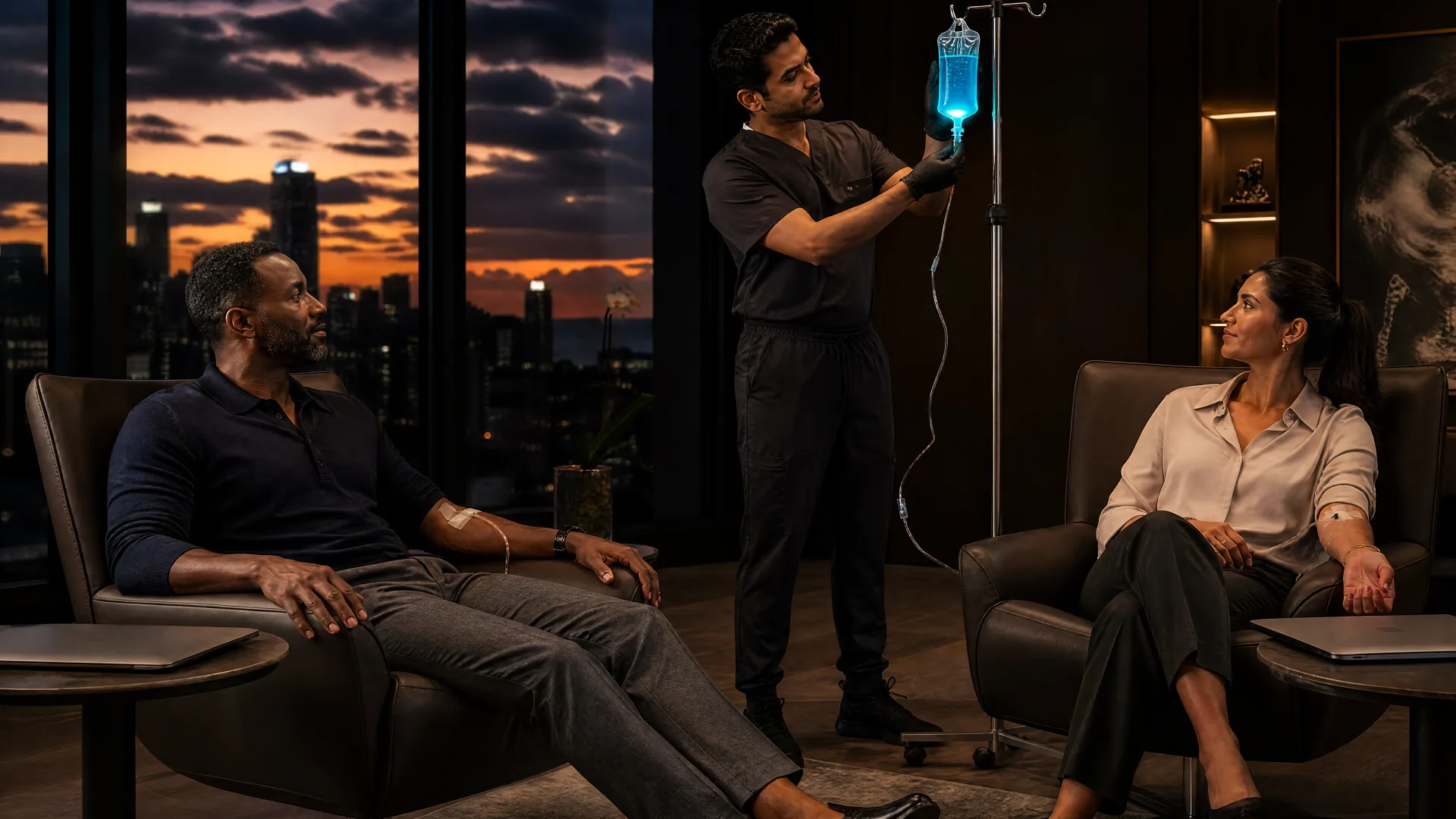
3:15 PM, a Tuesday, an office in West Palm — four days after landing home from a Rome anniversary trip. A man we'll call Dev — the pairing-menu Dev; the man travels — is telling a colleague the trip's great mystery: "Flying THERE ruined the first three days. Full zombie. Priya fell asleep at the Colosseum — standing up. But flying HOME? Fine by Thursday. Same ocean. Same six time zones. HOW?" The colleague shrugs. The answer, Dev, is that you didn't fly the same trip twice. You fought your clock going, and coasted with it coming back.
The clock that runs long
Here's the mechanism that explains every transatlantic war story: the human circadian rhythm naturally runs slightly longer than 24 hours. Left in a cave, your body drifts later each day — which means delaying your schedule (westbound travel: stay up later, wake later) works with the built-in drift, while advancing it (eastbound: sleep six hours earlier than your clock believes in) fights the machine head-on. The field rule follows: adaptation runs roughly a day per time zone eastbound, and noticeably faster westbound. Rome is six zones east of Palm Beach — six days of honest adjustment — landing via the route's signature cruelty: the overnight flight that arrives at 8 AM local, 2 AM body time, into a city expecting you to be delighted. Priya's Colosseum nap wasn't a character flaw. It was arithmetic.
Westbound, your clock coasts downhill with the trip. Eastbound, it climbs — one zone per day, in the sun, carrying your itinerary.
The eastbound campaign
The protocol for the hard direction starts before the airport: pre-shift — 30–60 minutes earlier to bed for the two or three nights pre-flight, banking a zone or two in advance; sleep the overnight flight — this is the rare flight where sleep strategy (and a conversation with your doctor about aids, if that's your path) genuinely decides the trip's first half; morning light on arrival, immediately — light is the master clock-setter, and the 9 AM espresso walk is chronobiology disguised as tourism; no naps till local night one, however eloquently the hotel bed argues; and the veteran's expectation-setting: day two is usually worse than day one — adrenaline carries day one; the deficit presents on day two, right on schedule. Budget the itinerary accordingly: cathedrals early in the trip, big dinners late.
The homecoming leg
Westbound home is the easy direction, not a free one: evening light, bedtime pushed to local, and the signature symptom — the 4 AM wide-awake morning, your body cheerfully running Rome time — best used (the sunrise beach walk, the inbox zero) rather than fought. And underneath both directions runs the non-clock layer: two transatlantic cabins in ten days is a genuine fluid event — the cabin program twice over — which is where the county's returning travelers run the standard landing protocol: rehydration and B vitamins on the landing-day session, clearing the flight's deficit so the only thing left to solve is the clock itself.
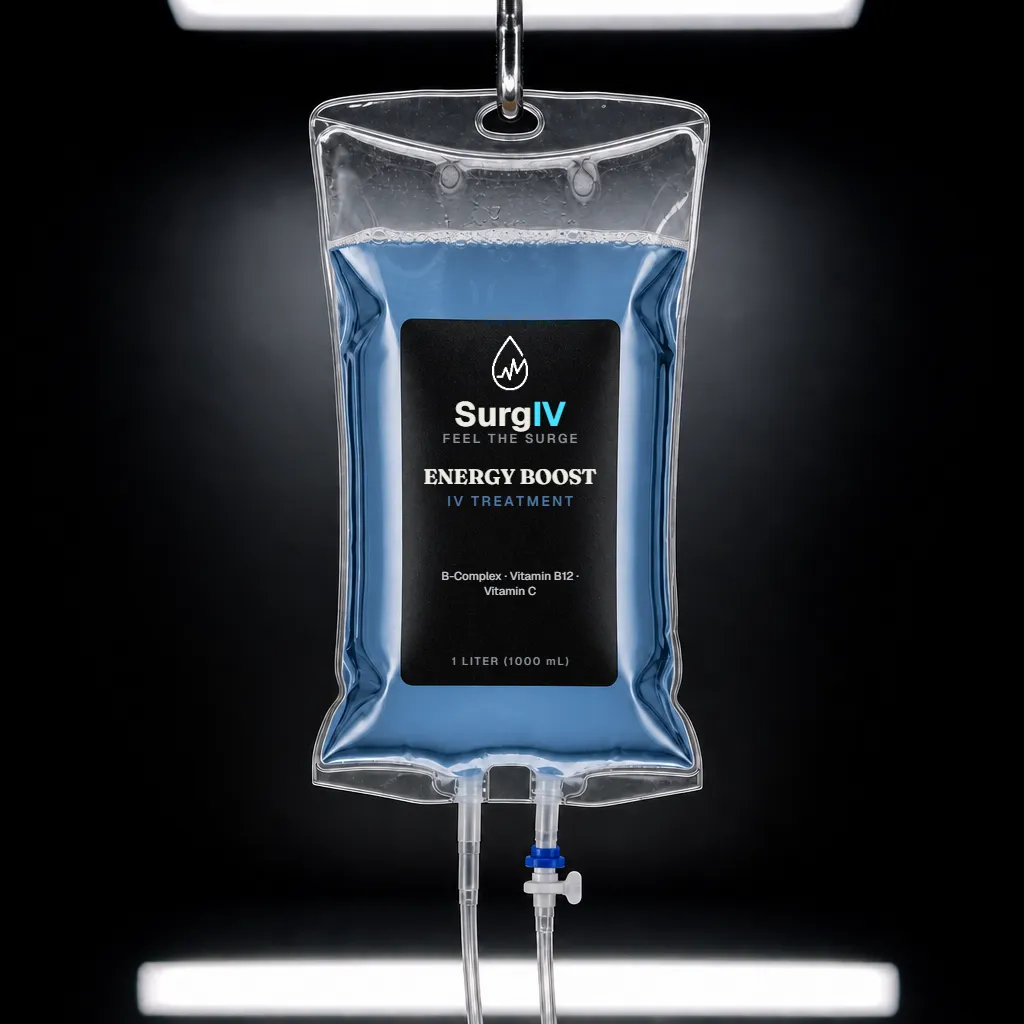
The landing protocol
Energy Boost $249
Rehydrate the flight, restock the switch — the first 48 hours, funded.
B-Complex · Vitamin B12 · Vitamin C
Dev, next crossing booked
Lisbon, October — planned this time like a campaign: pre-shift nights, flight-sleep strategy, morning-light itinerary, the landing-day drip on return. His trip-planning doctrine, delivered to the colleague with the confidence of the converted: "Distance is just miles. DIRECTION is the trip. East, you pay a day a zone — so pay some before you board, and never schedule the Colosseum for day two."
This article is for general education and is not medical advice. IV therapy at SurgIV is administered by registered nurses under physician-written protocols, with a health screening before your first visit. Talk to your doctor about what is right for you.