It always traces back to one decision. The gas-station sushi. The oysters in a month without an R. The leftover rice that had been in the fridge slightly too long. Six hours later your body initiated a full evacuation protocol, and the less said about that night, the better.
This article is about what comes next — because food poisoning has two acts, and everyone only talks about the first. Act two is the day after: the violence is over, but you're hollowed out, shaky-weak, headachy, standing up in stages. And here's the cruel detail — you're still queasy enough that the water you desperately need feels like a dare.
Why the day after feels like that
Act one was, mechanically, a rapid-loss event: your body deliberately ejected fluids and electrolytes at emergency speed to clear the toxin. Effective. Also expensive. The aftermath ledger reads: severely depleted fluids, drained sodium and potassium (the electrolytes your muscles, nerves, and heart rhythm bill hourly), zero calories retained, and a gut lining too inflamed to process much of anything. The weakness isn't lingering illness — it's the deficit the defense created. The toxin's gone; the crater remains.
Act one was your body solving the problem. Act two is the invoice.
The rehydration paradox, again
The standard advice — "sip fluids slowly" — is correct and maddening. Correct because your gut can only handle sips. Maddening because sips against a multi-liter deficit is a bailing-with-a-teaspoon situation: at that pace, act two lasts all day, sometimes two. Meanwhile work, kids, and life continue not caring what you ate Thursday.
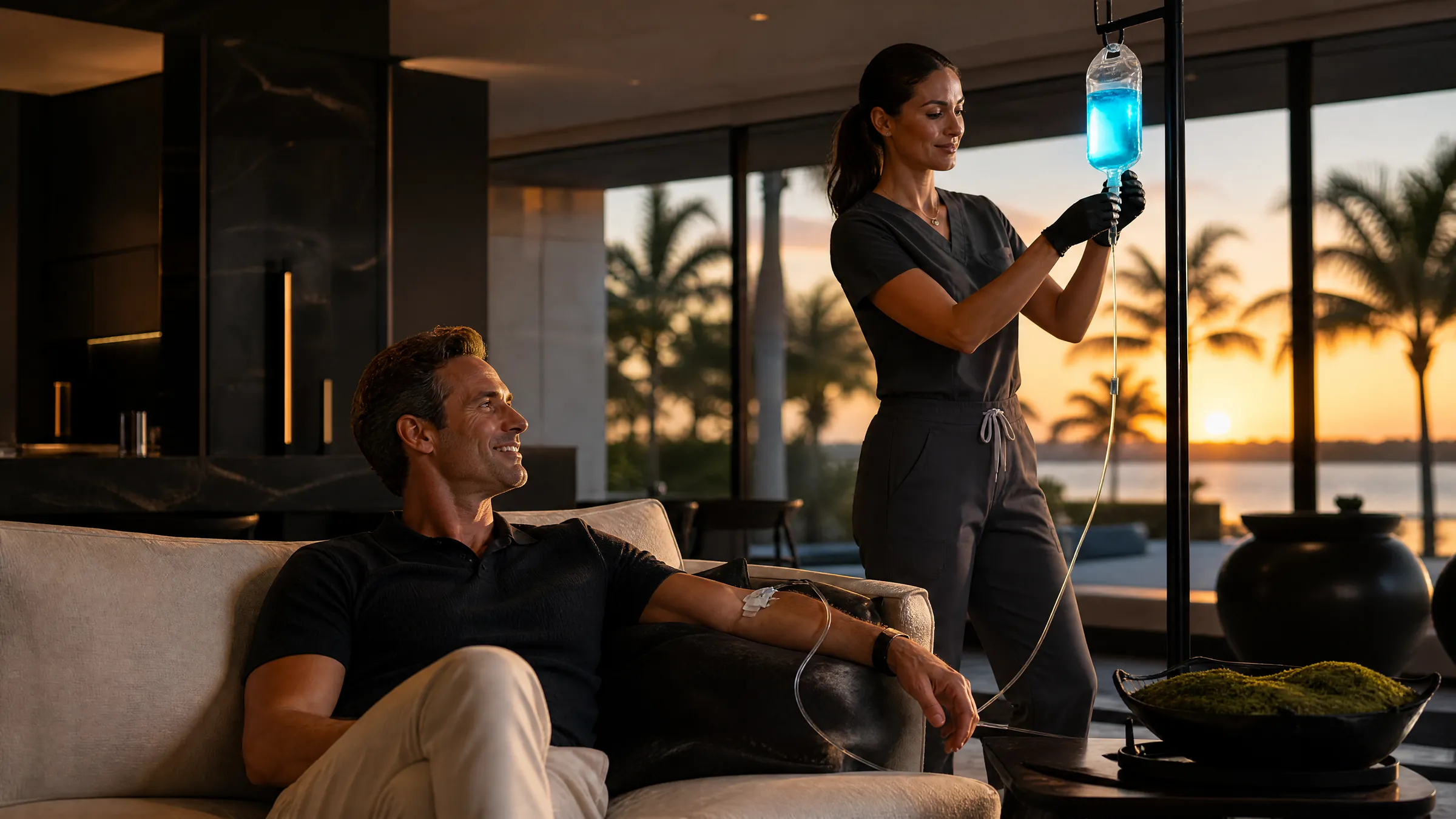
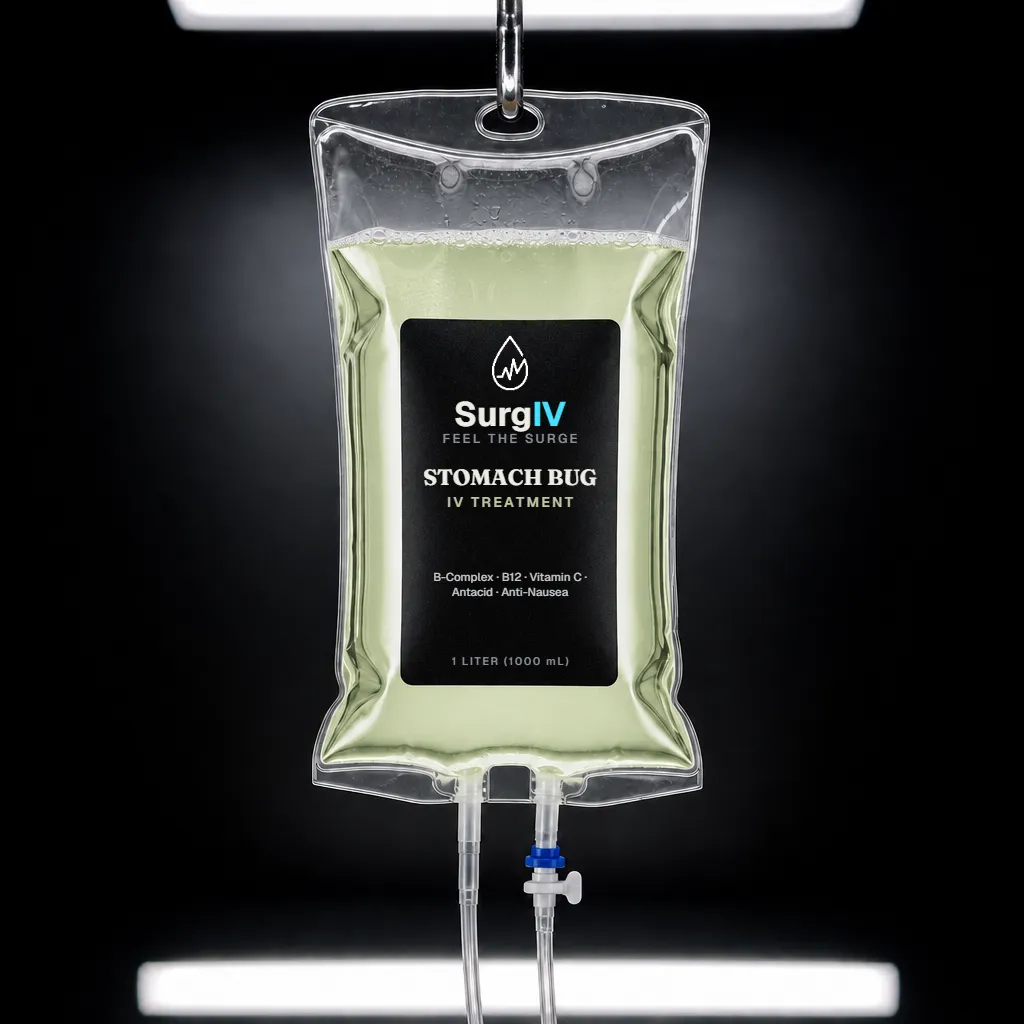
This is the same route-around-the-blockade case as the household stomach bug: the Stomach Bug IV delivers the entire rebuild — a liter of fluids, balanced electrolytes, anti-nausea support — intravenously, with your traumatized digestive tract left in peace to recover on its own schedule. The deficit that would've taken a day of disciplined sipping clears within the session, and the anti-nausea component typically reopens the oral route as a bonus: the water you drink afterward finally stays down and counts.
Rebuild without renegotiating with your stomach.
Stomach Bug $249
Fluids, electrolytes and anti-nausea support delivered intravenously — recovery that skips the gut entirely.
B-Complex · B12 · Vitamin C · Antacid · Anti-Nausea
The honest triage box
Most food poisoning is miserable, self-limited, and exactly what home IV recovery is for. Some isn't — and the line matters: blood anywhere, high fever, severe or one-sided abdominal pain, confusion, symptoms past two days, or a vulnerable person (pregnant, elderly, immunocompromised) — that's a doctor or ER, not a drip. Our intake screening asks precisely these questions, and our nurses are trained to walk away from bookings that belong in medical care. A wellness company that won't tell you that is a wellness company to avoid.
For everything else — the standard-issue aftermath of a meal that betrayed you — the math is simple: one bag, one hour, your couch, functional by evening. The oysters still weren't worth it. But at least they only cost you one act instead of two.
This article is for general education and is not medical advice. IV therapy at SurgIV is administered by registered nurses under physician-written protocols, with a health screening before your first visit. Talk to your doctor about what is right for you.