
The scoop ritual has conquered America's kitchens: every morning, millions of health-conscious people stir a tablespoon of green dust into water, drink something that tastes like a lawn's apology, and feel — this is the product's true genius — covered. A client we'll call Brian, 39, described his version to our nurse with the self-awareness of a man mid-epiphany: "Ninety bucks a month. I've been doing it for three years. And the other day my kid asked what it does and I realized my complete answer was... 'it's got the good stuff in it?' I market software for a living. I know what I sound like."
Let's give Brian's kid a real answer — what the tub actually delivers, what questions it's structured to avoid, and where the honest comparison with full-dose delivery lands.
What the tub gets right
Fair is fair: a quality greens powder is a legitimate insurance layer. Real (if modest) vitamin and mineral content, some plant compounds with genuine research interest, and unbeatable convenience for the weeks when vegetables lose to logistics. As a hedge against an imperfect diet, the scoop beats nothing — and beats most of the supplement aisle's theatrics. If the ritual gets you a baseline you'd otherwise skip, keep the ritual. This is not a hit piece. It's an audit.
The three questions the label deflects
- "How much of each thing?" — The proprietary blend problem, wellness's favorite fig leaf: a "7,412mg Superfood Complex" spanning forty ingredients tells you the total weight and nothing else. The impressive-sounding items could be — and per independent analyses of the category, often are — present at dustings. You cannot evaluate what you cannot see; the format knows.
- "How much absorbs?" — Everything in the scoop rides the same oral toll booth as every capsule: the water-soluble vitamins at their usual taxed rates, the minerals competing for uptake, the plant compounds at bioavailabilities that make researchers sigh. The tub's label, even where transparent, describes the scoop — not the bloodstream.
- "Insurance or repletion?" — The category's marketing whispers foundational nutrition; the honest job description is micronutrient insurance for the adequately-fed. Those are different products. Insurance maintains a fine baseline. It does not, at scoop doses through a gut toll booth, dig anyone out of a real hole.
"It's got the good stuff in it" — the entire greens-powder value proposition, as explained by every customer to every curious kid
Where each tool honestly wins
The clean division our members land on: the scoop for insurance — daily, cheap-ish, low-friction coverage against dietary chaos, ideally from a brand that publishes full doses (they exist; reward them). The bag for repletion — when the situation is a deficit, not a hedge: the post-illness rebuild, the depletion checklist, the drained seasons this blog maps — where the job needs known milligrams (published, like a label) at 100% delivery. Brian's realization, mid-drip: "So the tub is my renter's insurance and this is the actual repair crew. I was trying to fix a roof with an insurance card." Software marketing, as noted, is his profession. We couldn't have put it better.
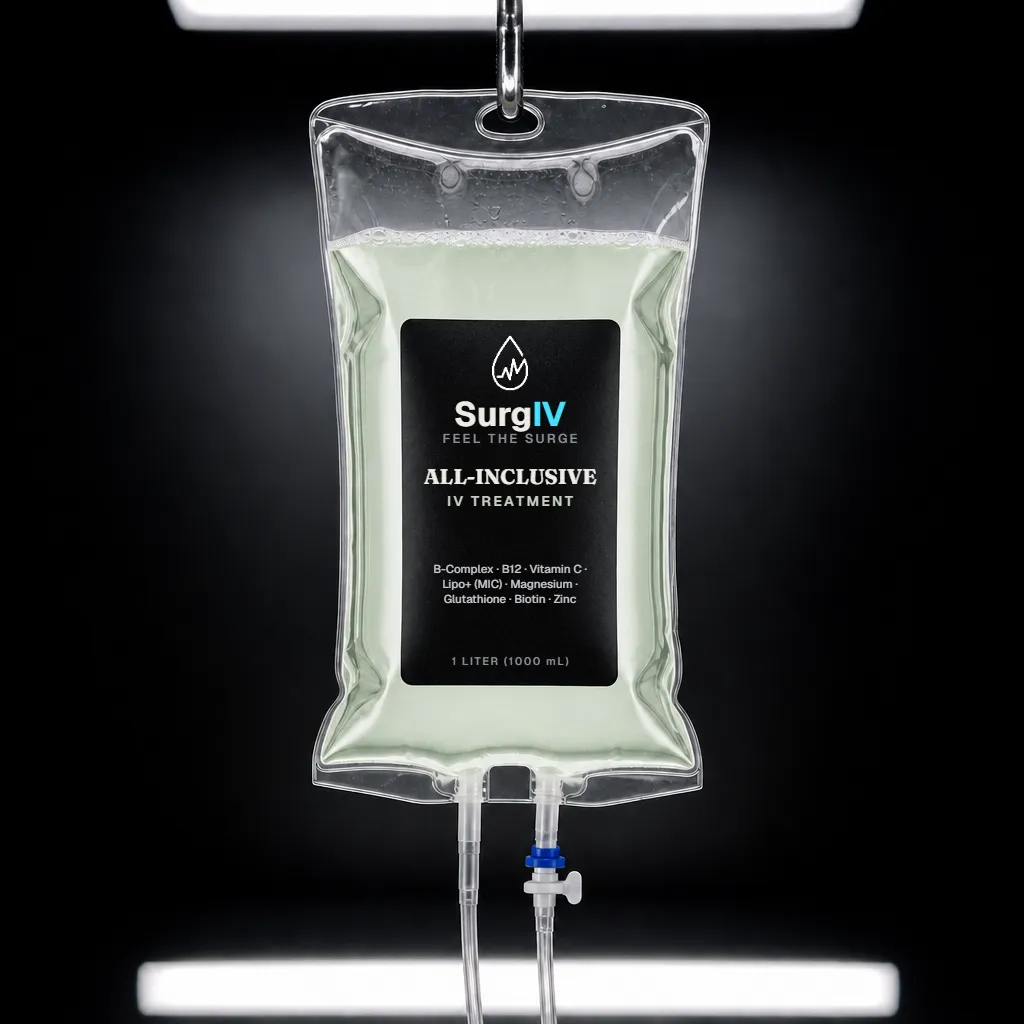
Published doses, no blends
All-Inclusive $349
Every milligram listed, every milligram delivered — the anti-proprietary-blend.
B-Complex · B12 · Vitamin C · Lipo+ (MIC) · Magnesium · Glutathione · Biotin · Zinc
Brian's kid, answered
The updated household explanation, per Brian: "The green drink is Dad's daily just-in-case. The nurse visit is for when Dad's actually run down. And vegetables are still vegetables, eat your broccoli." Three sentences, fully accurate, better than most of the category's marketing departments manage. The scoop survives the audit — demoted to its honest job, which was always the reasonable one. The repair crew takes the rest.
This article is for general education and is not medical advice. IV therapy at SurgIV is administered by registered nurses under physician-written protocols, with a health screening before your first visit. Talk to your doctor about what is right for you.