4:58 AM. You surface from thin, sweaty sleep into a heart that's beating like it knows something you don't. And then the committee convenes — the one that only meets at this hour, after that kind of night. What did I say to Mark's wife? Why did I order shots? Did I Venmo someone $200? Your hands, you notice while checking (no Venmo — one small mercy), have a fine tremble to them. The headache you'll joke about at brunch. This part — the dread, the shakes, the 5 AM tribunal — you'll never mention to anyone.
So let's mention it. It has a name — hangxiety — a well-understood chemistry, and some genuinely useful fixes. And knowing the mechanism is itself half the treatment, because the committee's favorite trick is convincing you this is you rather than chemistry.
The rebound: why calm turns to alarm
All evening, alcohol was pressing your brain's calm pedal (boosting GABA) and easing off the gas (suppressing glutamate, the excitatory signal). Your brain, which hates being pushed around, compensated in real time — turning its own calm down and its own gas up to stay level. Then, around 4 AM, the alcohol left. The compensation didn't. What remains is a nervous system with the gas taped down and the brakes disconnected: racing heart, sweat, restlessness, and a brain running threat-detection on everything, including your own memories. The dread isn't insight. It's rebound. It peaks in the early morning and decays over the day — knowing that timeline is genuinely calming at 5 AM.
The shakes: the committee's percussion section
The fine tremor is the same over-revved system plus a co-conspirator: low blood sugar. Your liver spent the night processing alcohol instead of steadily releasing glucose, so you wake up running on fumes — shaky, weak, and anxious, because hypoglycemia's symptoms are anxiety's symptoms. Add dehydration's racing heart and you've got three mechanical problems presenting as one psychological crisis.
Hangxiety's trick is disguising chemistry as character. It's neither a prophecy nor a diagnosis — it's a rebound with a half-life.
What actually helps, in order
- Feed the floor first: real breakfast (blood sugar), fluids with electrolytes (the racing heart's usual cause), magnesium (the settle-down mineral alcohol depletes).
- Delay the coffee — caffeine on rebound chemistry is espresso on a fire alarm. Give it till noon.
- Daylight and gentle movement — a walk outside legitimately down-regulates the alarm faster than the couch spiral does.
- Name it — "this is GABA rebound, it peaks now and fades by afternoon" is a surprisingly effective committee adjournment.
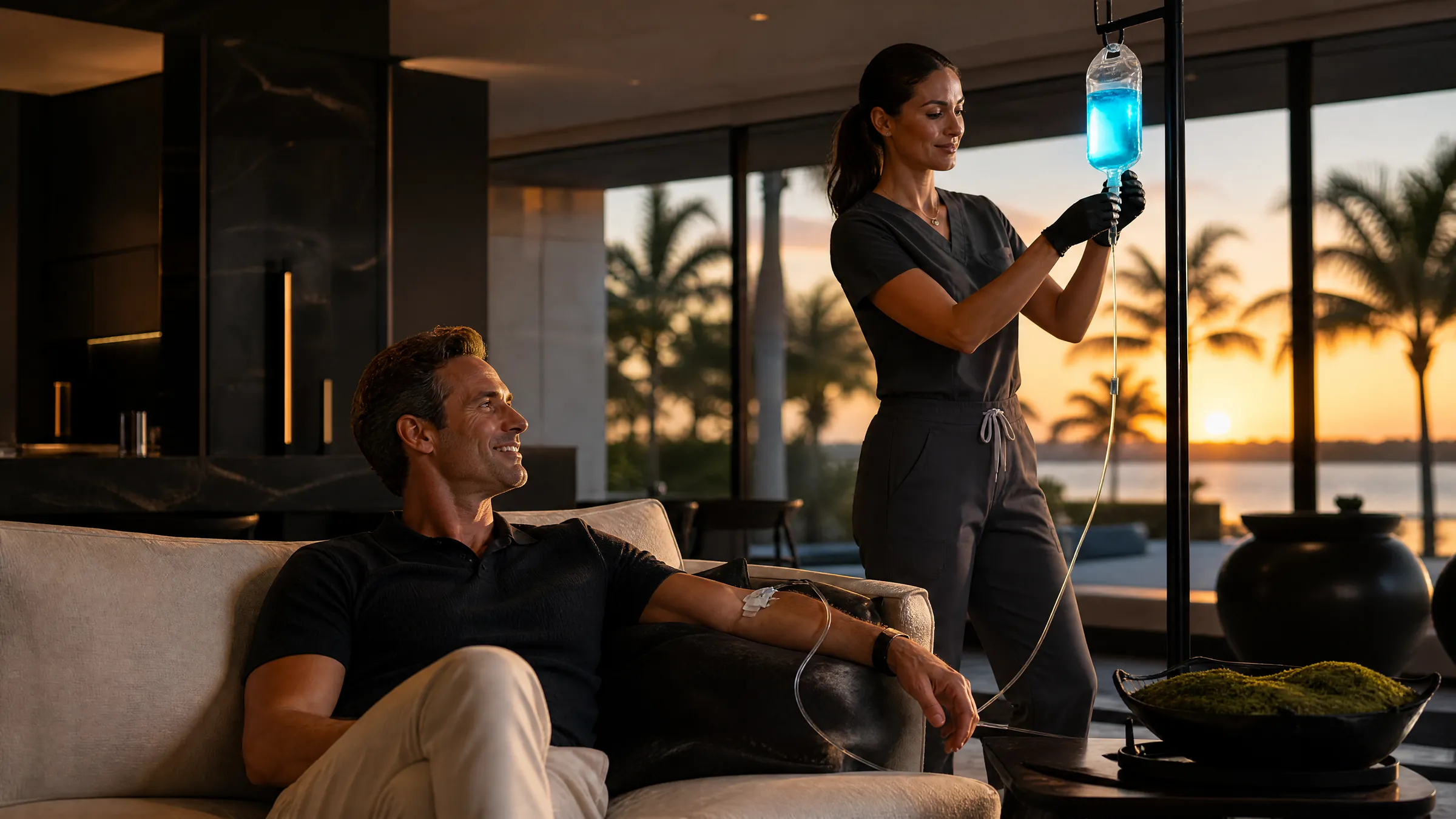
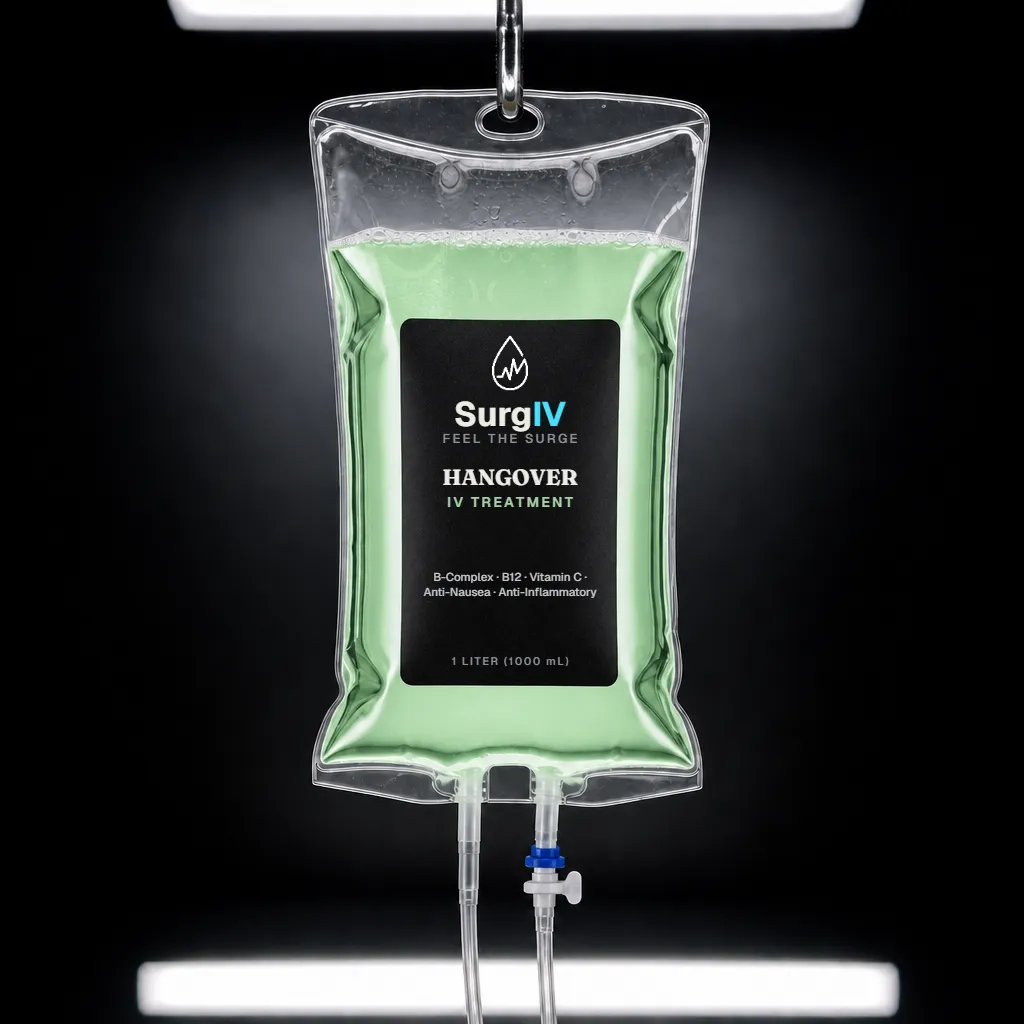
- The full physical reset — when the morning matters, the Hangover IV clears the dehydration and restocks the B vitamins and magnesium in one sitting; clients consistently report the mental weather clearing alongside the physical, because the anxious brain stops receiving crisis telemetry from the body.
Calm the body first
Hangover $249
Rehydration, blood-sugar support, B vitamins and magnesium — the physical floor under the mental morning.
B-Complex · B12 · Vitamin C · Anti-Nausea · Anti-Inflammatory
The honest paragraph
Two boundaries, stated plainly because this topic deserves them. If hangxiety is showing up after ordinary drinking, escalating, or arriving with shakes that ease only when you drink again — that's a pattern conversation for a doctor, and having it early is strength, not drama. And no drip treats an anxiety disorder; if the committee meets on sober mornings too, a therapist is the actual protocol, and we'll be the first to say so. For the occasional big night's chemical aftermath, though: breakfast, fluids, daylight, patience — and a nurse who makes house calls when the morning has a deadline. The committee adjourns by afternoon. It always does.
This article is for general education and is not medical advice. IV therapy at SurgIV is administered by registered nurses under physician-written protocols, with a health screening before your first visit. Talk to your doctor about what is right for you.