Second Saturday of July, a member-guest at a club west of Jupiter. Ninety-six degrees, humidity like a hand on your chest. Our client — call him Tom, 58, plays to a nine — is standing on the 14th tee when his playing partner asks if he's all right.
"I'm fine," Tom says. He is not fine. He's stopped sweating through his shirt the way he was on the front nine, his last full bottle of water was the 6th hole, and there's a faint ringing under the sound of everything. But there's a match on. He thinks, four holes. Anyone can do four holes.
Tom finishes the round. Shoots 84, even wins his flight. Shakes hands, loads the clubs, sits in the driver's seat of a car that's been baking since 8 AM — and that's where it hits him. The parking lot tilts. His heart is doing something percussion-like. His hands on the wheel look far away. The thought arrives with unusual clarity: I should not drive this car.
The lie Tom believed
Here's what Tom got wrong, and what almost everyone gets wrong about heat: he assumed that surviving the round meant he'd gotten away with it. The real shape of heat exhaustion is different — the crash characteristically arrives after the exposure ends. While you're moving, adrenaline and effort mask the deficit; your body is spending emergency reserves to hold the line. When you finally stop — the air conditioning, the parked car, the shower — the masking switches off, and the actual ledger gets read aloud: liters of fluid gone, sodium and potassium gone with them, a cooling system that's been redlining for five hours.
Heat doesn't send the bill during the round. It waits politely until you sit down.
Know the two tiers — this part is not optional
Before the recovery talk, the safety talk, because the line here is genuinely life-and-death. Heat exhaustion — Tom's tier — looks like heavy sweating, weakness, dizziness, headache, nausea, cramps: serious, miserable, recoverable. Heat stroke is the tier above: confusion or strange behavior, skin that's hot and may have stopped sweating, core temperature north of 103°F. Heat stroke is a medical emergency where minutes matter — it's a 911 call and aggressive cooling, full stop, and no wellness company should be anywhere near it. If the person seems altered — not just wiped, but not-themselves — you call, you cool, you don't wait.
What Tom actually did
Tom, to his credit, did not drive. He called his wife, drank the clubhouse's Gatorade in the shade, and got home by five — where the second act was waiting: the pounding head, the wobbling legs, the specific washed-out weakness of a body running on empty reserves. The Gatorade helped the way oral hydration helps: slowly, politely, at half a liter an hour against a multi-liter hole. On that math, Tom's Sunday — and likely a chunk of Monday — were already spent.
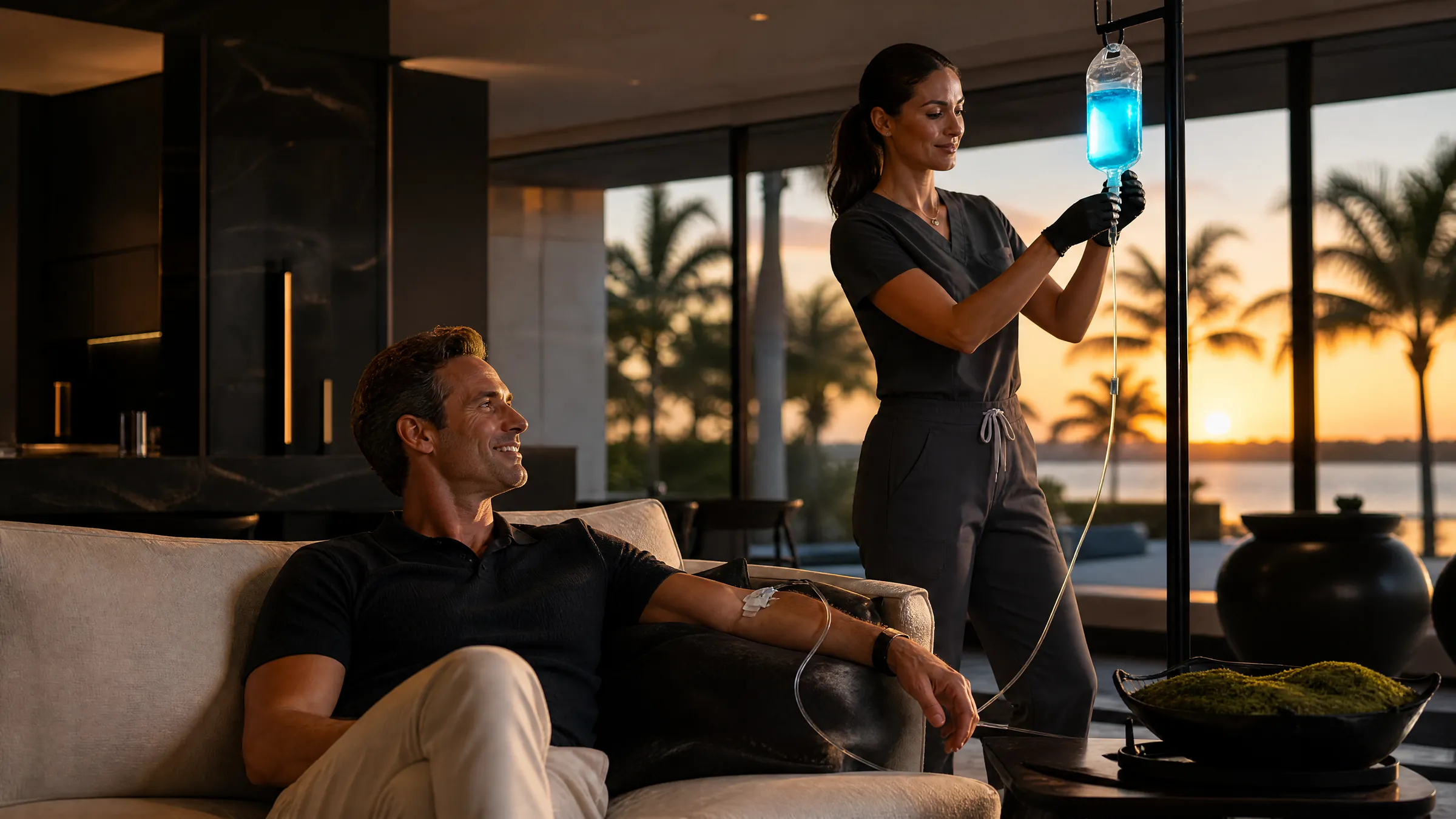
His wife had a different idea; she'd read about us after a boat day. The nurse arrived at 6:40. A full liter of fluids with balanced electrolytes went in over the next hour while Tom sat on his own couch replaying the 14th hole and being told, gently, what the ringing sound had been trying to say. The Dehydration IV did the arithmetic his stomach couldn't: the deficit that would've taken two days of sipping, restored to circulation before dinner.
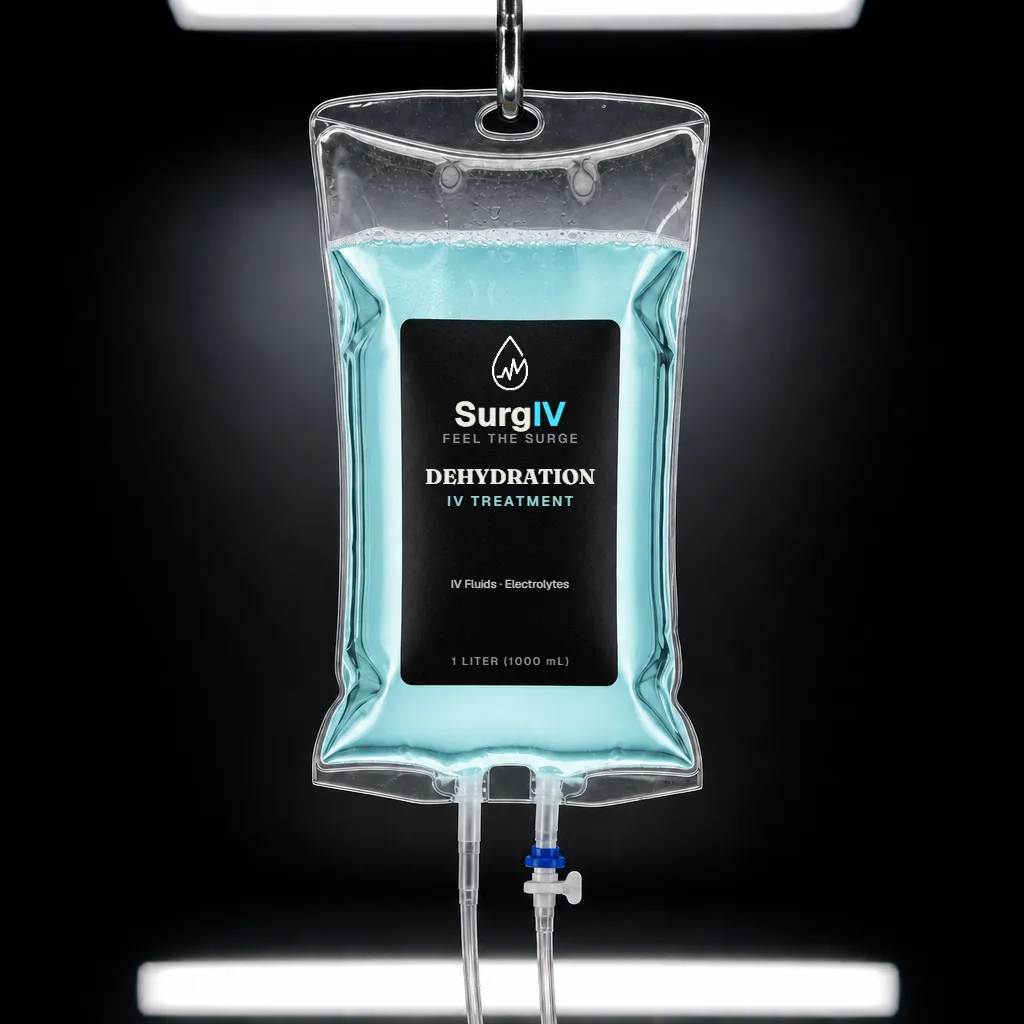
The evening-after protocol.
Dehydration $199
Full fluid and electrolyte restoration at home — because the heat's bill arrives after the sun goes down.
IV Fluids · Electrolytes
The ending, and the lesson
By eight, Tom felt — his word — "reassembled." Sunday morning he texted the group chat that he'd be at the 9 AM scramble after all, which his partner reports he played infuriatingly well. But the line he repeats when he tells this story (and he tells it a lot) is the one worth keeping: "I thought the danger was the heat. The danger was thinking I'd beaten it."
Respect the furnace hours. Drink on schedule, not on thirst. Know the heat-stroke red flags cold. And when a Florida summer day gets through your defenses anyway — because some Saturdays it will — remember that the crash after is a supply problem, and supply problems are the one thing that can knock on your door same-day, anywhere in Palm Beach County.
This article is for general education and is not medical advice. IV therapy at SurgIV is administered by registered nurses under physician-written protocols, with a health screening before your first visit. Talk to your doctor about what is right for you.