6:35 PM, minute 34 of a 90-minute heated class in Delray. A woman we'll call Camille — the four-classes-a-week Camille — is watching the newer student on the mat beside her go through something Camille recognizes instantly: the standing-series wobble, the hand that reaches for a wall that isn't there, the face doing the math of whether sitting down is allowed. It is. Camille catches her eye and mouths it: "Sit." The student sits. Afterward, in the lobby, the question comes out mortified: "Does that mean I'm not fit enough?" No. It means the room asked for something nobody told her to bring.
The room is the product
Hot yoga isn't accidentally hot — the sweat is the design, and at 95–105 degrees with added humidity, a 60-to-90-minute class commonly costs one to two-plus pounds of body weight: 16 to 32-plus ounces of fluid, carrying sodium, potassium and magnesium out with it. The single most educational thing any practitioner can do is weigh in and out once — the number reliably shocks people who've been repaying with half a bottle of water. (Sound familiar? It's the sauna's two-currency invoice with vinyasas.)
You're not paying for the poses. You're paying for the room — and the room bills in sweat, which means it bills in minerals, not just water.
The standing-series wobble, explained
The lobby student's dizziness was a three-part stack, none of it about fitness: heat dilates blood vessels (lowering blood pressure), fluid loss reduces blood volume (lowering it further), and then the sequence asks you to stand, fold, and rise repeatedly — the textbook setup for an orthostatic drop. Add the two most common amplifiers — arriving under-fed, and hydrating with plain water only (which dilutes the sodium the sweat is exporting) — and the wobble is essentially scheduled. Sitting down when it happens is the correct response, every time, in any studio worth practicing in; teachers respect it, and the students who push through are the ones who end up horizontal.
Practicing funded — and who should be careful
Before: 16–20 ounces with electrolytes an hour or two prior, light food far enough out to settle. During: sip, don't chug (a sloshing stomach in twisted postures has its own opinions). After: the real repayment — the full post-class protocol, and for the four-a-week faithful whose practice out-sweats the pantry, the periodic full settlement. And the honest caution list, because the room genuinely doesn't negotiate: pregnancy (talk to your OB — heated practice is commonly advised against), cardiovascular or blood-pressure conditions, medications affecting fluid balance or heat regulation, and any day you're ill or already behind. Screening yourself is part of the practice.
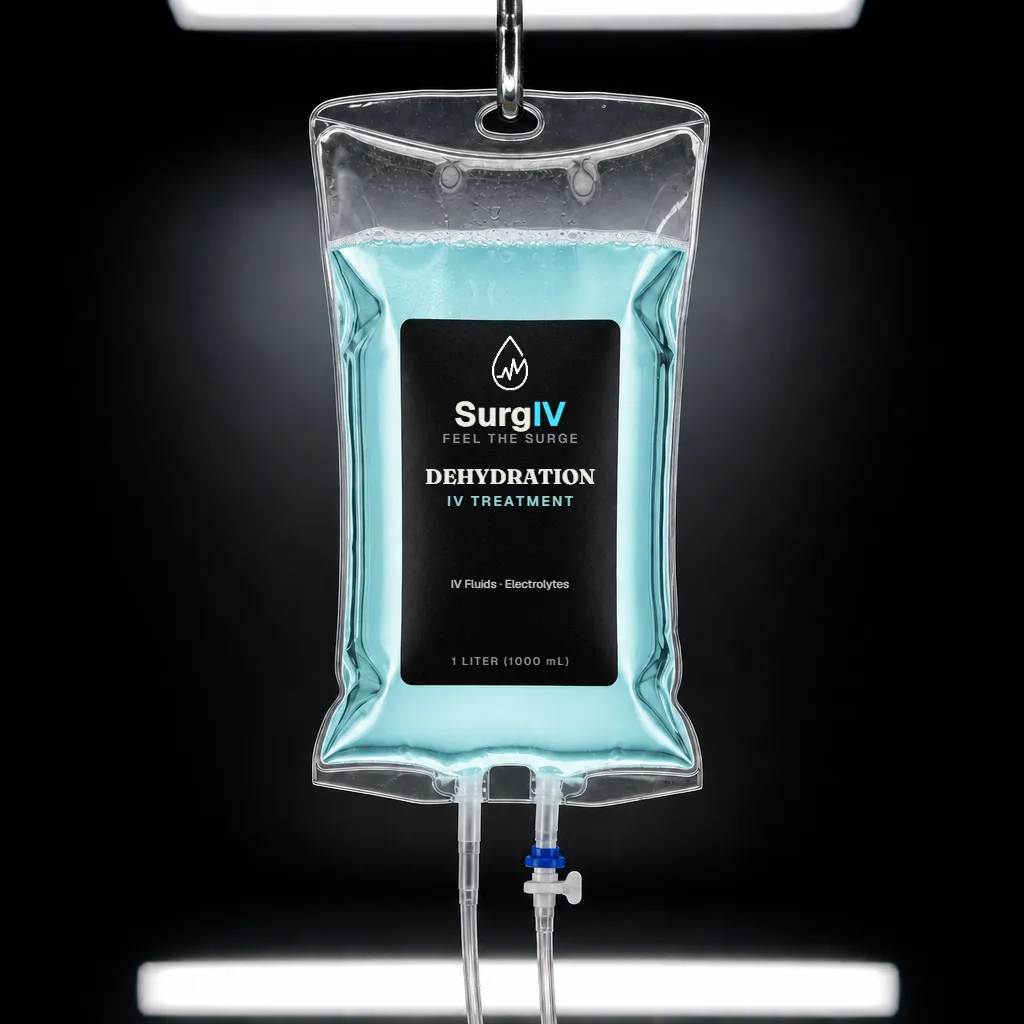
The practitioner's reset
Dehydration $199
For the weeks the room out-sweats the water bottle.
IV Fluids · Electrolytes
The lobby student, six weeks on
Camille sent her the protocol that night. Electrolytes before, packet after, food at 4 PM. The wobble hasn't returned, and the newer student has since caught someone else's standing-series moment and mouthed the same word Camille mouthed at her. Her review, delivered in the same lobby: "I thought the room was testing my fitness. The room was testing my prep. Totally different exam — and this one you can study for."
This article is for general education and is not medical advice. IV therapy at SurgIV is administered by registered nurses under physician-written protocols, with a health screening before your first visit. Talk to your doctor about what is right for you.