7:05 AM, a bathroom in Boca Raton. A financial advisor we'll call Derek, 36, is assessing the situation in the mirror, and the situation is assessing him back. Last night was a client dinner that metastasized — the good steakhouse, the second bottle someone insisted on, the nightcap that had nightcaps. Today's calendar, consulted through one eye: a 9 AM portfolio review, a need to sound intelligent about bond ladders, and no version of events where he isn't in that room. Derek's search history at 7:06: "hungover at work what to do."
Derek, this is that article. The full-day damage-control manual, hour by hour.
7–9 AM: Triage before departure
The pre-office window sets the day's ceiling: fluids with electrolytes started immediately — steady sips, since your gut's absorption ceiling applies double on an irritated stomach; a real breakfast, eaten against your preferences — the shakes and dread are half blood-sugar, and eggs fix more of this morning than any supplement; ibuprofen with that food (never acetaminophen after drinking — your liver's busy); one half-strength coffee, if you must, with the discipline to stop there — the second cup trades minor alertness for major jitters. And the shower's real function: not cleanliness, the psychological reset to professional mode, which is the day's actual load-bearing performance.
The 9 AM meeting doesn't need the best version of you. It needs a plausible one. Aim precisely there.
9 AM–noon: The performance window
Meeting survival tactics, field-tested by the county's professional class: manage the calendar ruthlessly — the hardest cognitive work moves to the afternoon (your recovery curve rises all day; schedule against it), cameras go optional where culture permits, and speaking roles get prepped notes because improvisation is today's weakest muscle; keep the water visible — the desk bottle refilled hourly does more than everything in the pharmacy drawer; eat the mid-morning snack — blood sugar stability is your anxiety management; and resist the caffeine spiral — every additional cup borrows from an account already in collections. Derek's 9 AM, for the record, was survived on exactly this protocol: plausible, hydrated, bond ladders explained without incident.
Noon: The pivot point
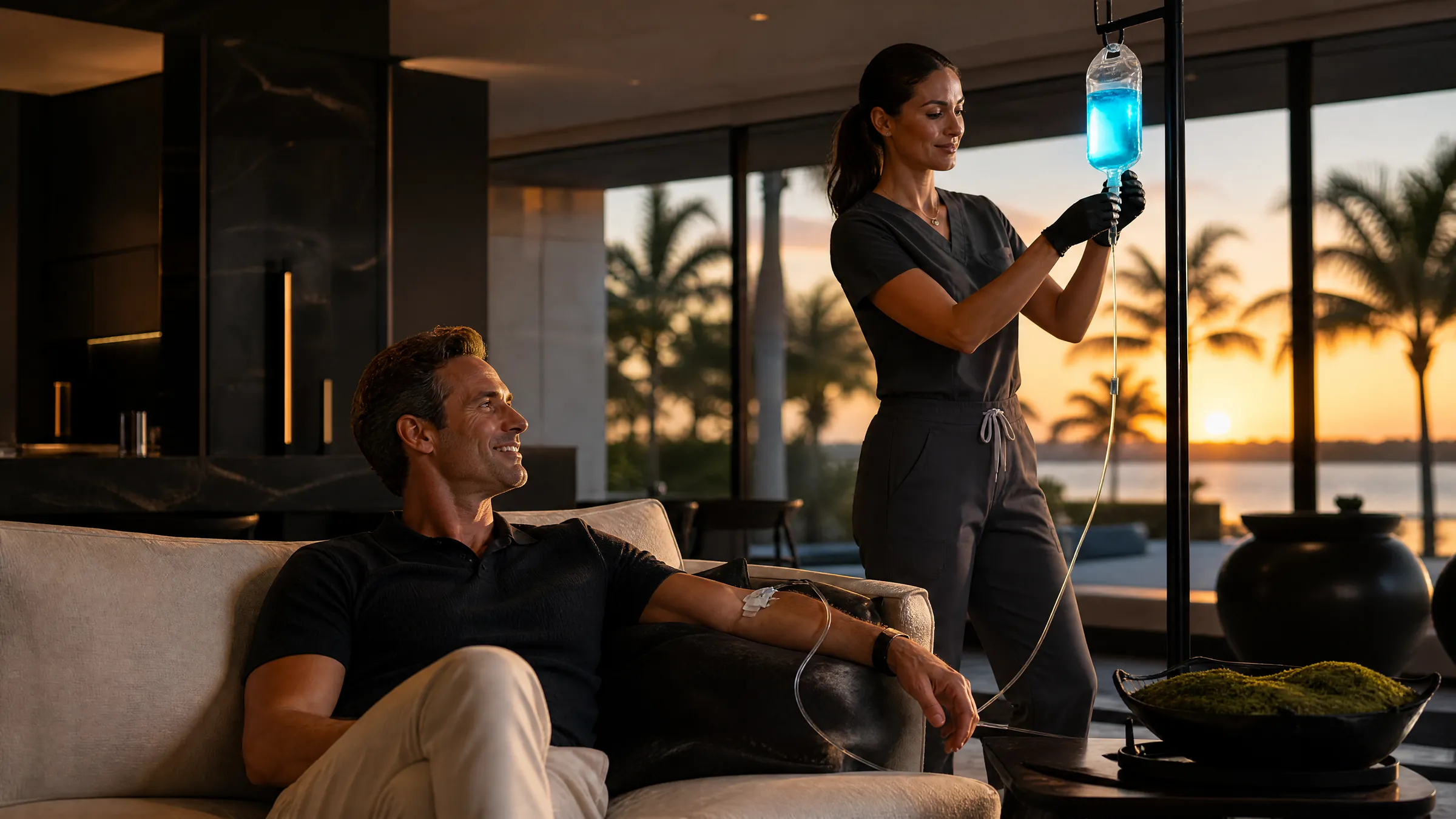
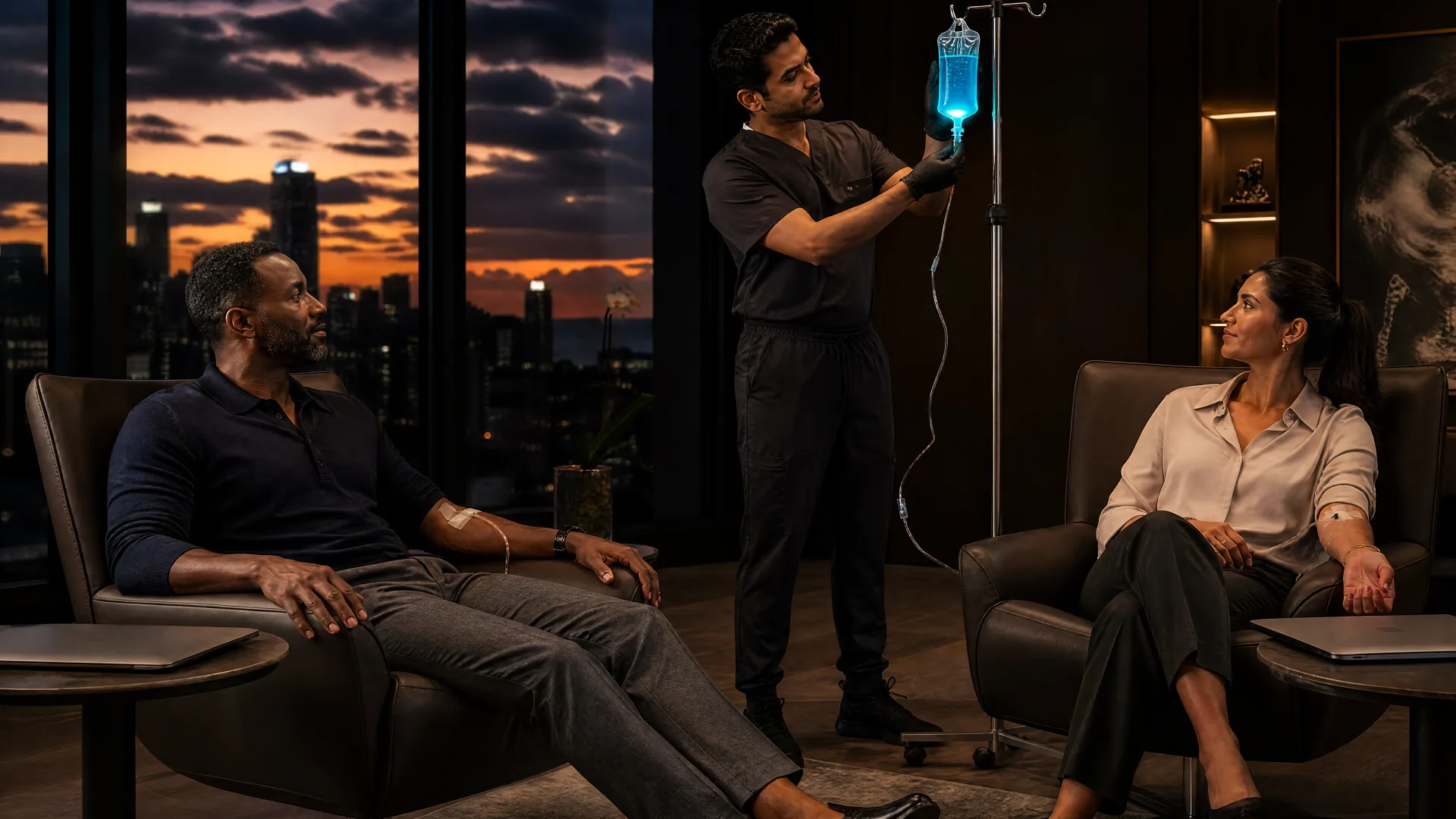
Here's where the county's professionals split into two afternoons. The default path: soldier through on fluids and willpower, arriving at 5 PM as a husk with a commute. The other path — the one that built our lunch-hour route: the midday session — a nurse at your home over lunch (or the office, where private space allows), running the full counter-formula in ~45 minutes: the liter your sips can't match, B vitamins, anti-nausea, headache support. The 2 PM version of Derek that returned from lunch was, by his own account, "a different employee — the one they think they hired." The afternoon's meetings got that guy. So did the gym, later, improbably.
The honest paragraph
Two truths for the file: first, if you're genuinely impaired — not miserable, impaired — or safety-critical or client-facing beyond faking, the sick day is the professional move, and pretending otherwise serves nobody. Second, if this article is becoming a bookmark rather than a rarity, the prevention playbook is the better investment — client dinners respond beautifully to the water ritual, and your Thursdays will too.
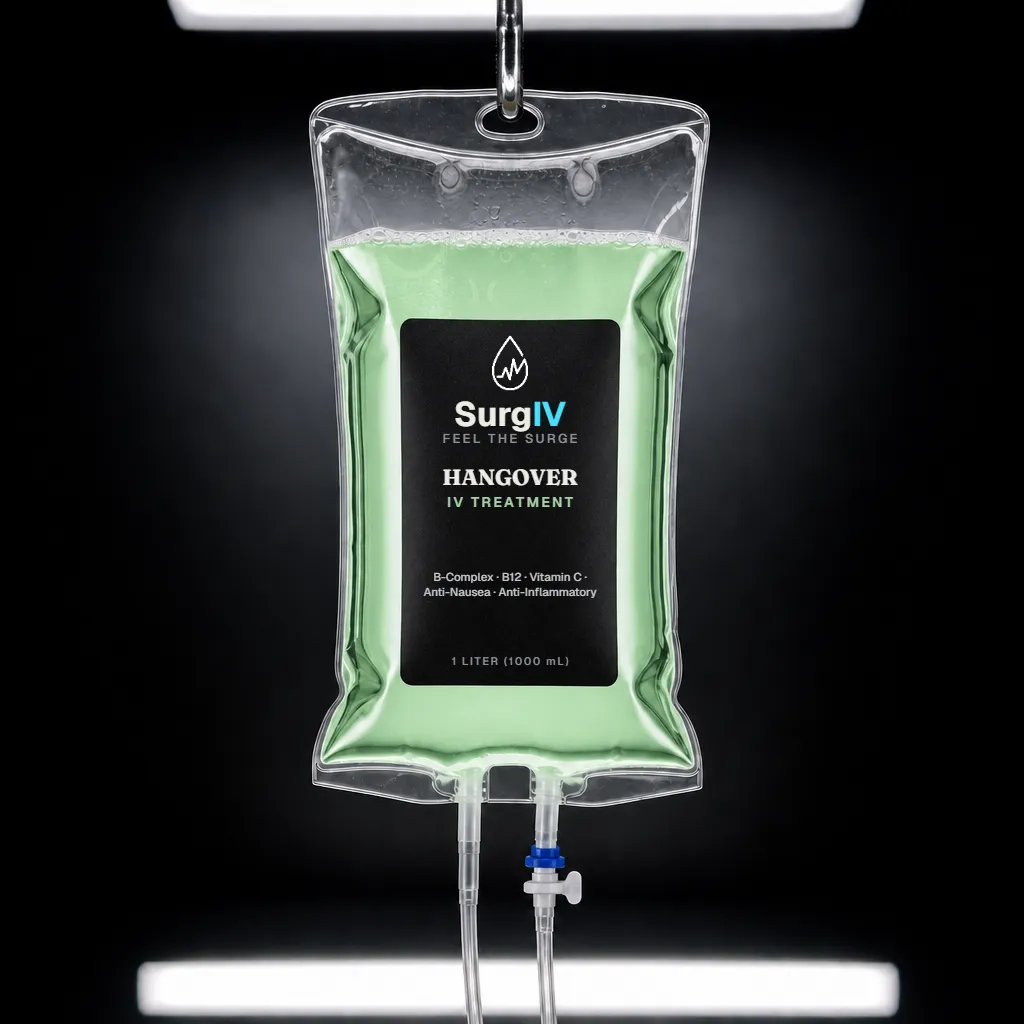
The lunch-break rescue
Hangover $249
A nurse at your office or home over lunch — afternoon meetings get a different person.
B-Complex · B12 · Vitamin C · Anti-Nausea · Anti-Inflammatory
Derek, 5 PM
Full day survived, afternoon actually productive, and one new calendar rule instituted: "Client dinners now end when the second bottle arrives. And if they don't — I know a nurse who does lunch." Both policies, we can confirm, remain in force.
This article is for general education and is not medical advice. IV therapy at SurgIV is administered by registered nurses under physician-written protocols, with a health screening before your first visit. Talk to your doctor about what is right for you.