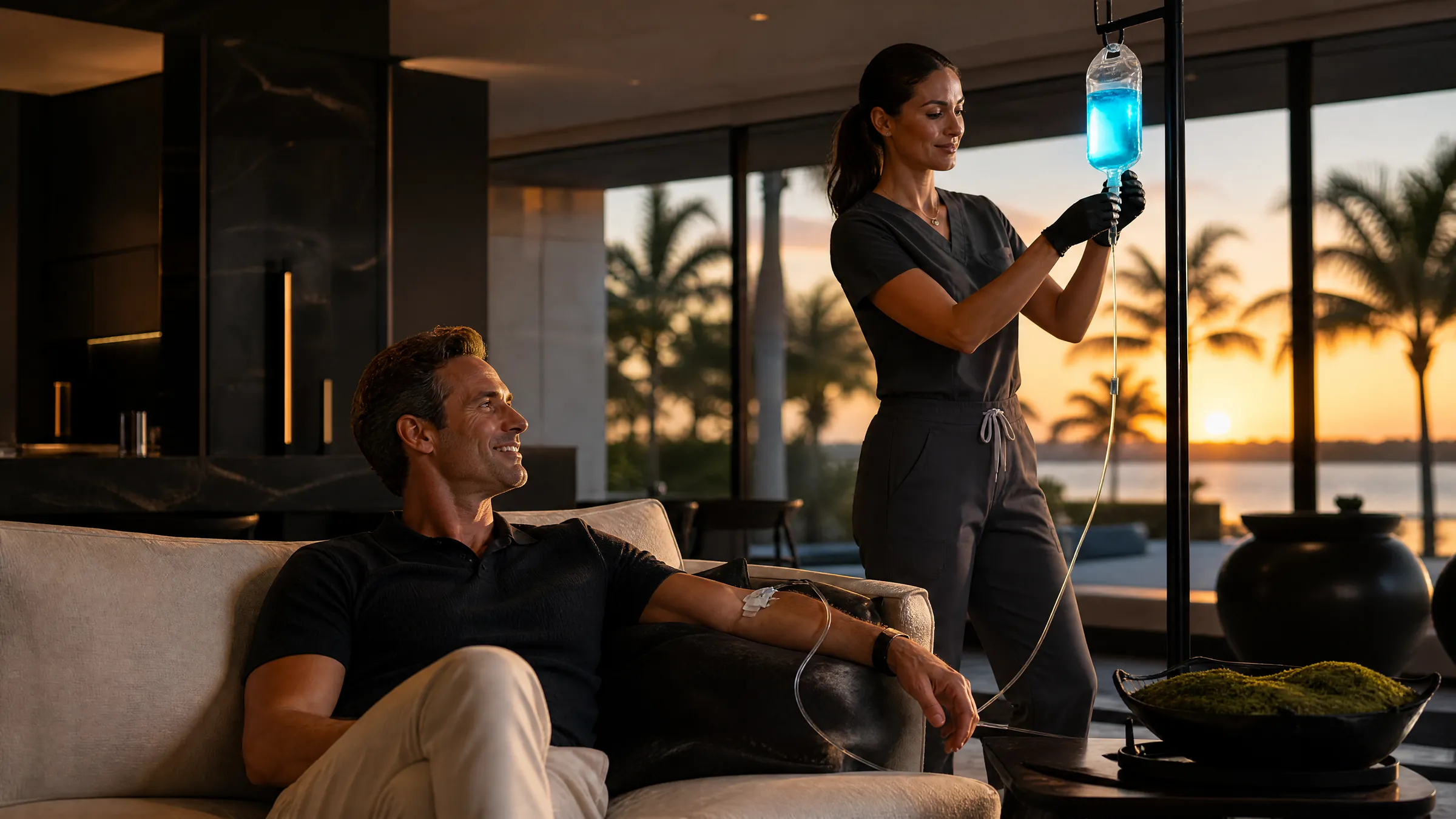
Day three of the cone. A house in Palm Beach Gardens, 11:40 PM. A man we'll call Doug, 49, is standing in his kitchen in the specific psychic state Floridians know as cone brain — fourteen browser tabs of spaghetti models, a garage full of water he bought at three different stores, shutters half-up, and a heart rate that's been running tropical-storm-force since Tuesday. His wife, from the bedroom, delivers the season's wisest forecast: "Doug. The storm is three days away. You are the only thing currently making landfall."
Every Florida prep guide covers the house. Almost none cover the human — and the human runs a brutal week: adrenaline, broken sleep, heavy labor in August heat, then possibly days without AC. Here's the missing chapter.
Phase one: the cone days (the cortisol tax)
The pre-storm week is a slow-motion stressor engineered for your worst habits: threat uncertainty (the cone's whole personality), doomscroll loops that spike cortisol at bedtime, and prep labor — shutters, lifting, ladder work — performed in peak-season heat, usually compressed into the final 48 hours. The veteran moves: prep early (the same shutters cost half the stress on day one of the cone versus the eve), set a model-run curfew (the 11 PM European run will still exist at breakfast; your sleep architecture won't), and hydrate the labor like the outdoor athletic event it is — the pre-storm heat exhaustion case is a real and stupid way to enter a hurricane.
The cone tracks the storm. Nobody tracks the householder making landfall in his own kitchen nightly at 11:40.
Phase two: the storm and the outage (the endurance leg)
The storm itself you'll spend wired and probably sleepless — normal, budget for it. It's the aftermath that runs the real physical bill: a Florida house without AC is an endurance environment — 85–90°F with full humidity, sweating at rest around the clock, sleep shallow and soaked. The math from our heat series applies at rest: double the fluids, add electrolytes (continuous mineral loss), eat despite the weird pantry meals, and watch the vulnerable — heat tolerance drops with age, and grandparents' thirst signals lag worst exactly when the AC dies. Generator households: carbon monoxide kills more Floridians than wind in many storms — outside, away from windows, no exceptions, tell your neighbors.
Phase three: cleanup and the crash (where the injuries live)
The all-clear sounds, and Florida performs its post-storm ritual: everyone becomes a lumberjack by 8 AM. This is statistically the danger window — chainsaws, ladders, debris lifting, performed by depleted, under-slept bodies in the heat with the adrenaline finally draining. Pace the cleanup across days, hydrate it like the labor it is, and know the crash is coming regardless: the post-adrenaline trough — profound fatigue, fog, flatness — that lands once the threat passes and the stress hormones stand down. It's physiology, not weakness, and it's exactly the window our post-storm route serves: when the roads reopen (historically a day or two after all-clear), the Dehydration IV for the outage's fluid hole, or the full panel for the whole week's ledger — delivered to houses that are often still warm, to people who just ran a week-long event nobody trains for.
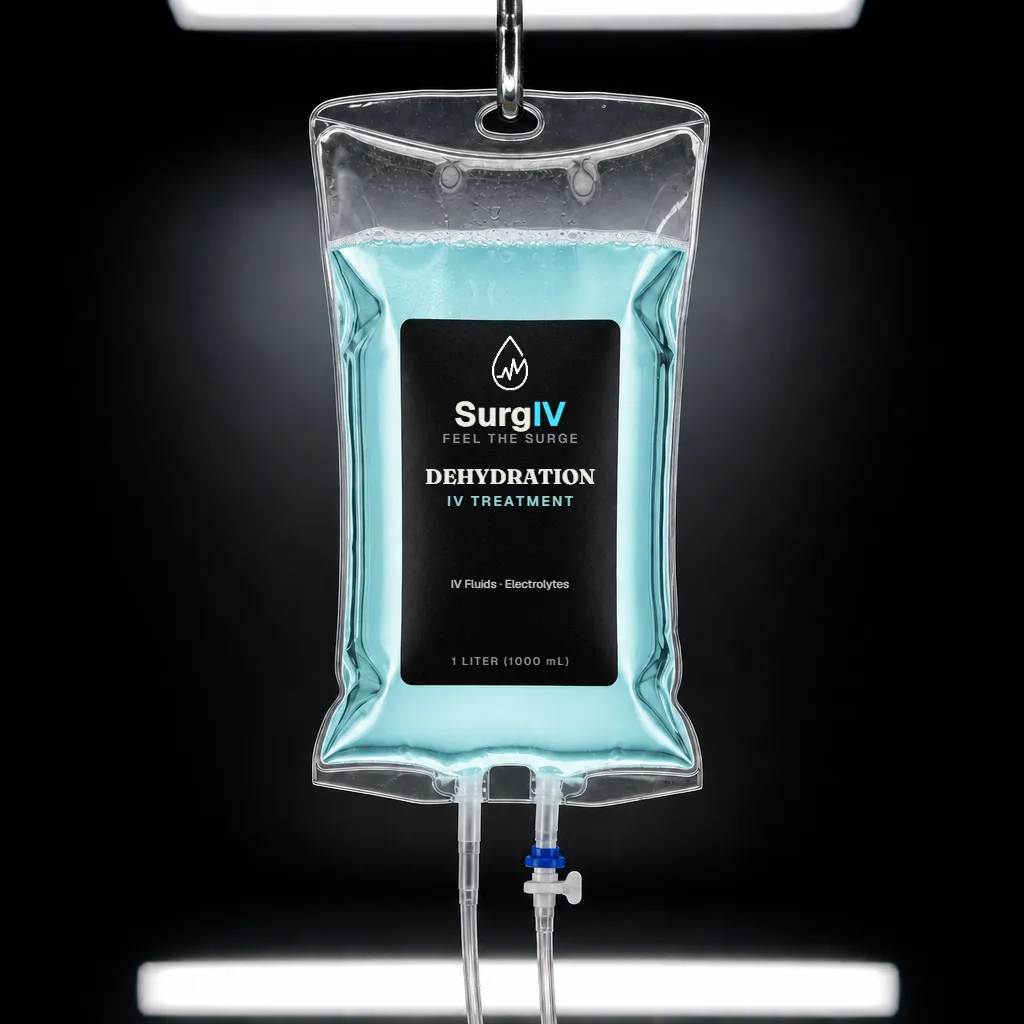
The after-the-all-clear reset
Dehydration $199
When roads reopen — fluids and recovery for the week the storm took.
IV Fluids · Electrolytes
Doug, post-storm
The storm, as most do, wobbled and weakened; the outage ran four hot days. Doug's amendments for next season, taped inside the shutter closet: "Shutters day 1. Models twice a day MAX. Water for the HUMANS. Book the drip for all-clear +1." His wife's addendum beneath: "Doug is the storm. Prepare accordingly." The season runs June through November. Prep the house — and the householder.
This article is for general education and is not medical advice. IV therapy at SurgIV is administered by registered nurses under physician-written protocols, with a health screening before your first visit. Talk to your doctor about what is right for you.