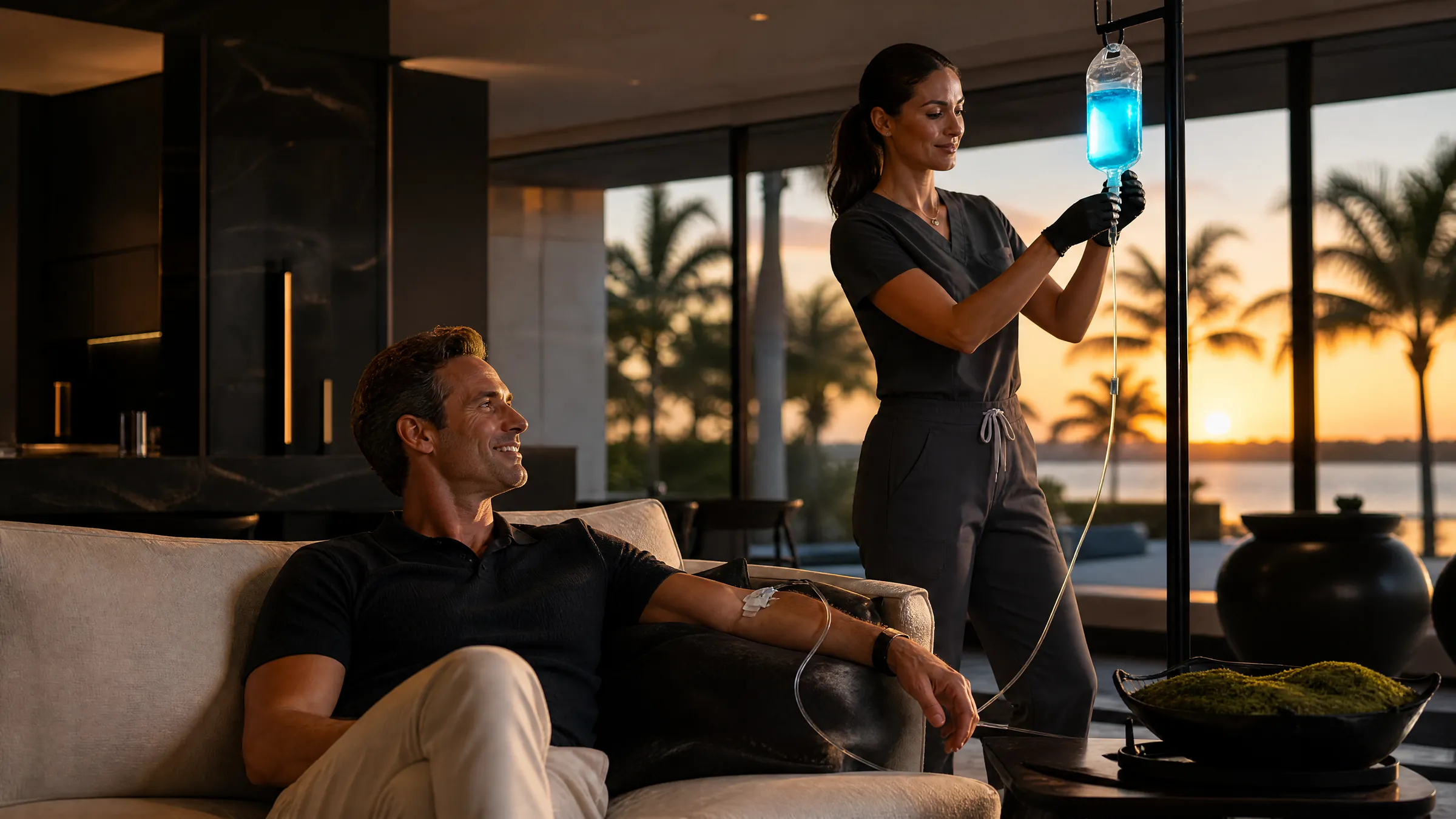
Let's acknowledge the awkwardness up front: you're asking whether IV therapy is safe, and the answer is coming from a company that sells IV therapy. So we'll do the only credible thing — give you the version with the sharp edges left in, including the questions that would disqualify some of our competitors, and occasionally send business away from wellness IVs entirely.
The baseline truth
IV access is one of the most routine procedures in medicine — performed millions of times daily in hospitals for a century. The technique itself is profoundly well-understood. Wellness IV therapy uses that same technique to deliver substances your body already uses: fluids, electrolytes, vitamins, minerals, amino acids. Administered properly, on an appropriately screened person, it's a low-risk procedure. Both italicized conditions are load-bearing, and they're where the entire real safety conversation lives.
The risks, actually itemized
- Minor and common: a bruise at the insertion site, brief soreness, the cold-arm feeling during infusion. Annoying, not dangerous.
- Uncommon and manageable: infiltration (fluid slipping outside the vein — swelling that resolves), vein irritation, a vasovagal faint in needle-phobic clients. A trained nurse handles all of these routinely.
- Rare and provider-dependent — the ones that matter: infection from broken sterile technique, and complications from infusing someone whose heart or kidneys can't handle a fluid load. Note what these two have in common: neither is caused by IV therapy. Both are caused by bad providers.
IV therapy isn't safe or unsafe. Providers are.
What safety actually consists of
Four unglamorous systems, present or absent at every operation in the county:
- A registered nurse on every visit — not for the needle skill alone, but for the clinical judgment: recognizing the client who needs a doctor instead of a drip.
- Physician-written protocols and medical direction — formulas, doses, and contraindications decided by a medical director, not improvised by whoever's working.
- Health screening before treatment — the boring questionnaire is the single most protective step in the process. Its absence is disqualifying.
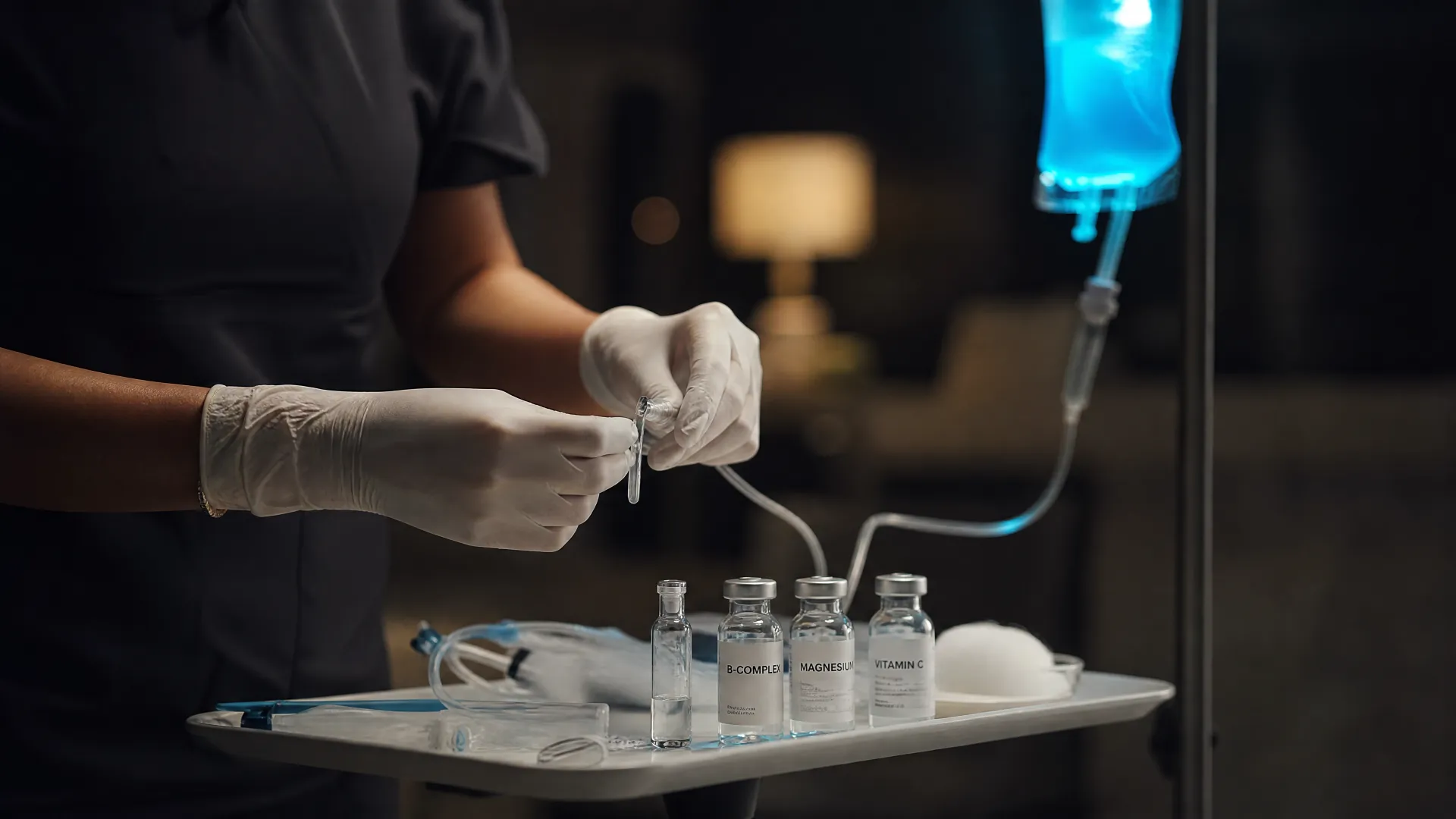
- Pharmaceutical-grade sourcing and sterile technique — licensed compounding pharmacies, single-use supplies, proper prep. Invisible when done right; catastrophic when not.
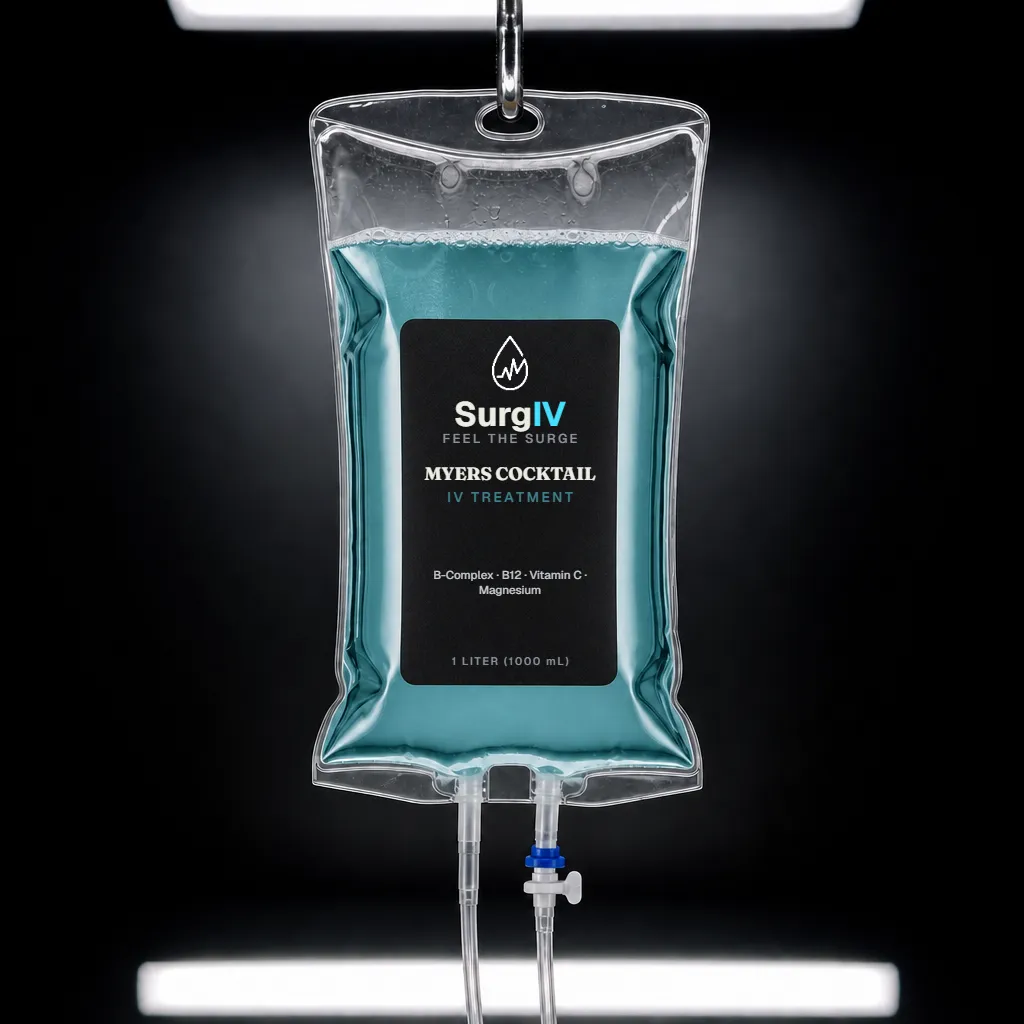
Every safeguard, standard.
Myers Cocktail $249
Registered nurses, physician-written protocols, health screening, pharmaceutical-grade ingredients — on every single visit.
B-Complex · B12 · Vitamin C · Magnesium
Our own fine print, voluntarily
Two things we tell clients that cost us bookings. First: wellness IVs are supportive care, not medicine — symptoms that suggest something real (chest pain, high fever, confusion, severe pain) belong in urgent care or the ER, and our nurses are trained to say so at your door. Second: some people shouldn't book at all without physician clearance — significant heart or kidney conditions chiefly — which is exactly what our screening screens for. A provider willing to lose those bookings is the kind you want; the four questions in the FAQ below will find them anywhere.
Asked properly and answered honestly: yes — with an RN, a protocol, a screening, and a real pharmacy behind it, IV therapy is a low-risk, well-understood procedure. Everything below that standard is a different product wearing the same name.
This article is for general education and is not medical advice. IV therapy at SurgIV is administered by registered nurses under physician-written protocols, with a health screening before your first visit. Talk to your doctor about what is right for you.