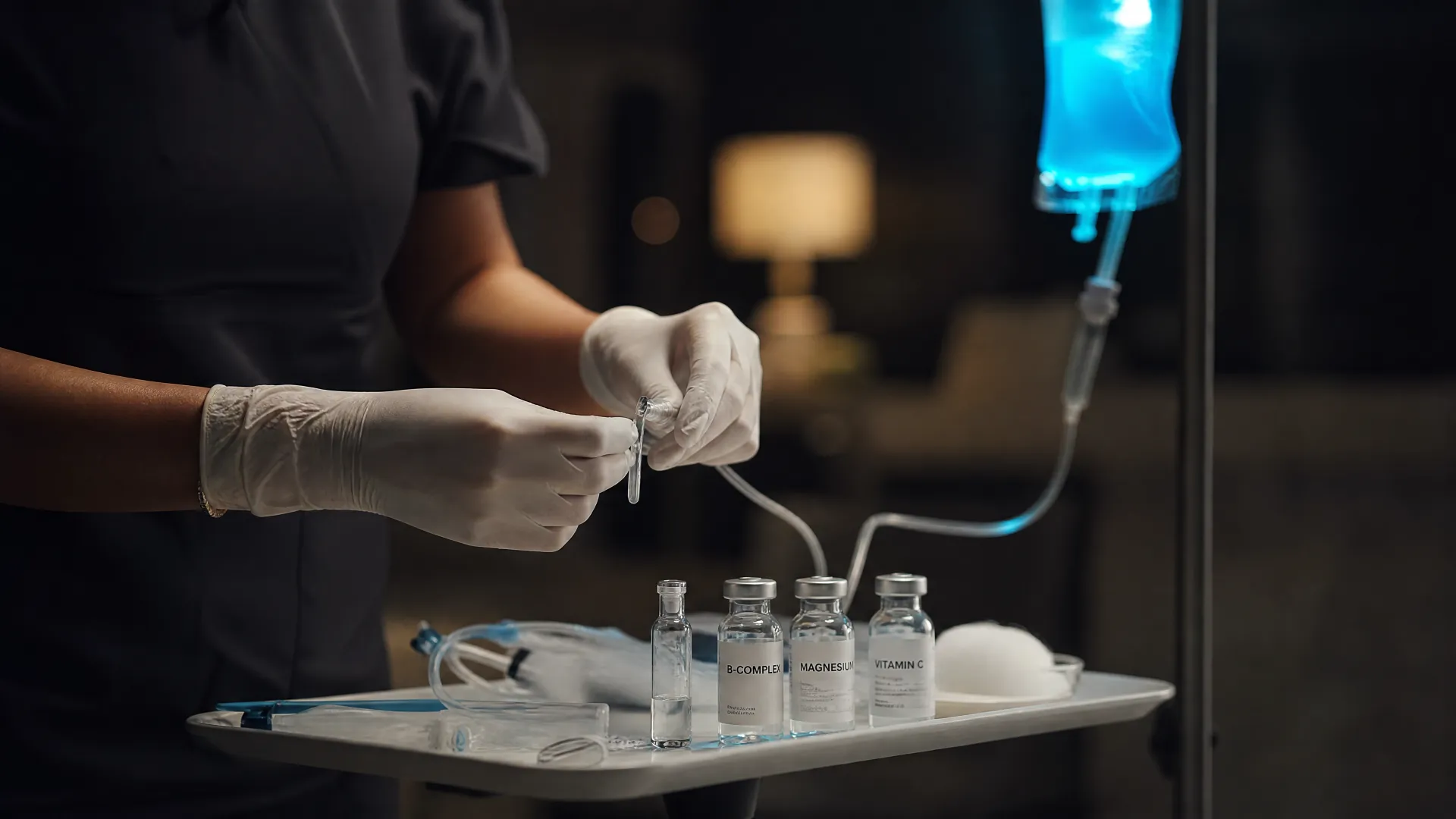
7:50 AM, two days post-drip, a bathroom in Wellington. A woman we'll call Carol, 58, first-timer as of Tuesday, is holding her forearm up to the mirror light like it's evidence. A bruise the size of a nickel, quietly purple, sits exactly where the catheter was. Her texts to her daughter — the one who recommended the IV — escalate in real time: "Is this normal." "Googling it." "The internet says everything from 'fine' to 'call a doctor immediately.' The internet is useless. ASKING YOU."
The answer Carol needed in one paragraph
A small bruise at the IV site, appearing within a day or two and fading over the next week: completely normal. A bruise is just a little blood that leaked from the vein into surrounding tissue when the catheter came out — the identical mechanism to the mark after any lab blood draw, which most people have had and shrugged off. It's cosmetic, self-clearing, and says nothing about the treatment's success or your health. The color will run its ugly little rainbow — purple, green, yellow — and be gone. That's the whole story for the overwhelming majority of marks.
A bruise is spilled blood tidying itself up. The rainbow is the cleanup crew's uniform changing shifts.
Why some arms bruise and others don't
The honest variables: vein character — thinner-walled, more delicate veins (age is the big factor; Carol's 58-year-old veins bruise easier than her daughter's) leak a touch more readily; blood thinners — prescription anticoagulants but also everyday aspirin and fish oil, which is why screening asks; movement during placement, and skipped pressure after removal — the firm one-minute press is the single best bruise preventer, which is why your nurse does it every time. Prevention on your side is mostly one word: hydrate — plump, well-filled veins take clean sticks.
The short list that isn't normal
Boundaries, plainly: a bruise changing color over days is normal; a site growing hot, swollen, or angry-red after day one is not. Spreading warmth, redness that expands rather than fades, red streaking up the arm, or a fever — those point to irritation or infection, which sterile technique makes rare, and they warrant a same-day call to us or your doctor rather than a week of watching. The rule of thumb: bruises get uglier in color while feeling better; problems feel worse while getting redder. One is a cleanup. The other is a call.
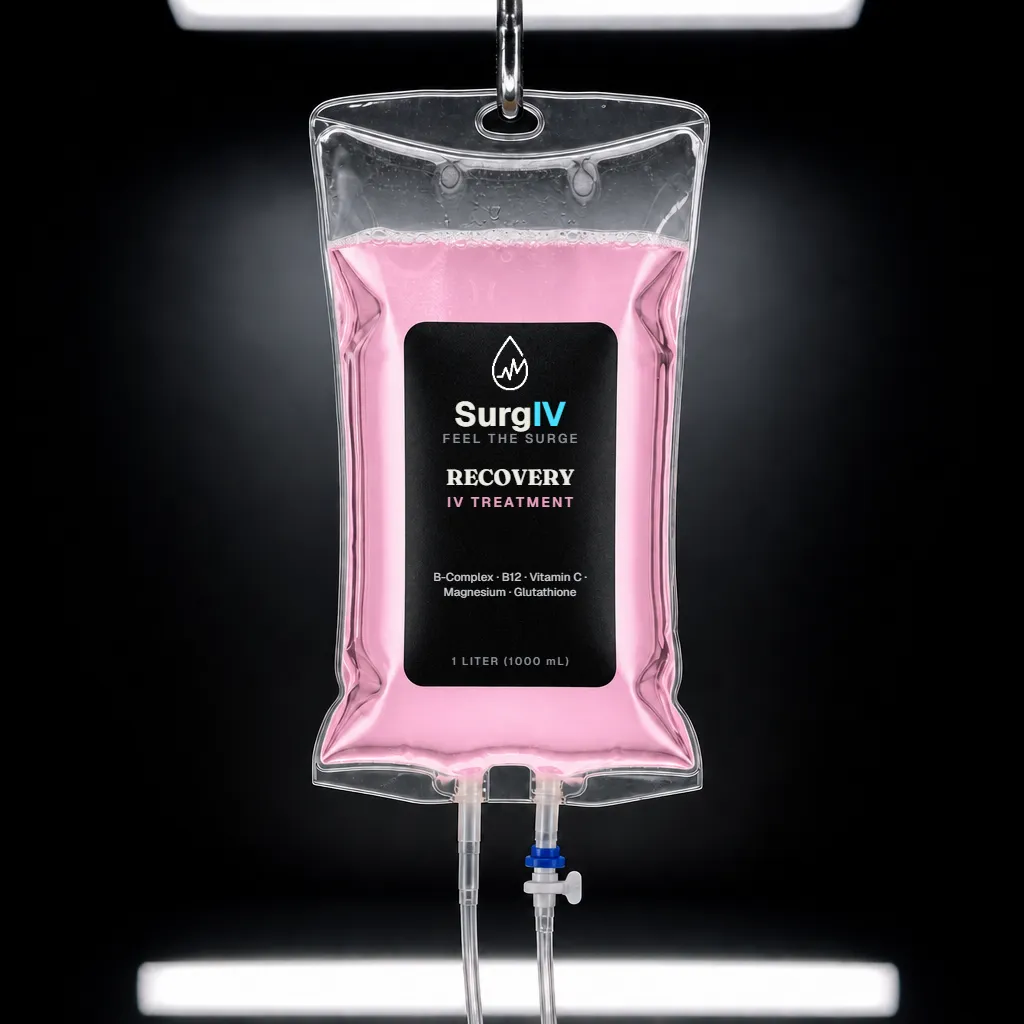
Gentle technique, every visit
Recovery $299
Experienced RNs, small catheters, unhurried placement — bruising minimized by craft.
B-Complex · B12 · Vitamin C · Magnesium · Glutathione
Carol, one rainbow later
The nickel went green by Friday, yellow by Sunday, gone by the following Wednesday — precisely on schedule. Carol, being Carol, now delivers the briefing to every friend she's converted since: "You might get a little bruise. It means nothing. Don't google it — the internet has no sense of proportion." Neither do first-time nerves. That's what this page is for.
This article is for general education and is not medical advice. IV therapy at SurgIV is administered by registered nurses under physician-written protocols, with a health screening before your first visit. Talk to your doctor about what is right for you.