Open your kitchen's supplement drawer — you have one, everyone does — and conduct a brief archaeology. The vitamin C from the winter you kept getting sick. The B-complex from the tired phase. The glutathione capsules some podcast sold you. Each bottle two-thirds full, each abandoned around week three with the same quiet verdict: "I couldn't tell it was doing anything."
Here's the thing — you were probably right. Not because the nutrients don't work. Because of what happened between your mouth and your bloodstream. Nobody ever told you about the toll booth.
The toll booth
Every capsule you swallow enters a gauntlet: stomach acid, digestive enzymes, then a wall of intestinal transporters that decide — molecule by molecule — what actually gets through to circulation. The fraction that survives is called bioavailability, and it's the most important number the supplement industry never prints, because for many key nutrients it's shockingly low and it falls further as the dose rises. The label says 1000mg. The toll booth has other plans.
The toll varies wildly by nutrient, and the pattern explains your drawer:
- Vitamin C — absorbed through transporters that saturate at small doses; mega-dose orally and most of it never enters circulation.
- Glutathione — a peptide, i.e., the exact molecule class your gut is designed to dismantle. Oral glutathione arrives mostly as spare parts. Full story here — this one borders on scandal.
- B12 — needs stomach acid, a protein called intrinsic factor, and a specific receptor; common medications and age break the chain. The people who most need it often absorb it worst.
- NAD⁺ — largely destroyed in digestion, which is why serious use has always been intravenous.
Your supplements weren't failing you. They were being taxed to death in transit.
So are pills worthless? No — and this matters
Honesty over sales pitch: for maintenance, oral works. A daily D3, magnesium at night, a decent multi — small doses, taken consistently, absorb adequately and cost pennies. Keep them. The drawer's bottles failed at a different job: you bought them to fix something — depletion, fatigue, a rough season — which requires therapeutic-level amounts actually arriving. That's the specific job where the toll booth wins and the format loses.
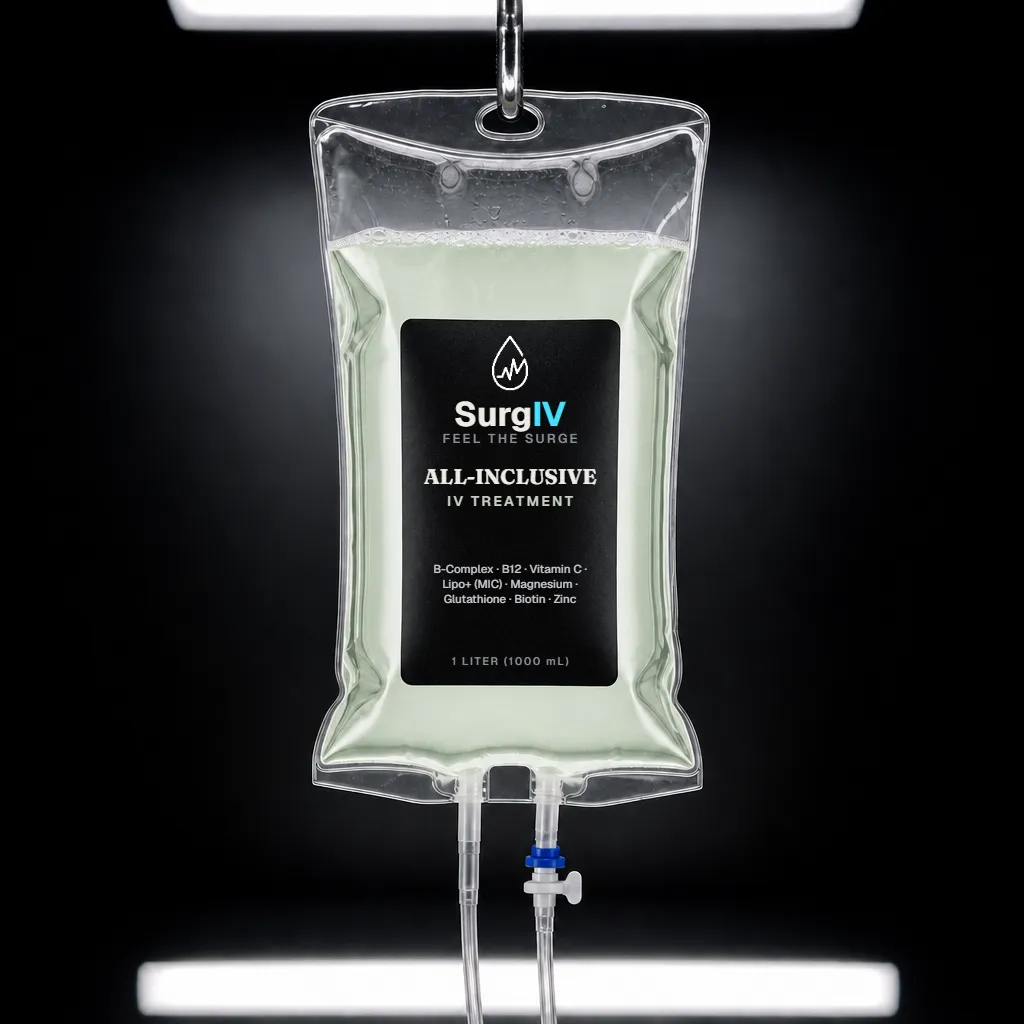
The label dose, actually delivered.
All-Inclusive $349
Every ingredient at 100% availability — the number on the bag is the number in your blood.
B-Complex · B12 · Vitamin C · Lipo+ (MIC) · Magnesium · Glutathione · Biotin · Zinc
The route around
IV delivery is exactly one idea: skip the toll booth entirely. Nutrients enter circulation directly — the label dose and the blood dose become the same number for the first time. It's why one All-Inclusive session can feel like more than three months of capsules did: not stronger ingredients, just delivered ones. And it's why the nutrients that headline IV formulas are precisely the heavy-taxed four above — the format exists because of the toll booth.
The grown-up protocol, then: oral basics for daily maintenance — cheap, sensible, keep going. IV sessions for the rebuild moments and the untaxed full doses — monthly-ish for most members. And the drawer of disappointment? You're free. It was never a willpower museum. It was a receipts file for a toll you didn't know you were paying.
This article is for general education and is not medical advice. IV therapy at SurgIV is administered by registered nurses under physician-written protocols, with a health screening before your first visit. Talk to your doctor about what is right for you.