
10:20 AM, an exam room in Palm Beach Gardens. A man we'll call Craig, 46, is receiving the good news like a verdict. His physician, scrolling the portal: "CBC's clean. Thyroid's fine. Glucose, kidneys, liver — all normal. You're healthy, Craig." Craig, who needed two coffees to attend this appointment and will nap in his car after it: "Then why do I feel like a phone at 14 percent?" The doctor — good at her job, honest about its edges — gives the answer medicine rarely says out loud: "The labs I can order tell me you don't have a disease. They don't actually measure whether you feel good. Those are different tests, and the second one mostly doesn't exist."
What the panel actually measures
Standard bloodwork is a disease screen — engineered to catch anemia, thyroid failure, diabetes, organ trouble — and it earns its keep daily. But read the fine print of "normal": ranges wide enough that the bottom tenth percentile passes, no measurement at all of hydration status, sleep debt, stress load, or the NAD⁺ decline that tracks every decade past 35. Craig's 14-percent feeling lives in the unmeasured space: the gap between "no disease detected" and "operating well" — real physiology, invisible to the panel, and the single most common configuration walking out of good checkups feeling unheard. The labs answered their question honestly. It just wasn't Craig's question.
"Normal" is a floor, not a grade. The panel confirms you're above the floor. It has no opinion about the ceiling.
Diligence first — then the audit
Boundaries before enthusiasm, because this gap is also where real diagnoses hide: with the physician, rule out sleep apnea (snoring plus exhaustion = sleep study, full stop), depression, medication side effects, and the beyond-basic panels — ferritin, B12, vitamin D, thyroid antibodies. Only after that diligence does the depletion audit begin, and it's brutally unglamorous: actual sleep hours (not time-in-bed — the eight-hour illusion); hydration reality in a climate that taxes silently year-round; alcohol's true weekly total; stress-versus-recovery arithmetic; and the age term — the cellular energy decline no basic panel prices. Most Craigs are running two or three of these deficits at once, each individually sub-clinical, jointly a 14-percent battery.
Funding the gap
The repair matches the audit, cheapest levers first: sleep architecture, daily electrolyte-honest hydration, the alcohol arithmetic. Then the restock layer for what's depleted — the Peak Performance formula's exact brief: fluids, the mineral panel, B vitamins and aminos, the accounts a demanding decade drains and a disease screen never audits. And for the age term specifically, the NAD⁺ conversation. None of it treats a disease — that's the point. It funds the territory the panel doesn't govern.
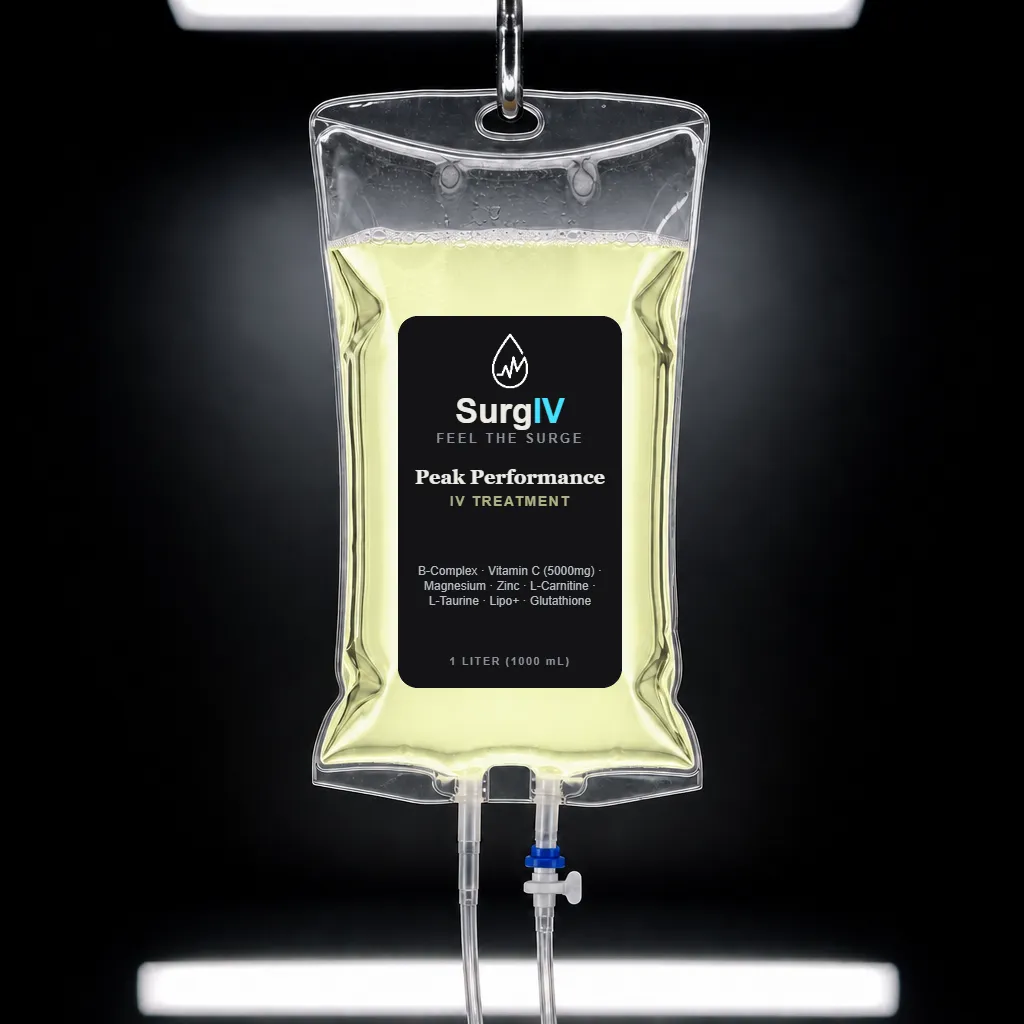
For the gap itself
Peak Performance $499
Hydration, minerals, B vitamins, aminos — the deficits normal labs don't price.
IV Bag: B-Complex · Vitamin C (5000mg) · Zinc · Magnesium · L-Carnitine · L-Taurine · Lipo+ + more
Craig, above the floor and climbing
Sleep study: negative (worth every dollar to know). Audit findings: 6.1 real sleep hours, coffee-to-water ratio indefensible, twelve drinks a week he'd have sworn was six. Three months of boring repairs plus a monthly drip, and his review at the follow-up — to the same honest doctor: "Labs still say normal. But now I do too." The panel measures the floor. Craig renovated the upstairs.
This article is for general education and is not medical advice. IV therapy at SurgIV is administered by registered nurses under physician-written protocols, with a health screening before your first visit. Talk to your doctor about what is right for you.