
2:47 AM, a bedroom in Palm Beach Gardens with the ceiling fan on high and the duvet in exile. A woman we'll call Diane, 52 — runs a title company, has out-negotiated every difficult party in the county — is awake for the second time tonight, damp, furious at no one, renegotiating the sheets. Tomorrow she will be flat by 2 PM, and when she mentions all of it at her annual physical, she'll get the phrase that made her switch doctors: "Well, that's just menopause."
Just. The transition that rewires sleep, temperature, mood and energy for years gets a just. So here's the briefing nobody schedules — honest about what wellness support can do, and adamant about what deserves a real doctor's full attention.
Why the energy cliff is a stack, not a symptom
The transition's fatigue isn't one mechanism — it's four running simultaneously, each draining the accounts the others need:
- The sleep fragmentation engine. Night sweats and 3 AM wakings don't just shorten sleep — they shred its architecture, cutting disproportionately into the deep stages where physical restoration happens. Diane's eight hours in bed are delivering five hours of value: the quality-vs-quantity problem with a hormonal accelerant.
- The sweat ledger. Unglamorous and real: nightly sweats are fluid and mineral losses — waking mildly dehydrated becomes the default, stacking the standard deficit symptoms (fog, headache, flatness) on top of everything else.
- The mineral spend-down. Magnesium — the sleep-quality and muscle-release mineral — depletes with stress and sweat exactly when it's needed most; the transition years are its perfect storm.
- The parallel slide. Underneath the hormonal transition, the age-related NAD⁺ decline is running its own program — two energy taxes, one decade, frequently billed as a single mysterious exhaustion.
"Just menopause" is four compounding drains dismissed in two words. The accounting deserves better.
The two-lane approach
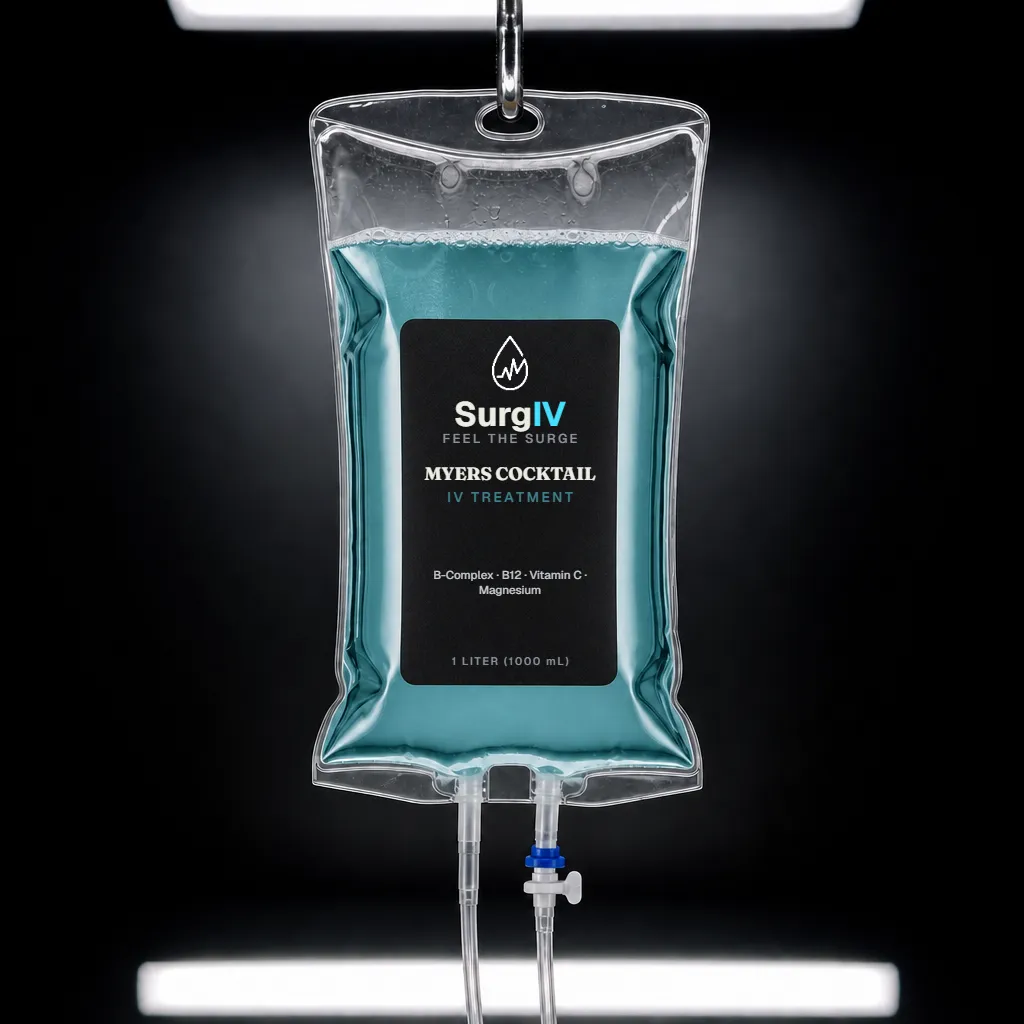
Lane one — the doctor's lane, driven assertively. The hormonal engine itself belongs with a physician who takes it seriously (they exist; Diane found one): modern HRT — whose current evidence base is dramatically friendlier than the 2000s headlines that frightened a generation away from it — plus thyroid screening (the great symptom mimic), iron if perimenopausal periods run heavy, and real mood support. Arrive with the symptom list written down; leave with a plan, not a just. Lane two — the supply lane, ours. While the doctor addresses the engine, wellness support funds the accounts the transition drains nightly: the Myers' Cocktail as the anchor — full-dose magnesium (the 3 AM mineral), the B family, a liter against the sweat ledger — on a monthly rhythm; members fighting the deeper parallel slide add the Surge's NAD⁺ layer. No hormone claims, no miracle language: supply-side support for a body doing genuinely hard work. The stack drains daily; the refill should be scheduled too.
The transition's supply line
Myers Cocktail $249
Hydration, magnesium and B vitamins — the accounts night sweats and broken sleep drain.
B-Complex · B12 · Vitamin C · Magnesium
Diane, renegotiated
A year on: a doctor who listens, an HRT decision made on current evidence rather than old headlines, and a monthly Myers' she books for the Friday after her worst sleep week. The 2:47 wakings still visit — less often — but the 2 PM collapse has been, in her words, "bought out of the deal." Her summary, delivered with title-company precision: "Turns out 'just menopause' was three fixable things and one manageable one. I don't accept vague terms in contracts. Stopped accepting them in exam rooms."
This article is for general education and is not medical advice. IV therapy at SurgIV is administered by registered nurses under physician-written protocols, with a health screening before your first visit. Talk to your doctor about what is right for you.