
12:35 PM, a lunch spot in Boca. Two friends, both 47, are conducting middle age's most popular seminar. A man we'll call Gerald — the $600-resort Gerald, whose education continues — pats his midsection and delivers the thesis: "Metabolism. Died at 43. I eat the SAME as college and look at this. Nothing you can do — it's biology." His friend nods the nod of shared fate. It's a comforting seminar. Comfortable, communal, and — per the largest metabolism study ever conducted — mostly wrong. Gerald's metabolism didn't die. It's barely changed since his sophomore year. Something else did, and it's on the to-do-list side of the ledger.
What the landmark study found
In 2021, Science published the field's reset: Pontzer and colleagues, ~6,400 subjects from infancy to old age, measured with doubly-labeled water — metabolic research's gold standard. The finding that reorganized the textbook: total energy expenditure, adjusted for body composition, is remarkably stable from roughly age 20 to 60. No midlife crash. No 40s cliff. The genuine decline begins after 60, at a modest ~0.7% per year. The famous metabolic death of middle age — the most-told story at every lunch table in America — simply doesn't appear in the data. Which raises Gerald's actual question: if the furnace didn't change, where did the calories go?
The metabolism has an alibi — the best-documented alibi in physiology. The weight came from somewhere else, and "somewhere else" is fixable.
The real suspects
Four, all unglamorous: muscle drift — mass declines without training, and muscle is metabolically expensive tissue; losing it genuinely lowers the daily burn, but that's body composition, not metabolic aging, and it reverses under load; activity drift — careers desk-ify, the pickup games fade, and the daily movement Gerald ran at 20 quietly halved without a single decision being made; sleep degradation — short sleep measurably shifts appetite hormones toward more hunger and worse choices, the lever nobody counts; and the drink math — alcohol calories, midlife's most under-reported line item. "I eat the same as college" is almost always true of the plates and false of the glasses, the steps, and the sleep.
Fate versus levers
Here's why the semantics matter more than they seem: "my metabolism died" is fate — untreatable, and comfortingly so. "My muscle declined and my activity drifted" is a checklist: strength training rebuilds the expensive tissue (the burn comes back with it); movement floors are schedulable; sleep is architecture; the glasses are countable. The comfort of the fate story is exactly its cost — it retires the levers. And the support layer slots in honestly: the Peak Performance panel funds the training-and-recovery engine (hydration, minerals, aminos, B vitamins) that the checklist runs on. No metabolism potion appears anywhere in this article, because none exists — which is, properly understood, the good news: nothing died. The levers still work.
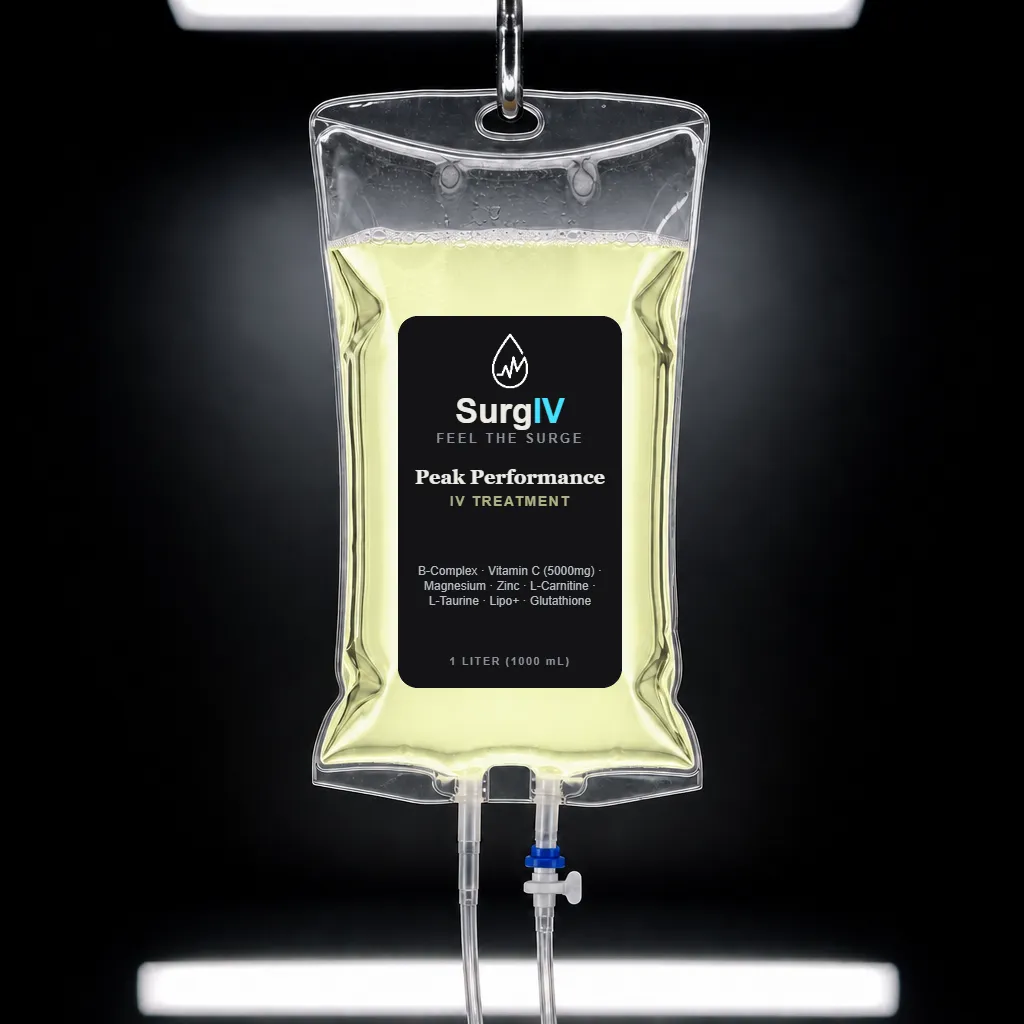
Fund the real levers
Peak Performance $499
Muscle, energy, recovery — the accounts that actually moved.
IV Bag: B-Complex · Vitamin C (5000mg) · Zinc · Magnesium · L-Carnitine · L-Taurine · Lipo+ + more
Gerald, seminar revised
He audited: gym twice weekly (restarted), steps floored at 8k, the wine arithmetic conducted with visible grief, sleep window set. Six months: fifteen pounds down, the lunch-table thesis formally retracted. His new seminar, delivered to the same nodding friend: "The metabolism was framed. It's been innocent since sophomore year. Arrest the couch, the pour, and the missing barbell — the case closes in six months."
This article is for general education and is not medical advice. IV therapy at SurgIV is administered by registered nurses under physician-written protocols, with a health screening before your first visit. Talk to your doctor about what is right for you.