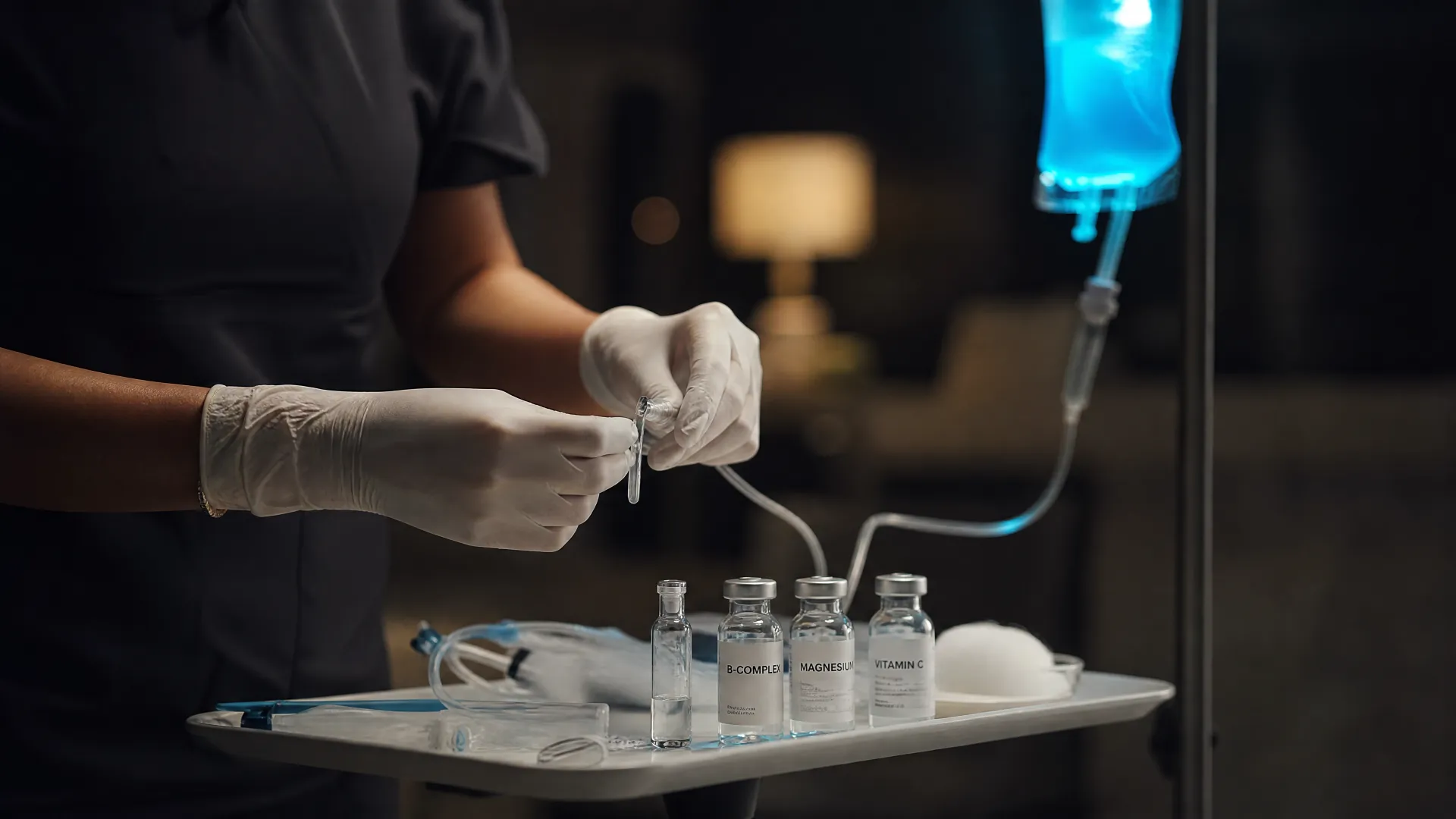
At a wine dinner in Palm Beach Gardens — the irony of the venue is noted — a member we'll call Caroline, 49, asked our founder the question that produces this article: "Explain something. I drink the same as I did at 35. Wine with dinner, more on weekends. But the COST changed — I feel it the next day now, and not just hangover-feel. Like... older-feel. Did the wine change, or did I?"
Neither, exactly. What changed is an account balance — and the wine has been drawing on it the whole time. Here's the metabolic story connecting every drink to your cellular battery, told honestly, boundaries included.
The chemistry: every drink is a withdrawal
Alcohol metabolism isn't magic — it's two liver-enzyme steps (alcohol → acetaldehyde → acetate), and here's the detail the wellness industry only recently noticed out loud: both steps consume NAD⁺ as their required cofactor. The same coenzyme your entire energy economy runs on gets converted to NADH to process every gram of ethanol — temporarily skewing the cell's NAD⁺/NADH ratio and sidelining the liver's other metabolic work (part of why blood sugar crashes into the next morning's shakes). A glass of wine is a small loan against the battery. A big Saturday is a bridge loan. The system repays and re-synthesizes — that's what livers do — but the repayment draws on the same NAD⁺ production capacity that declines every year after your thirties.
At 35, the wine borrowed from a full account. At 49, it borrows from a declining one. The wine didn't change. The collateral did.
Caroline's math, solved
Which answers the wine-dinner question precisely: the same consumption, run against a smaller base, produces the 'older-feel' — deeper next-day dips, the lengthening recovery arc, the sense that the social calendar started charging interest. It's the age-decline and the alcohol-spend compounding: two withdrawals, one account, and the account's automatic deposits shrinking annually. This is also — honesty checkpoint — the mechanism's whole story: alcohol spends NAD⁺; it doesn't make restoration a license. No infusion out-runs the pour rate, and the prevention playbook protects every account more cheaply than any restoration refills one.
The boundary paragraph (non-negotiable)
Because this topic attracts the industry's worst actors: there are clinics marketing NAD⁺ as an addiction cure, at five figures, to desperate families. Our line, from the myths piece, restated harder: addiction is a medical condition — detox can be genuinely dangerous unmanaged, and treatment belongs to physicians, therapists and real programs. What NAD⁺ restoration honestly offers is metabolic maintenance for healthy social drinkers — Caroline's use case, not a treatment for anyone's disease. And the caring version of the adjacent truth: if the volume-awareness math in this article feels impossible rather than informative, that's a doctor conversation worth having, and having early.
The social drinker's maintenance stack
For the Carolines — the wine-with-dinner, more-on-weekends demographic doing honest math: the prevention layer on drinking nights (meal, water ritual, pace — every account thanks you); the B-vitamin awareness (alcohol drains thiamine and friends alongside the NAD⁺ — the accounts travel together); and the restoration rhythm — the Surge's 500mg monthly-ish, refunding what the calendar borrows, with members like Caroline reporting exactly what the mechanism predicts: the next-day cost easing back toward its 35-year-old size. Not younger. Solvent. There's a difference, and it's the honest product.
Refund the loans
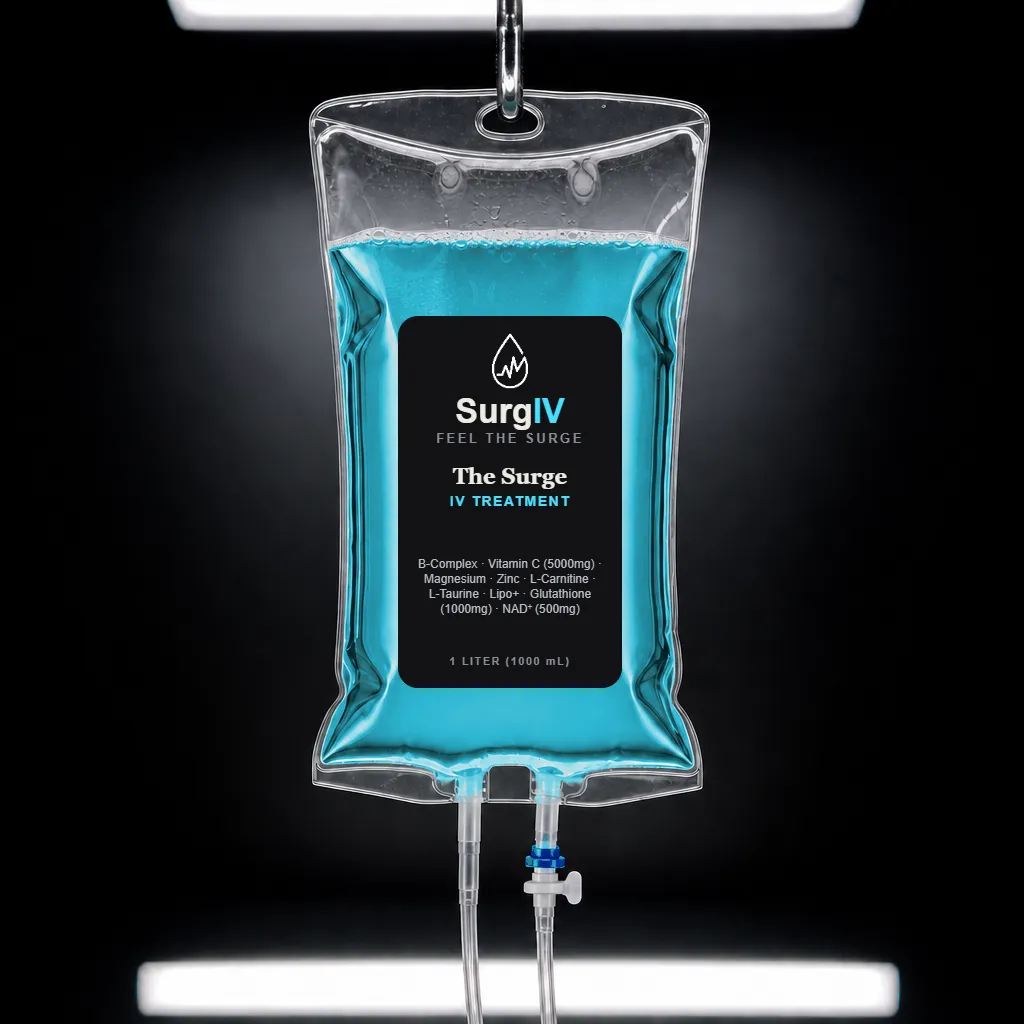
The Surge $899
500mg NAD⁺ plus the full formula — for social drinkers doing honest maintenance math.
IV Bag: B-Complex · Vitamin C (5000mg) · Zinc · Magnesium · L-Carnitine · L-Taurine · Lipo+ + more
Caroline, balanced
Her regimen since the wine dinner: the water ritual adopted ("the sommelier disapproves; my Tuesdays don't"), volume honest, monthly Surge on the books. Her verdict, delivered at the next dinner over a glass she enjoyed at full price and reduced interest: "Turns out I wasn't aging faster. I was over-drafting slower equipment. Now the ledger balances — and the wine's just wine again."
This article is for general education and is not medical advice. IV therapy at SurgIV is administered by registered nurses under physician-written protocols, with a health screening before your first visit. Talk to your doctor about what is right for you.