
There's tired, and then there's the fourth trimester. The tired where you calculate sleep in fragments. Where you've been awake at every hour the clock offers. Where "how are you?" gets the automatic "we're doing great!" while your body files a silent minority report.
Everyone warned you about the sleep. Here's what nobody itemizes: sleep deprivation isn't just an absence of rest — it's an active drain on physical accounts, and the newborn months drain them faster than any life phase you've been through. This is the guide for the version of you holding it all together at 3 AM.
What the newborn months actually spend
- Hydration, quietly. You're surviving on coffee, forgetting your own water while tracking someone else's intake to the milliliter — and if you're nursing, your fluid requirements jumped dramatically at exactly the moment self-care collapsed. Mild chronic dehydration's symptoms (fog, headaches, fatigue, mood dips) stack invisibly on top of the sleep debt.
- B vitamins, fast. Stress and disrupted sleep accelerate the burn rate of the exact vitamin family your energy production runs on — and they're water-soluble, so there's no reserve tank. Pregnancy and nursing draw on the same accounts.
- Minerals. Magnesium — the calm-and-sleep-quality mineral — depletes under stress precisely when the tiny windows of sleep you do get need to count double.
- Immune capacity. Under-slept immune systems run measurably weaker, right as the household's germ traffic increases. (The full strategy for that front: germ-season survival.)
You can't get the sleep back yet. You can get everything else back. That's not nothing — it's the difference between hard and grinding.
Why parents don't fix this (and the fix for that)
Every wellness suggestion aimed at new parents fails the same test: it requires leaving. The gym requires leaving. The massage requires leaving. Even urgent care for the sinus thing you've had for three weeks requires leaving, so it stays untreated. The defining constraint of this phase isn't money or willingness — it's that you cannot be elsewhere.
Which is why mobile delivery matters more here than for anyone else we serve: the Energy Boost IV happens in your living room, during a nap window, with you on duty the entire time. A registered nurse arrives, sets up quietly (they are, professionally, excellent around sleeping babies), and delivers the resupply — a liter of fluids, B12 and B-complex, the steady-energy stack — while you sit on your own couch, possibly holding your entire reason for being this tired.
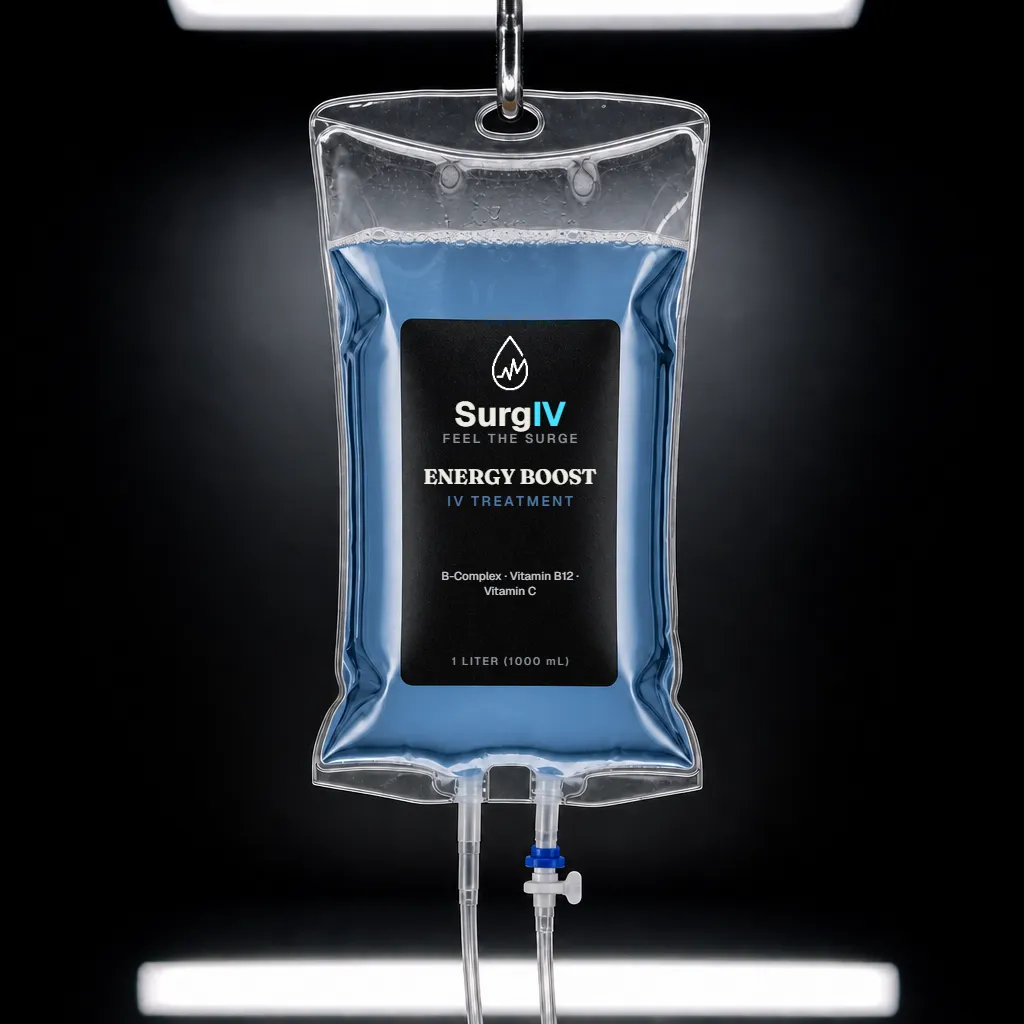
Care that comes to the nursery shift.
Energy Boost $249
A nurse at your home during nap time — hydration, B vitamins and steady-energy support, no babysitter required.
B-Complex · Vitamin B12 · Vitamin C
Permission, in writing
The real obstacle usually isn't logistics — it's the quiet parental math that says resources spent on yourself are resources taken from the baby. So here's the counter-math, from a company that watches it play out weekly: the baby's primary infrastructure is you. Your hydration, your energy, your immune function — that's the household's load-bearing system, currently running its hardest workload on its lowest inputs. Maintaining it isn't indulgence. It's infrastructure spending on the thing everything else depends on.
Partners: back-to-back sessions, one visit — you're both on newborn time. And to whoever forwards this article at 3 AM: you're doing better than you think. Refill the tank anyway.
This article is for general education and is not medical advice. IV therapy at SurgIV is administered by registered nurses under physician-written protocols, with a health screening before your first visit. Talk to your doctor about what is right for you.