3:17 AM, a dispatch center in West Palm Beach. A 911 dispatcher we'll call Renee, 39, eight years on nights, is at the console eating what she has privately named "the meal with no name" — not dinner, not breakfast, a protein bar and gas-station soup consumed at an hour her digestion has never once agreed to. Her body temperature is bottoming out on its ancient schedule, her fourth coffee is negotiating with her adrenal glands, and on the other end of the line she is, as always, the calmest voice in someone's worst night. Renee's question, asked during her first session with us, is the whole genre: "Is it supposed to feel like being permanently a little bit sick?"
No — but it will keep feeling that way until the maintenance matches the assignment. Night work is a physiological expatriation: you live in a country your body never emigrated to. Here's the manual nobody issues with the badge.
What inversion actually breaks
- The hormone schedule. Cortisol, melatonin, growth hormone — all released on a light-set clock that still thinks you sleep at night. Working against it means alertness chemistry arriving as you leave and sleep chemistry arriving mid-shift.
- Digestion. Your gut runs on the clock too — it's simply not staffed at 3 AM, which is why the meal-with-no-name sits like a stone and why night workers' gut complaints are near-universal.
- Thirst. Underrated and important: circadian inversion blunts thirst signaling, so night workers run the county's standing dehydration deficit plus a sensor that's stopped reporting it. Coffee-as-hydration finishes the job.
- Sleep itself. Day sleep against light, heat, lawn crews and life averages shorter and shallower — the recovery window is smaller exactly when the recovery need is larger.
- Immunity. The night-shift cold that everyone on the rotation shares isn't bad luck; under-slept, inverted immune systems run measurably weaker.
Night shift isn't a schedule. It's a country your body never agreed to move to — and it charges import taxes on everything.
The expat survival kit
The protocols that actually move the needle, from our nights-community members (dispatchers, nurses, deputies, bakers, hotel desk, plant operators): Light discipline — bright during shift, sunglasses for the morning commute (dawn is a "wake up" command; don't accept it), blackout room for sleep; it's the biggest lever and it's free. Caffeine translated — cutoff 8 hours before your sleep window, which kills the beloved, catastrophic 4 AM pot. An actual water plan — because your thirst sensor is off-duty; the console bottle with a schedule beats waiting for a signal that isn't coming. Protected anchor sleep — same window every day, defended from daylight-people obligations, because consistency is the closest thing to actually flipping the clock. And deficit maintenance — the Energy Boost IV booked on your schedule (our 10 AM is your evening; we know, and we come then): fluids for the silent deficit, B vitamins for the inverted burn rate, monthly as the floor, biweekly through brutal rotations.
On your schedule, not the sun's
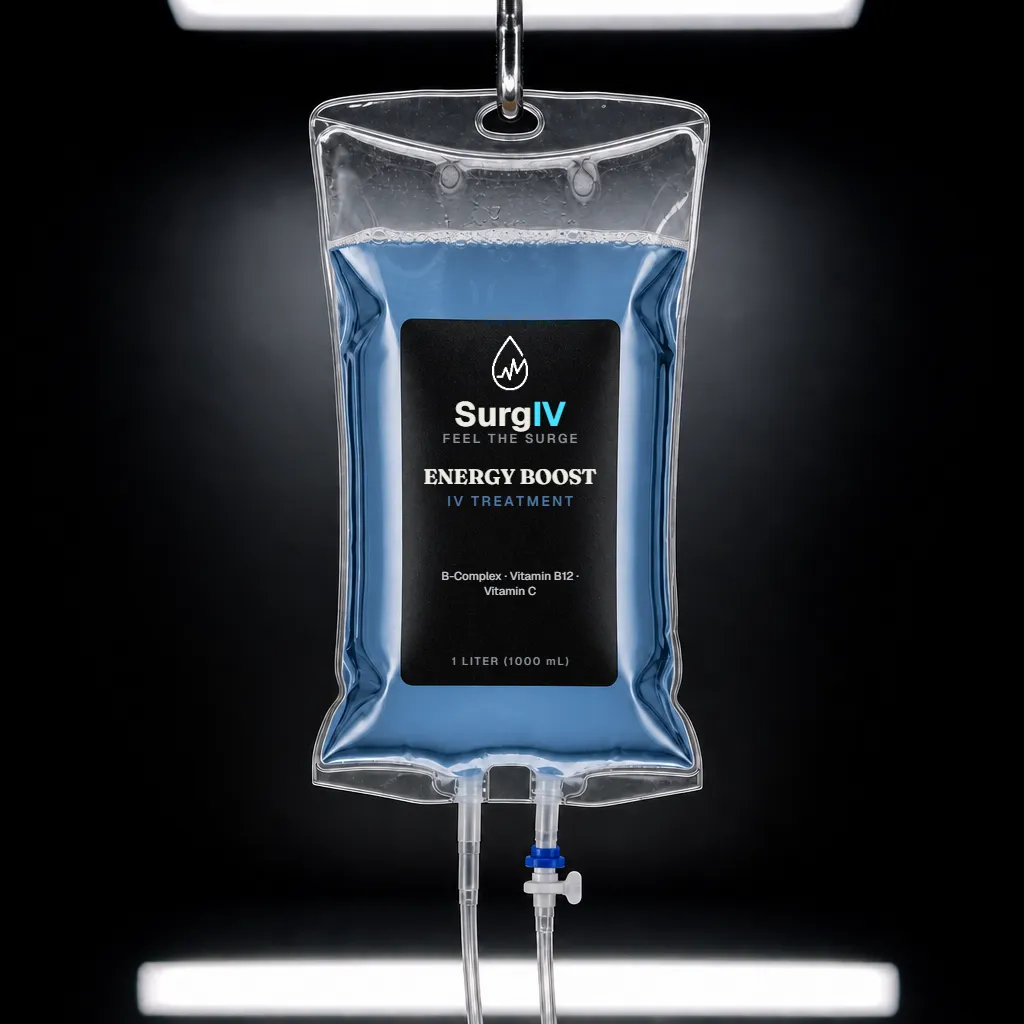
Energy Boost $249
Sessions booked around your nights — because your 9 AM is everyone else's midnight.
B-Complex · Vitamin B12 · Vitamin C
Renee, still on nights
Renee didn't leave nights — the differential is real and she's the best in that building at 3 AM. She left the permanent-little-bit-sick: light discipline, midnight caffeine cutoff, a monthly session at her Tuesday-morning "evening." Her assessment, delivered in dispatcher deadpan: "Turns out I wasn't broken. I was just running a body in a time zone it didn't have papers for. Got it the papers." The country of the night is survivable — with the right paperwork.
This article is for general education and is not medical advice. IV therapy at SurgIV is administered by registered nurses under physician-written protocols, with a health screening before your first visit. Talk to your doctor about what is right for you.