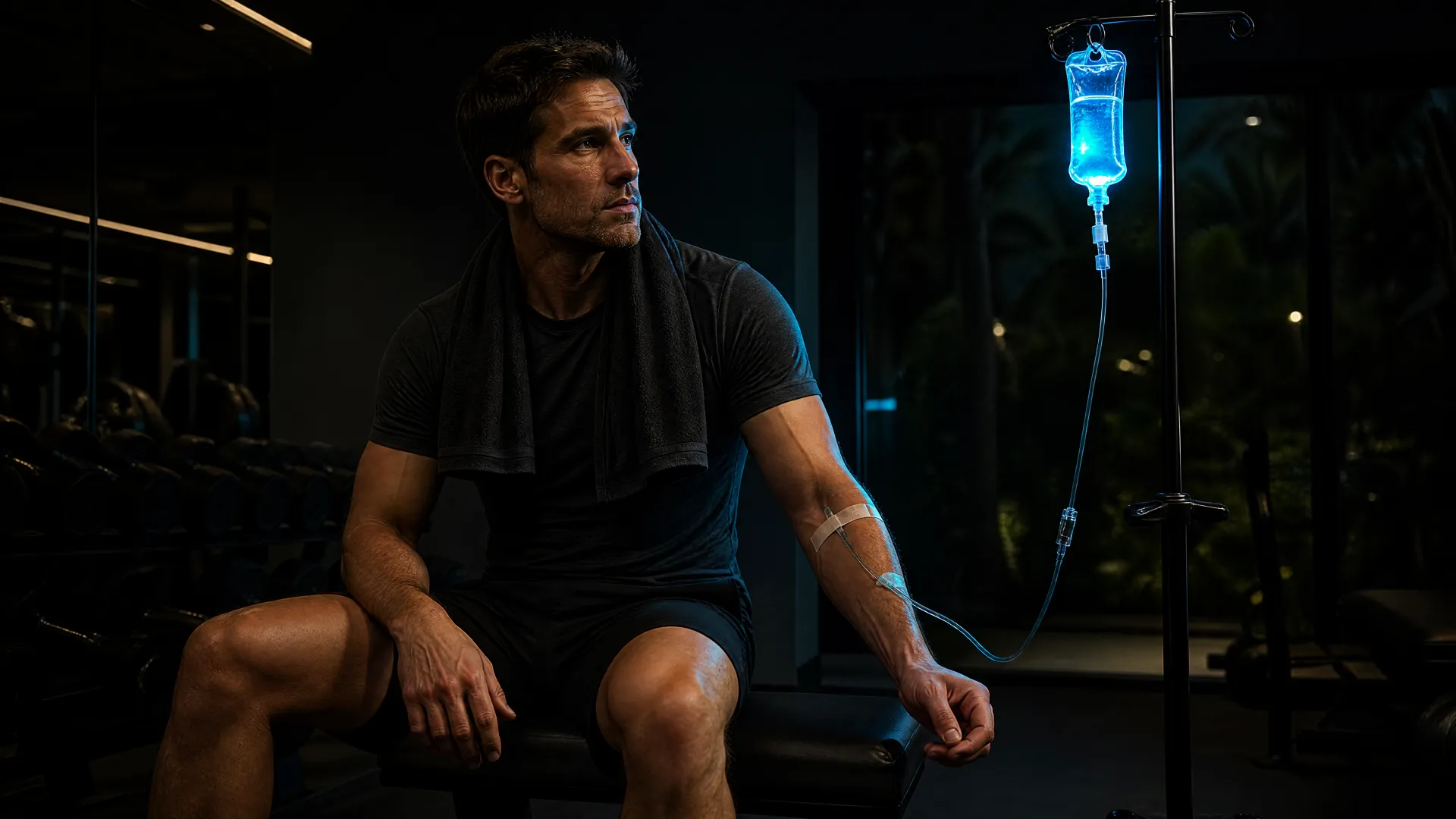
Somewhere in your thirties the contract changed and nobody told you. The same Saturday workout that used to cost you a day started costing two. Then two and a half. You stretched more, foam-rolled more, bought the massage gun, took the ice bath — and the recovery window kept widening anyway.
Here's the thing worth understanding: the soreness isn't the damage. The soreness is the construction site. And construction takes as long as the supply chain allows.
What recovery actually spends
After a hard session, your body launches one of the most resource-hungry programs it runs: clearing metabolic byproducts, calming the inflammation that training deliberately created, rebuilding muscle fiber stronger than before. Every step has a bill of materials:
- Water and electrolytes — the medium every repair reaction happens in. Training in Palm Beach heat, you start most recoveries already behind.
- Amino acids — the literal building material, plus compounds like L-carnitine and taurine involved in muscle energy metabolism.
- Antioxidants — hard training produces oxidative stress; glutathione, the body's master antioxidant, is central to cleaning it up.
- B vitamins and magnesium — cofactors the rebuild chemistry can't run without.
- Cellular energy (NAD⁺) — the rebuild is work, work takes energy, and the coenzyme that produces it declines year over year from your thirties on.
That last line is the one that explains the widening window. The repair program didn't get lazier. Its energy budget got cut — research suggests NAD⁺ levels fall substantially by middle age — so the same job runs on fewer resources and takes longer to finish.
Your recovery didn't slow down. It got underfunded.
Why the recovery gadgets only half-work
Massage guns, compression boots, ice baths — they help circulation and symptom management, and we're fans. But they all share a limitation: they move resources around; they don't add any. If the warehouse is empty, optimizing the forklift only does so much. Oral supplements try to restock it but hit the absorption ceiling — much of what you swallow never survives digestion, especially at meaningful doses.
Restocking at 100%
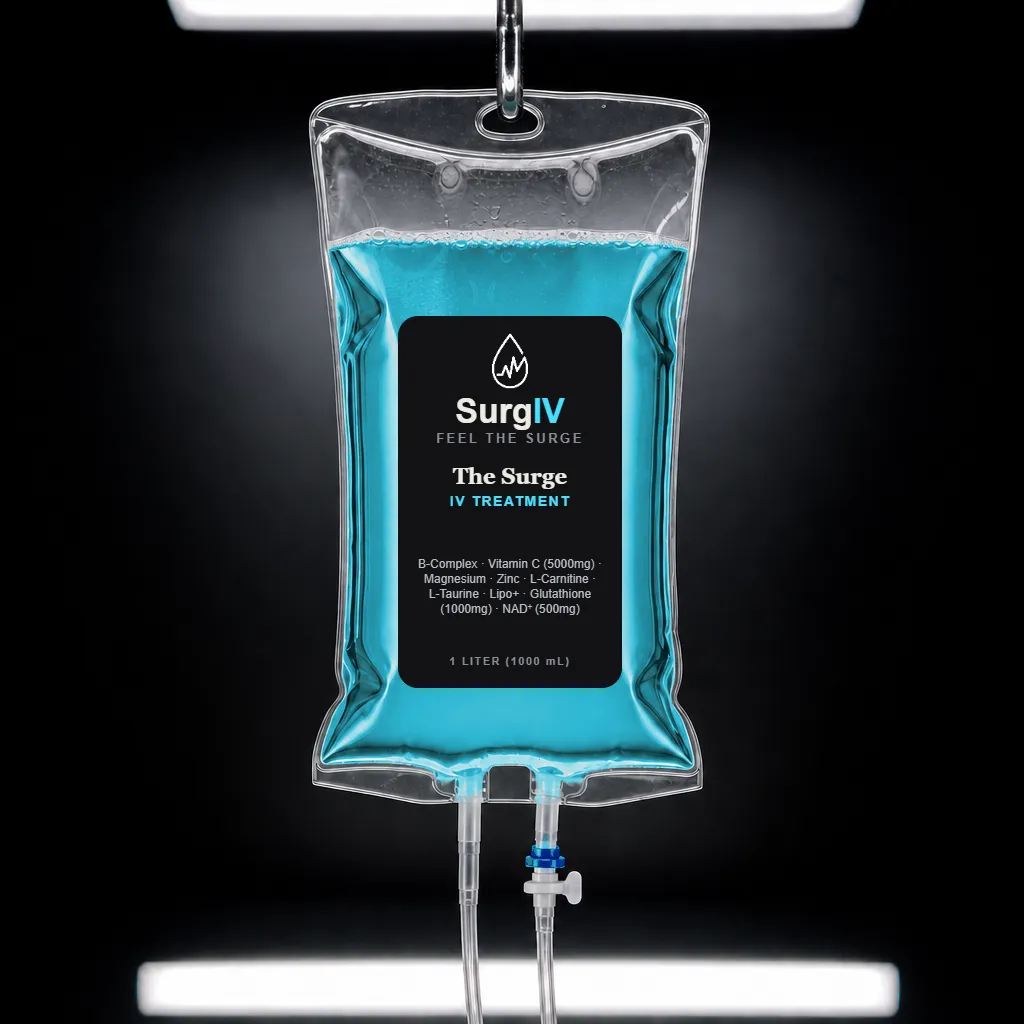
The Surge approaches recovery from the supply side: every ingredient the rebuild program bills for, delivered intravenously so the full dose reaches your bloodstream. A liter of fluids. The amino stack. Glutathione at 1000mg. The B family. Magnesium and zinc. And 500mg of NAD⁺ — refunding the energy budget the whole operation runs on.
Recovery, delivered.
The Surge $899
The complete rebuild stack — fluids, aminos, glutathione, B vitamins and 500mg NAD⁺ — brought to your door by a registered nurse.
IV Bag: B-Complex · Vitamin C (5000mg) · Zinc · Magnesium · L-Carnitine · L-Taurine · Lipo+ + more
The pattern members describe
We won't promise you a specific timeline — physiology varies, and IV therapy supports recovery rather than replacing sleep and sensible programming. But the member reports rhyme: "My squats went up and my legs actually feel fresh the next morning." "Trail runs used to wreck my knees for a week. Now I'm out again in two days." The recovery window stops widening and starts shrinking back toward what it was.
A registered nurse brings the entire session to your home or gym — 60 to 90 minutes, physician-supervised protocols, anywhere in Palm Beach County. You trained hard for the fitness. The recovery shouldn't be the thing that takes it away.
This article is for general education and is not medical advice. IV therapy at SurgIV is administered by registered nurses under physician-written protocols, with a health screening before your first visit. Talk to your doctor about what is right for you.