
7:52 AM, a hospital parking garage in West Palm. A med-surg nurse we'll call Jess, 34, has just finished the third twelve of a three-in-a-row, is sitting in her car with the keys unturned — the post-block sit, every nurse knows the post-block sit — and is doing the math she does for patients all day and never once for herself: On my feet since 6:45. Fluids today: one coffee at 5 AM, half a Diet Coke at 3. Last real meal: yesterday? I would flag this chart.
She would. Any nurse would. Which is the strange, tender irony this article lives in: the profession that runs the world's hydration and recovery infrastructure is the most under-recovered workforce in it.
The chart nobody writes
Score a 3x12 block like an intake: 24+ miles walked over three days. Fluid intake that would concern you in a patient (no drinks at the station, no time regardless). Meals eaten standing in the med room in the time it takes a pump to beep. Sustained adrenaline and decision-load for 36 working hours. Sleep windows compressed by commutes and cortisol. Then — for the rotating — a circadian flip on top. The resulting deficit — fluids, B vitamins, magnesium, the whole familiar panel — is one Jess would treat in a stranger without a second thought. In herself, it's filed under "just the job."
"I've hung ten thousand of these and never once had one." — the most common first-session sentence we hear from nurses
Why nurses make the best and worst patients
Best: they know exactly what's in the bag, ask the sharpest questions (our nurses love treating nurses — it's shop talk with a drip), and they screen honestly. Worst: the professional reflex that says care flows outward — the same reflex that has Jess flagging a colleague's dehydration while running on half a Diet Coke. There's also the busman's-holiday objection: I do this all day; why would I pay for it? The answer every converted nurse gives: because doing it and receiving it are different professions. Someone else palpates the vein. Someone else watches the drip. You lie on your own couch, compression socks finally off, and are — for seventy-five minutes — the patient. Several tell us that part matters as much as the liter.
The block-recovery protocol
What our healthcare members converge on: fluids during blocks wherever the unit allows (the water bottle in the break room, actually used), the first-day-off slot for the All-Inclusive — the full panel, because a block drains the full panel — and honest sleep protection on off days instead of the revenge-scrolling everyone earns and regrets. Units increasingly book group sessions after brutal stretches; the group chat screenshots we get from those are among our favorite possessions.
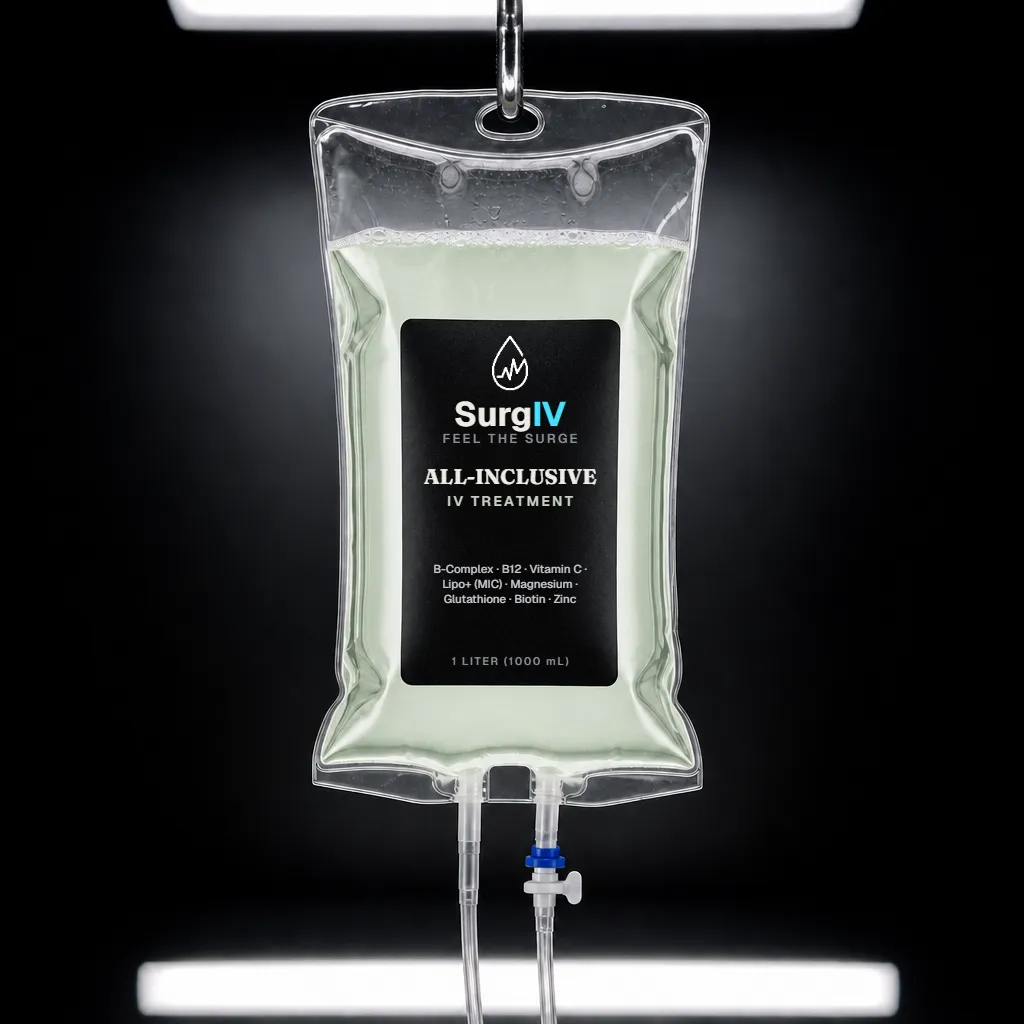
For the ones who know exactly what's in the bag
All-Inclusive $349
The full formula, administered to you for once — by an RN who gets it.
B-Complex · B12 · Vitamin C · Lipo+ (MIC) · Magnesium · Glutathione · Biotin · Zinc
Jess, off-block
Jess books the morning after every third block now — 10 AM, her couch, a nurse she's become friends with, the shop talk flowing both ways. Her review, which our whole company has memorized: "Best part isn't even the bag. It's that for one hour, I'm not the one watching the drip." To every nurse reading this at 3 AM on a break that isn't really a break: you'd order this for a patient with your chart. Be the patient. We'll bring everything — you don't even have to chart it.
This article is for general education and is not medical advice. IV therapy at SurgIV is administered by registered nurses under physician-written protocols, with a health screening before your first visit. Talk to your doctor about what is right for you.