10:40 AM, Saturday, an outdoor court in Boynton Beach, third game of the morning, next point wins. A man we'll call Terrell, 34, checks the ball, drives baseline, scores through two defenders, and collapses into the shade with the grin of a man at his weekly church. Total elapsed court time: two hours, forty minutes. Water consumed: most of one bottle. Air temperature: 94. Court temperature: significantly worse. That evening, the grin's invoice arrives — a headache like a full-court press and calves twitching like they're still boxing out. His text to the group chat: "why am I DESTROYED, we were just hooping"
"Just hooping," measured honestly
Put a lab on Terrell's morning and it stops being casual: full-court basketball is near-continuous interval work — sprint, defensive shuffle, jump, repeat — and pickup's structure removes every governor: games run to a score, not a clock; winners stay, so the best players rest least; and "next point wins" is a euphemism for maximal effort, indefinitely. Stack the venue: Florida asphalt banks sun all day and radiates it back at ankle height, running court-level temperatures well past the forecast — you're doing intervals inside a griddle's convection zone. Three hours of that is a conditioning session college strength coaches would schedule carefully, executed weekly by men who describe it as hanging out.
The weather app measured the air. Nobody measured the asphalt. The asphalt is where the game happens.
The sideline ledger
The morning's fluid bill runs liters, front-loaded with sodium, and the standard sideline provision — one water bottle, warm by game three — covers a fraction of it. The receipts arrive on schedule: the game-five calf cramp (the court's most reliable event), the crushing evening headache, the Sunday flatness that gets blamed on age. The heat-safety ladder applies to grown men too — the summer courts produce their share of genuinely scary moments, and the guy who goes quiet and stops sweating is everyone's business, immediately.
The regular's protocol
Before: electrolytes with breakfast — arrive funded, the way every heat discipline learns. During: a real cooler (the vets bring one; be a vet), electrolyte drink between games, shade breaks honored without machismo. After: the two-currency repayment — fluids plus salts plus real food, not just the drive-thru sweet tea. The summer schedule: for the three-runs-a-week faithful, that's a training camp by any measurement, and it deserves a camp's recovery infrastructure — the periodic full reset that clears the compounding before it becomes the season-ending calf strain in August. Winners stay. Recovered winners stay longer.
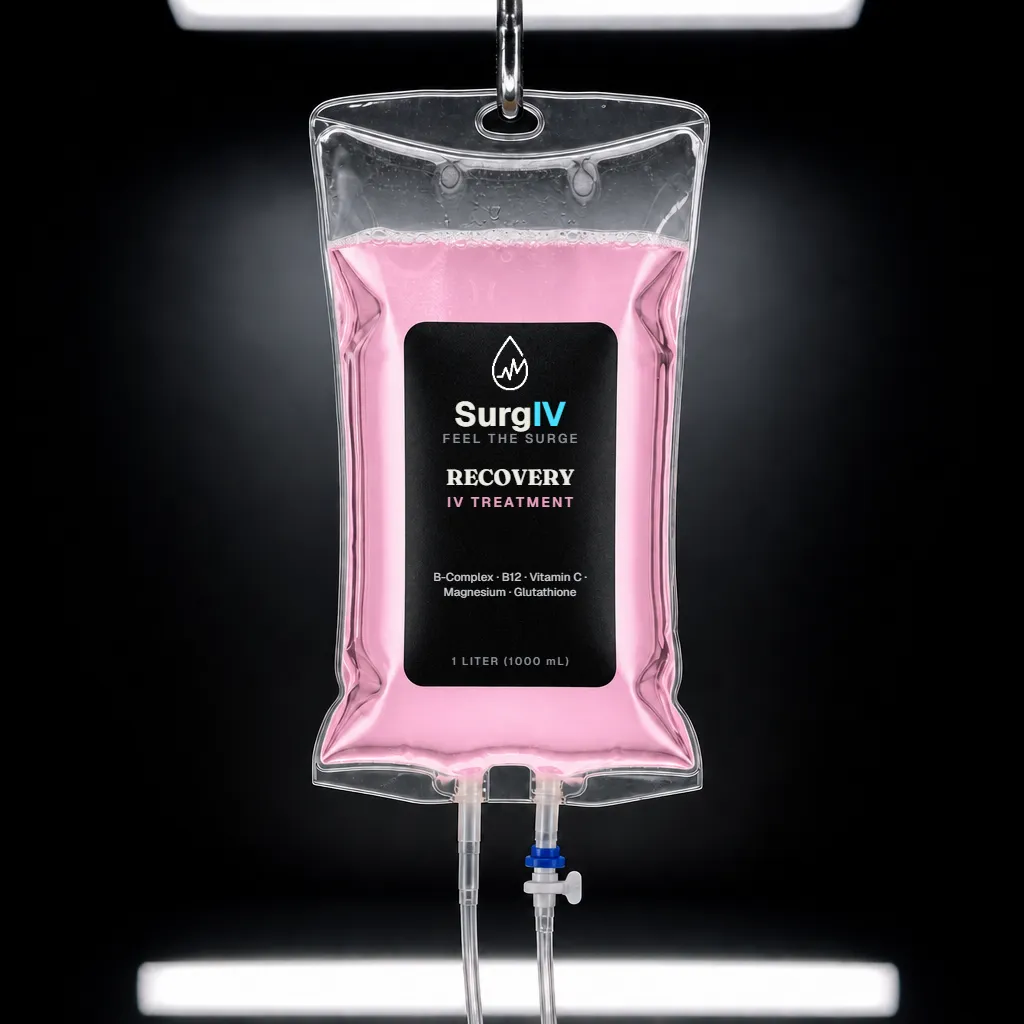
For the regulars
Recovery $299
Three runs a week in summer is training camp. Recover like it.
B-Complex · B12 · Vitamin C · Magnesium · Glutathione
Terrell, elder statesman
He bought the cooler — instantly the most popular man at the court — instituted electrolytes-between-games, and books a drip after the monthly all-day tournament runs. The evening headaches retired; the game-five calf hasn't cramped since June. His courtside ruling, delivered while restocking the cooler: "We're not 'just hooping.' We're doing three-hour intervals on a griddle. Fund it like the sport it is and you get to keep playing it at 40."
This article is for general education and is not medical advice. IV therapy at SurgIV is administered by registered nurses under physician-written protocols, with a health screening before your first visit. Talk to your doctor about what is right for you.