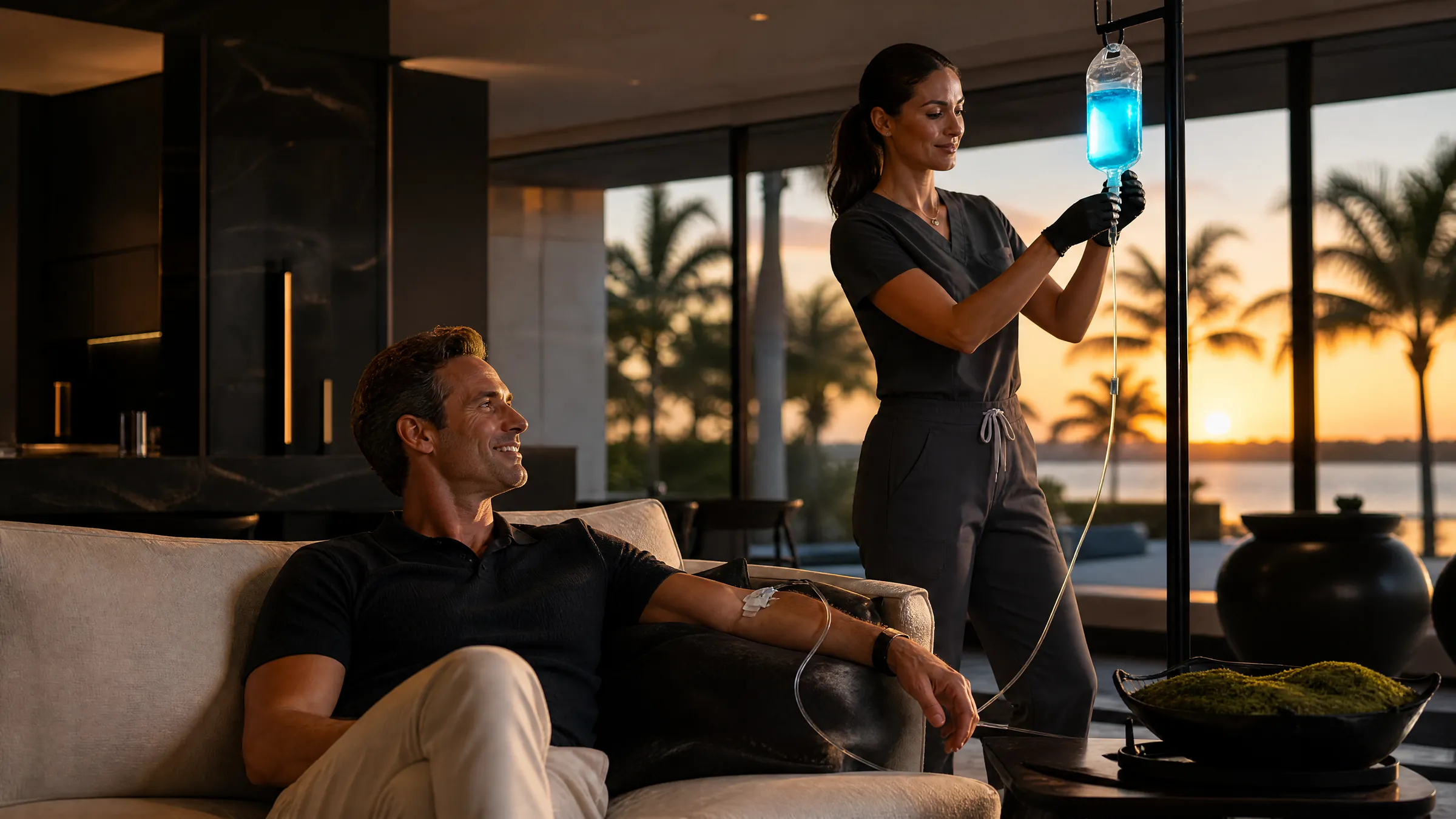
Eighteen months ago, a client we'll call Andres, 45 — former college tennis, retired knees, or so he claimed — was dragged to a glass-walled court in West Palm by a Spanish colleague who promised "tennis, but fun again." Today Andres owns four padel racquets, plays five sessions a week, follows the pro tour, and has attempted to convert, by his wife's count, "everyone we have ever met, including a waiter." His knees, remarkably, love it. The rest of his body filed its first complaint last month, during his third match of the day: "Why," he asked the glass wall, mid-lunge, "am I this destroyed by the fun one?"
Because the fun one is a workout wearing a party costume — and it's multiplying across Palm Beach County faster than any racquet sport since pickleball. The early-adopter's recovery guide.
The rally tax
Padel's genius — the walls keep everything in play — is also its physiological signature: rallies run two-to-three times longer than tennis points, converting the sport into sustained work with fewer between-point resets. The movement vocabulary compounds it: constant lunging (the walls reward retrieval), overhead smash-and-recover sequences, and doubles positioning that never lets you coast. An hour of padel delivers more continuous output than an hour of its cousins — the exact profile of the small-court deception, at higher tempo. And Florida adds its signature levy: the glass that makes the sport blocks the breeze that cools it. Enclosed and semi-enclosed courts strangle airflow, and in a dew-point state where evaporation was already losing, a summer session's sweat math runs greenhouse rules. Andres's third-match destruction wasn't age. It was arithmetic in a terrarium.
"Why am I this destroyed by the fun one?" — every padel convert, month three, mid-lunge
The addiction curve (and its recovery gap)
The sport's growth engine — easier entry than tennis, more dynamism than pickleball, structurally social — produces the same curve that made pickleball a recovery story: enthusiasm scales frequency faster than bodies adapt. Nobody plays padel once a week; the club culture and group chats see to that. Five sessions weekly of sustained lunge-and-smash work, in terrarium heat, on bodies that were sedentary eighteen months ago — that's the profile filling our schedule with padel converts, presenting the classic trio: the shoulder (overhead volume), the calves and adductors (the lunge economy), and the general widening-window fatigue of over-40 athletes whose sport found them mid-decline.
The convert's protocol
What the sustainable five-day players run: the terrarium hydration rule — electrolyte fluids at every changeover, treated like the enclosed-court sport it is, plus the same-day settlement after multi-match days; the trio maintenance — shoulder mobility, calf and adductor work before first serve (the sport's injury map is predictable; pre-pay it); one defended rest day — against a group chat that, as with pickleball, will absolutely try to steal it; and the weekly anchor for the 4+ crowd — the Recovery IV after the heaviest day: fluids for the greenhouse math, aminos for the lunge economy, magnesium for the smash-hand forearms. Andres's crew books it as a foursome after Saturday's session — the fifth-game format, glass-court edition, match replayed wall-bounce by wall-bounce.
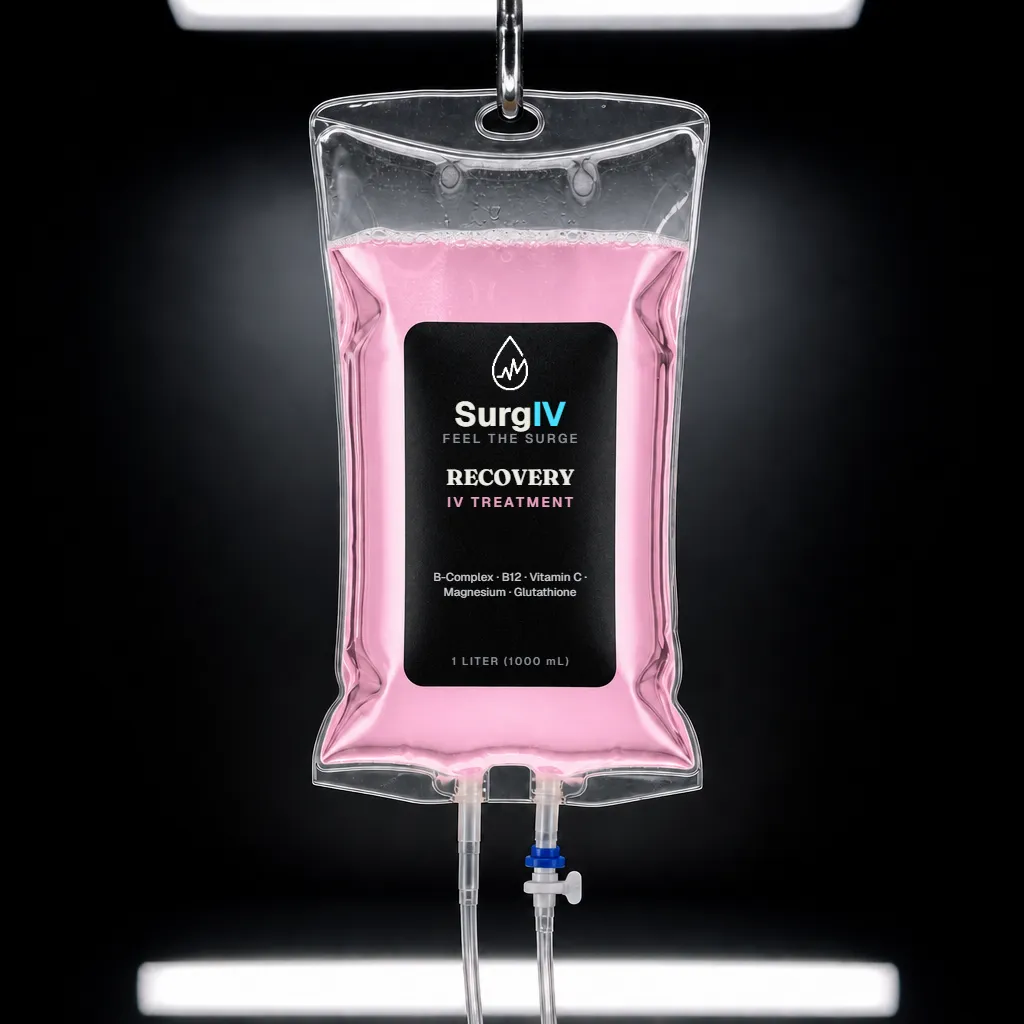
For the padel-addicted
Recovery $299
Fluids, aminos and minerals after the week's sessions — the fourth-match legs, restored.
B-Complex · B12 · Vitamin C · Magnesium · Glutathione
Andres, evangelist, sustainable
Current status: five sessions weekly, zero destroyed third matches since the protocol, the waiter successfully converted ("he's a lefty with hands, I knew it"), and a testimonial that captures the whole sport: "Padel gave me back the athlete. The recovery plan is how I keep him." The courts are multiplying, county. Get in early — and recover like you plan to stay.
This article is for general education and is not medical advice. IV therapy at SurgIV is administered by registered nurses under physician-written protocols, with a health screening before your first visit. Talk to your doctor about what is right for you.