
There's a specific walk of shame that has nothing to do with last night's outfit: the 9 AM shuffle down the pediatric aisle of a Publix in flip-flops and sunglasses, reaching past the diaper cream for a bottle of Pedialyte while avoiding eye contact with an actual parent buying it for an actual child. You know the walk. Half of Palm Beach County has done the walk.
Here's the good news for everyone in sunglasses: the instinct is correct. Pedialyte is legitimately good rehydration — arguably the best thing in the store for the job. And here's the rest of the story: it's still an oral product, adult-sized problems have a way of outgrowing the pediatric aisle, and knowing the crossover point is the difference between a saved morning and a wasted one.
Why the kids' drink beats the sports drink
Pedialyte was engineered as a medical-grade oral rehydration solution for children with vomiting and diarrhea — which means, unlike sports drinks built to fuel mid-exercise athletes, its entire formula is optimized for one job: getting fluid and electrolytes into a depleted body. The ratios show it: meaningfully more sodium and potassium than a sports drink, far less sugar (excess sugar actually slows rehydration and can worsen diarrhea — the classic sports-drink mistake on a sick stomach). For a dehydrated adult, drinking the children's medical formula instead of the athlete's candy water is simply choosing the right tool. The secret got out decades ago; the company now openly markets to the hungover. Everyone knows. Wear the sunglasses anyway.
Pedialyte is what sports drinks pretend to be. It's still a drink.
Where grown-up problems outgrow it
Every strength above operates inside the oral route — and the oral route has the same three walls it always has. The rate wall: perfect ratios still absorb at the gut's half-liter-ish hourly pace, so a multi-liter adult deficit (the boat day, the flu week, the wedding weekend) remains an all-day project no matter how medical the label. The gut wall: active nausea gates every sip — and the situations Pedialyte was literally designed for (vomiting illnesses) are the ones where adults often can't keep it down either. And the scope wall: fluid and electrolytes are one injury of several — the hangover's B-vitamin burn and inflammation, the stomach bug's need for actual anti-nausea medication, none of it lives in that bottle.
The crossover rule
Use the pediatric aisle when: the deficit is modest, the stomach is accepting deliveries, and time is on your side. Skip to the IV route when: sips aren't staying down, the hole is multi-liter with a deadline, or you need the full counter-formula (fluids + electrolytes + anti-nausea medication + B vitamins) rather than fluids alone. Same decision logic as every oral-vs-IV question — the formula was never the limit; the door was.
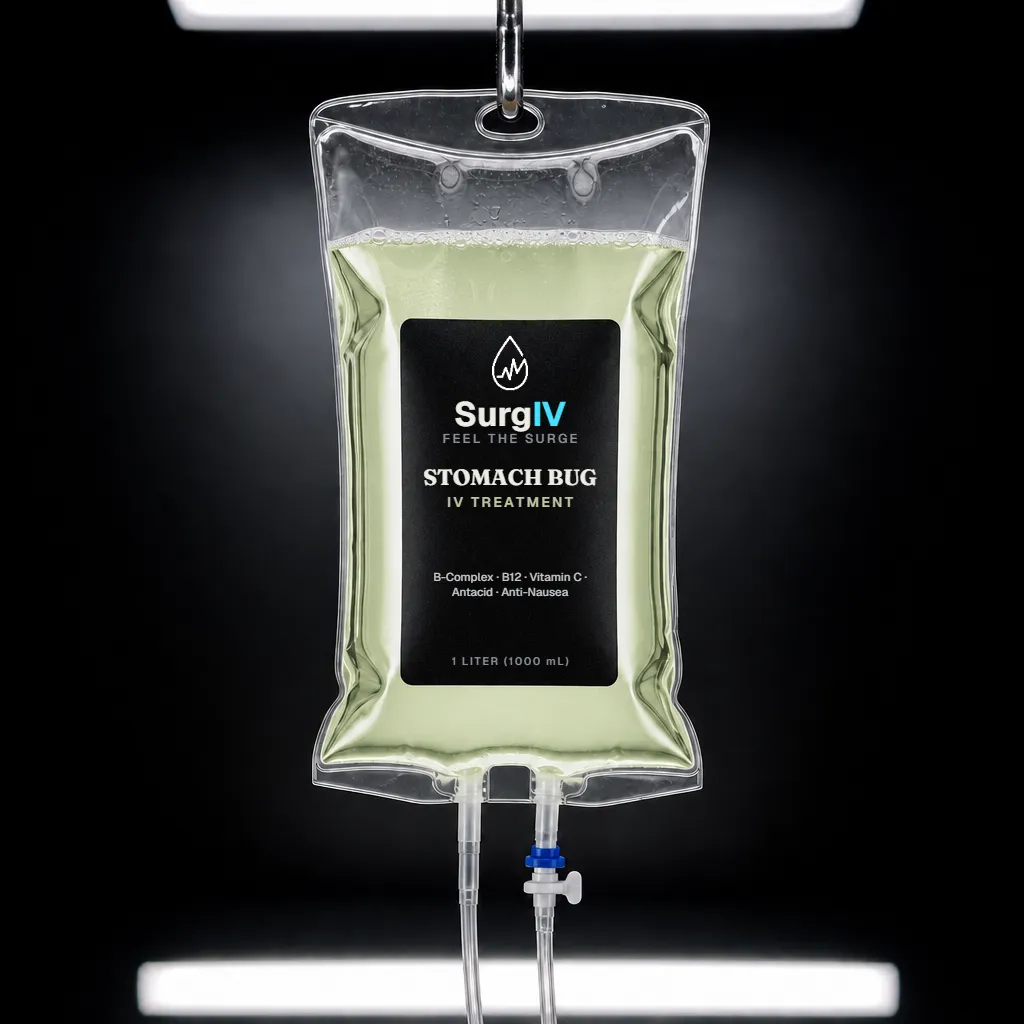
When sipping isn't happening
Stomach Bug $249
Fluids, electrolytes and anti-nausea medication — past the blockade entirely.
B-Complex · B12 · Vitamin C · Antacid · Anti-Nausea
The aisle, graduated
One of our regulars — a 44-year-old attorney who did the Publix walk for fifteen years before finding us — puts it in terms we can't improve: "Pedialyte is the minor leagues of feeling better. Great fundamentals. But some mornings you need to get called up." Keep a bottle in the fridge for the minor-league mornings. Save our number for the call-ups — no sunglasses required; the nurse comes to you.
This article is for general education and is not medical advice. IV therapy at SurgIV is administered by registered nurses under physician-written protocols, with a health screening before your first visit. Talk to your doctor about what is right for you.