If you train seriously, you've had the conversation. Someone at the gym is on a peptide protocol — BPC-157 for the shoulder, something else for sleep, an acronym for fat loss — and the results sound amazing and the vials arrive from a website with a name like a password. And you wonder: is this the future, or is this the thing we'll all pretend we never did?
We sell IV therapy, so read this knowing where we stand. But we'd rather give you the honest comparison than the salesy one, because informed members stay members.
What peptides actually are
Peptides are short chains of amino acids that act as signaling molecules — instructions, essentially, telling cells to do more of something: release growth hormone, accelerate tissue repair, alter appetite. Some have become fully FDA-approved drugs after clinical trials. The ones circulating in gym culture are mostly different: compounds sold as "research chemicals," not approved for human use, produced by unregulated labs, purchased online, and self-injected.
Three problems follow from that, and none of them are hypothetical:
- Sourcing. Unregulated means unverified — purity, dosage, sterility, even whether the vial contains the compound on the label. You are trusting your bloodstream to a supplier no one audits.
- Evidence. Much of the excitement rests on animal studies and anecdotes. Long-term human safety data for most performance peptides simply does not exist yet. Early adopters are, functionally, the trial.
- Oversight. Self-injection protocols from forum posts, without labs, screening, or a clinician who knows your history. Reports of severe reactions are easy to find.
The question isn't whether peptides are interesting. It's whether you want to be the long-term study.
The other path: restore what's already yours
Now the comparison. NAD⁺ is not a novel signaling compound — it's a coenzyme your body has used in every cell since before you were born, central to how mitochondria produce energy. It declines with age; the case for restoring it is about returning your own system to its own earlier operating levels. The same logic runs through everything in The Surge: vitamins, minerals, amino acids, glutathione — molecules with decades of human use, delivered at full IV doses under medical protocols.
That's the philosophical difference in one line: peptides introduce new instructions; The Surge restores the machine's own supplies. One is an experiment on your biology. The other is maintenance of it.
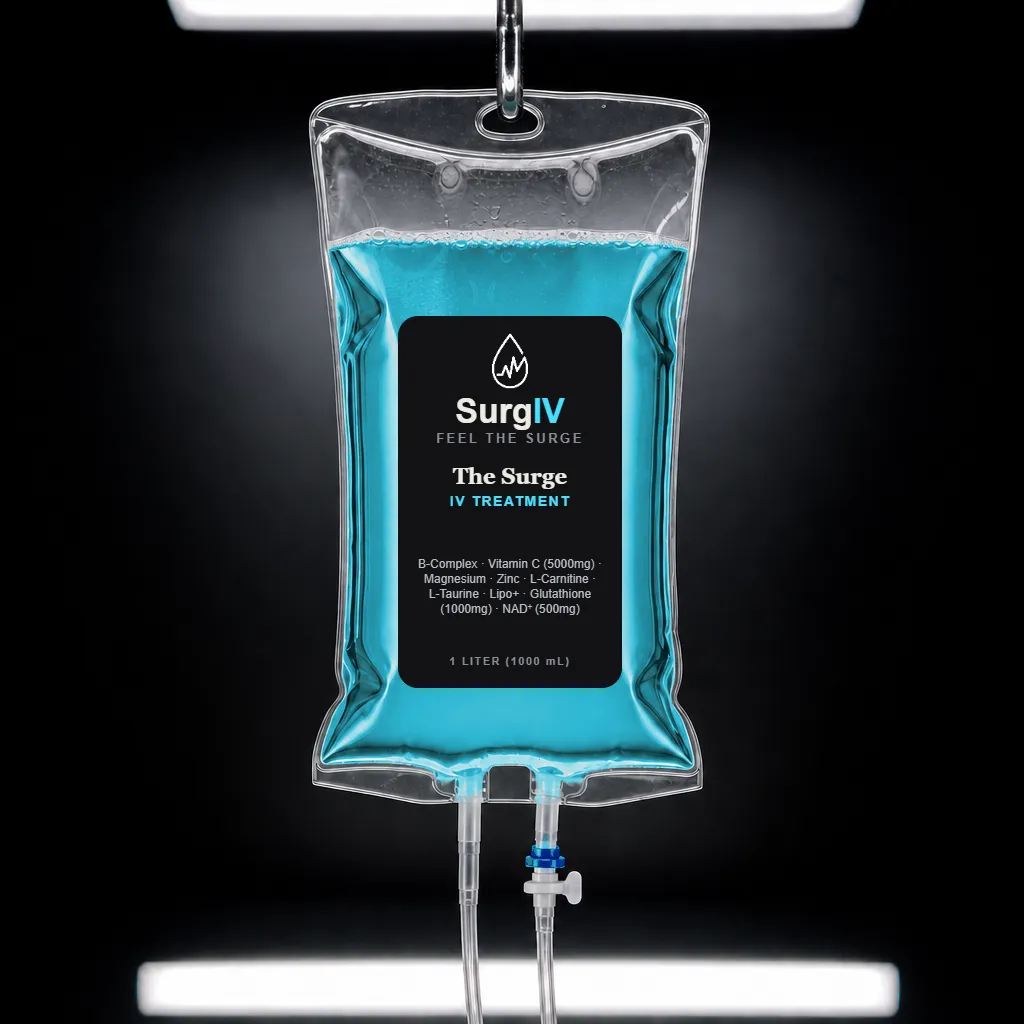
Nothing experimental. Nothing gray-market.
The Surge $899
Vitamins, minerals, aminos, glutathione and NAD⁺ — molecules your body already uses, at full IV doses, RN-administered.
IV Bag: B-Complex · Vitamin C (5000mg) · Zinc · Magnesium · L-Carnitine · L-Taurine · Lipo+ + more
Where we land
If a licensed physician you trust prescribes a legitimate, pharmacy-sourced peptide for a specific problem — that's medicine, and it's between you and them. What we'd push back on is the default forming in performance culture: exotic first, foundation never. Most people running gray-market protocols have never once experienced their own body fully hydrated, fully resourced, with cellular energy restored — which costs less, risks almost nothing, and is available legally, today, at your house.
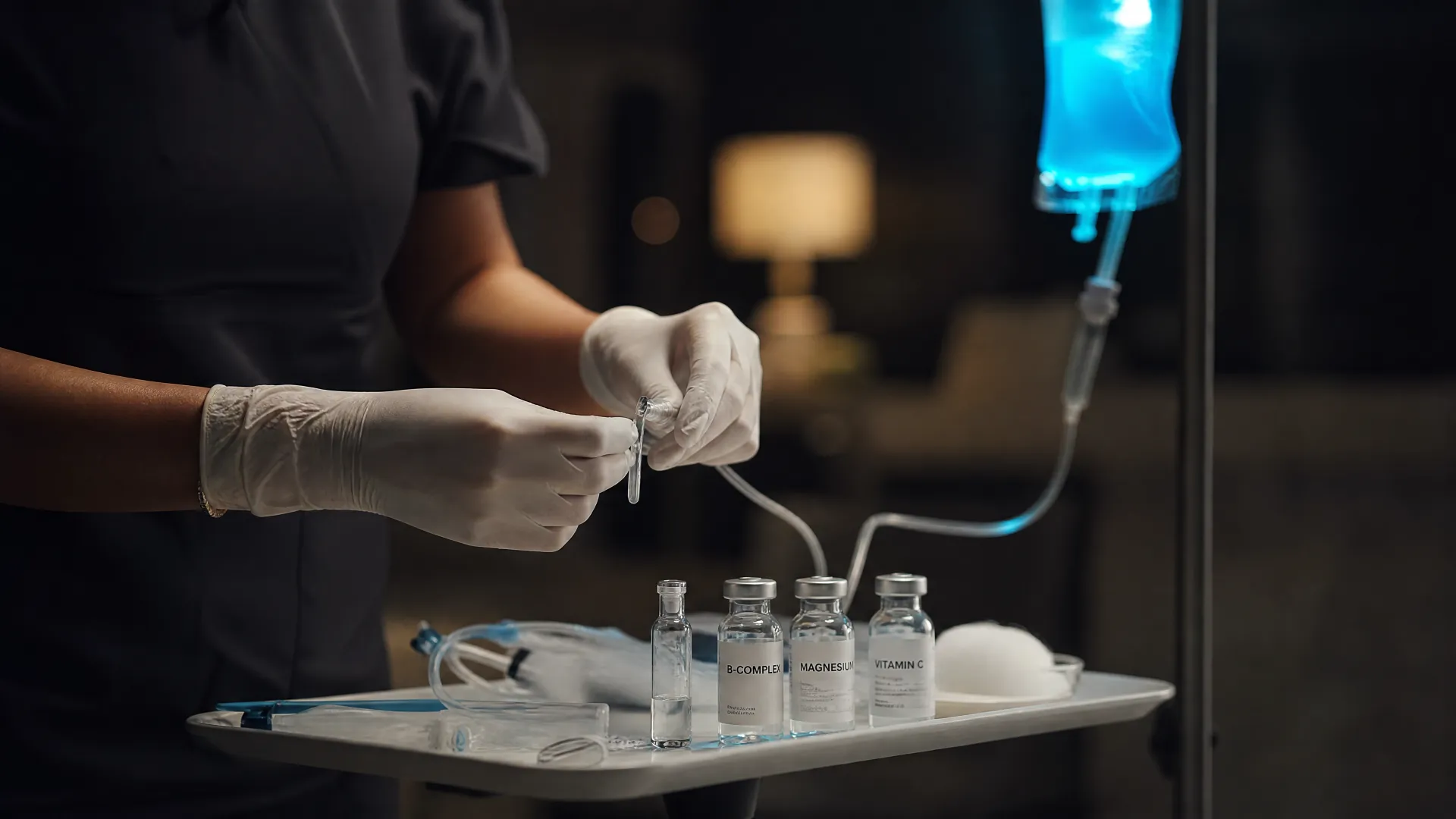
Run the boring experiment first. A registered nurse, a physician-supervised formula, 90 minutes on your own couch. See what your baseline actually feels like before you start rewriting the instructions.
This article is for general education and is not medical advice. IV therapy at SurgIV is administered by registered nurses under physician-written protocols, with a health screening before your first visit. Talk to your doctor about what is right for you.