
1:40 AM, a closed kitchen off Atlantic Avenue in Delray. The line is wiped down, the hood fans are finally quiet, and a sous chef we'll call Marco, 31, is sitting on an overturned bus tub with a shift beer, doing the industry's oldest math: doubles Friday and Saturday, brunch service in nine hours, and a body that feels — his word — "pre-owned." Around him, the floor staff counts tips and someone proposes the bar next door, and Marco knows exactly how this goes, because it goes this way every Saturday of season: the industry that feeds Palm Beach County eats itself.
The shift, itemized
Nobody outside hospitality believes the physical numbers. The line: 90–110°F at the rail, ten hours over flame, a sweat rate that rivals summer training — hydrated by espresso and maybe a quart of water if the expo window slows. The floor: eight to twelve miles a shift on concrete, trays overhead, a voice used for six straight hours (talking is real fluid loss), dinner eaten standing at 4:30 or not at all. Both jobs end the same way: a 1 AM adrenaline peak precisely when sleep should start, resolved by the industry's universal medicine — the shift drink — which quietly converts today's depletion into tomorrow's compound interest. Then brunch. Then again. Season is four months of this without a true weekend, because your weekend is everyone else's Tuesday.
Hospitality runs the best preventive maintenance in the world on its equipment. The fryer gets more scheduled care than the sous chef.
Why season eats staff by February
The pattern every GM in the county knows: staff arrive in November strong, run brilliant through the holidays, and by February the sick calls stack, the tempers shorten, and the best line cook in the building is running on Celsius and spite. It isn't weakness — it's the same compounding-deficit spiral athletes hit, run on hospitality hours: every shift ends in the red, no shift starts at zero, and the ledger compounds until bodies file for bankruptcy in the middle of the busiest month. The house loses its best people at peak revenue. The math is bad for everyone.
The industry protocol
What our hospitality members (and the smart operators who book for their teams) actually run: a real water container at the station — the single highest-ROI change on any line; food before service like it's mise (you'd never run the line without prepped stations; your body is a station); and the anchor — the Recovery IV on industry hours: noon on Monday, the hospitality Sunday. Fluids for the line-heat losses, aminos for the ten-hour-standing rebuild, B vitamins for the burn rate, magnesium for the 1 AM wind-down that never winds down. A few restaurant groups now book team sessions before the holiday push — the rare season expense that pays for itself in February's staffing chart.
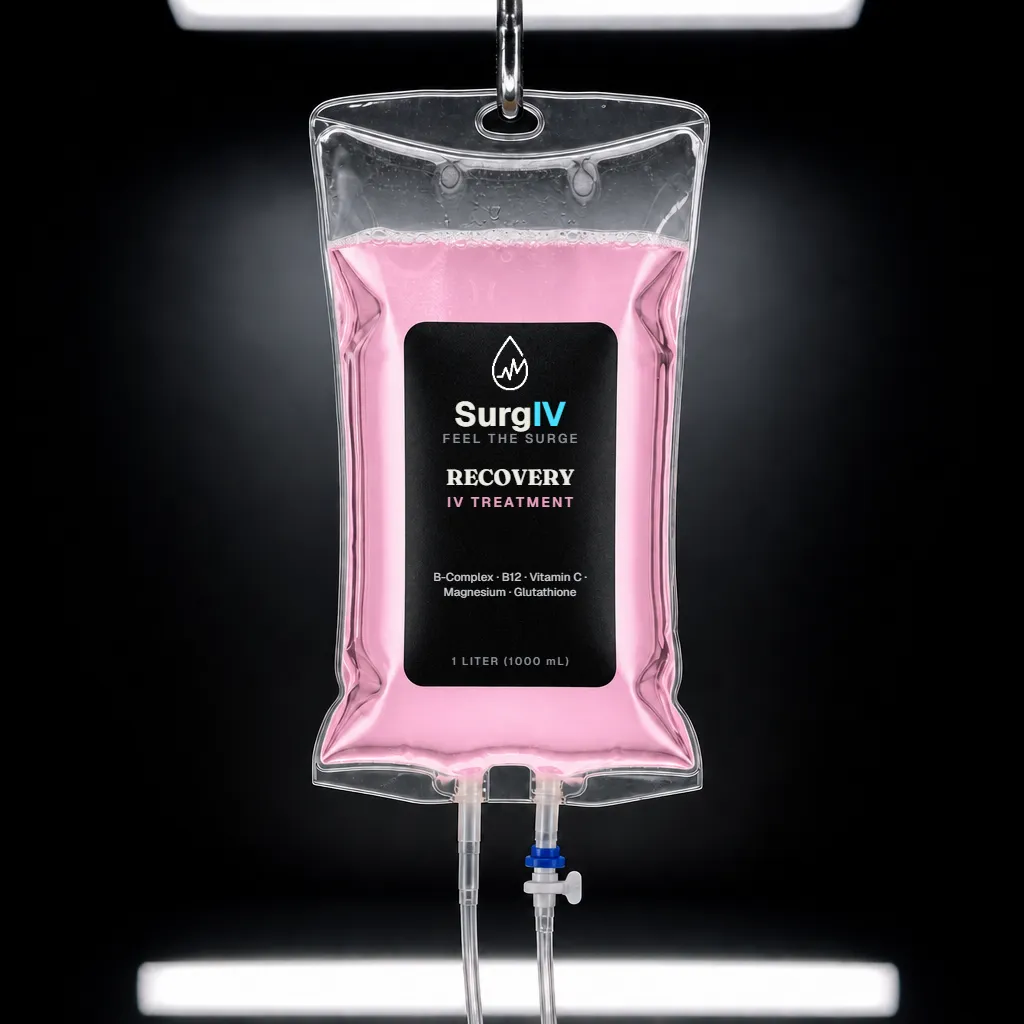
Between doubles
Recovery $299
Fluids, aminos and B vitamins on your schedule — including the industry's actual morning, which is noon.
B-Complex · B12 · Vitamin C · Magnesium · Glutathione
Marco, in February
Marco's crew runs a Monday-noon standing booking now, four of them, at the pastry chef's apartment because she has the good couch. He reports — with the line cook's gift for review-writing — that February arrived and he was, for the first time in six seasons, "still a person in it." The industry motto was always the show goes on. It goes on a lot easier when the cast gets maintained like the equipment.
This article is for general education and is not medical advice. IV therapy at SurgIV is administered by registered nurses under physician-written protocols, with a health screening before your first visit. Talk to your doctor about what is right for you.