The trip was supposed to be the good kind of story. Six-person charter out of Jupiter Inlet, mahi on the horizon, a forecast that said "two to threes" and meant fives. By 9:40 AM, a guest we'll call Priya — first offshore trip, did everything right, ate the light breakfast, wore the wristbands — was at the rail making her contribution to the Gulf Stream, and the captain was doing the kind thing captains do, which is pretending not to notice while quietly turning for home.
Everyone covers seasickness prevention. Nobody covers 2 PM — when Priya is back on land, technically safe, and feels like a wrung-out towel that's still somehow moving. This is the recovery half of the seasickness story.
The two bills you're paying on land
Bill one: the wobble. That land-is-still-rocking sensation — mal de débarquement, the disembarkment effect — is your balance system slowly un-learning the boat. It's disorienting and harmless, and it resolves on its own within hours (rarely a day). Time is the only treatment; a walk on solid ground genuinely helps the recalibration. Bill two: the crater. This one's fixable, and it's most of why you feel destroyed. A seasick episode is a rapid-loss event — vomiting, cold sweating, and hours of keeping nothing down, often in full sun. You stepped off the boat liters behind with electrolytes to match: the hollow weakness, the pounding head, the shaky legs that aren't just the wobble. It's the same aftermath physiology as food poisoning's act two — the illness is over; the deficit remains.
The sea stops moving when you dock. The bill doesn't.
Why the afternoon drags (and how to shortcut it)
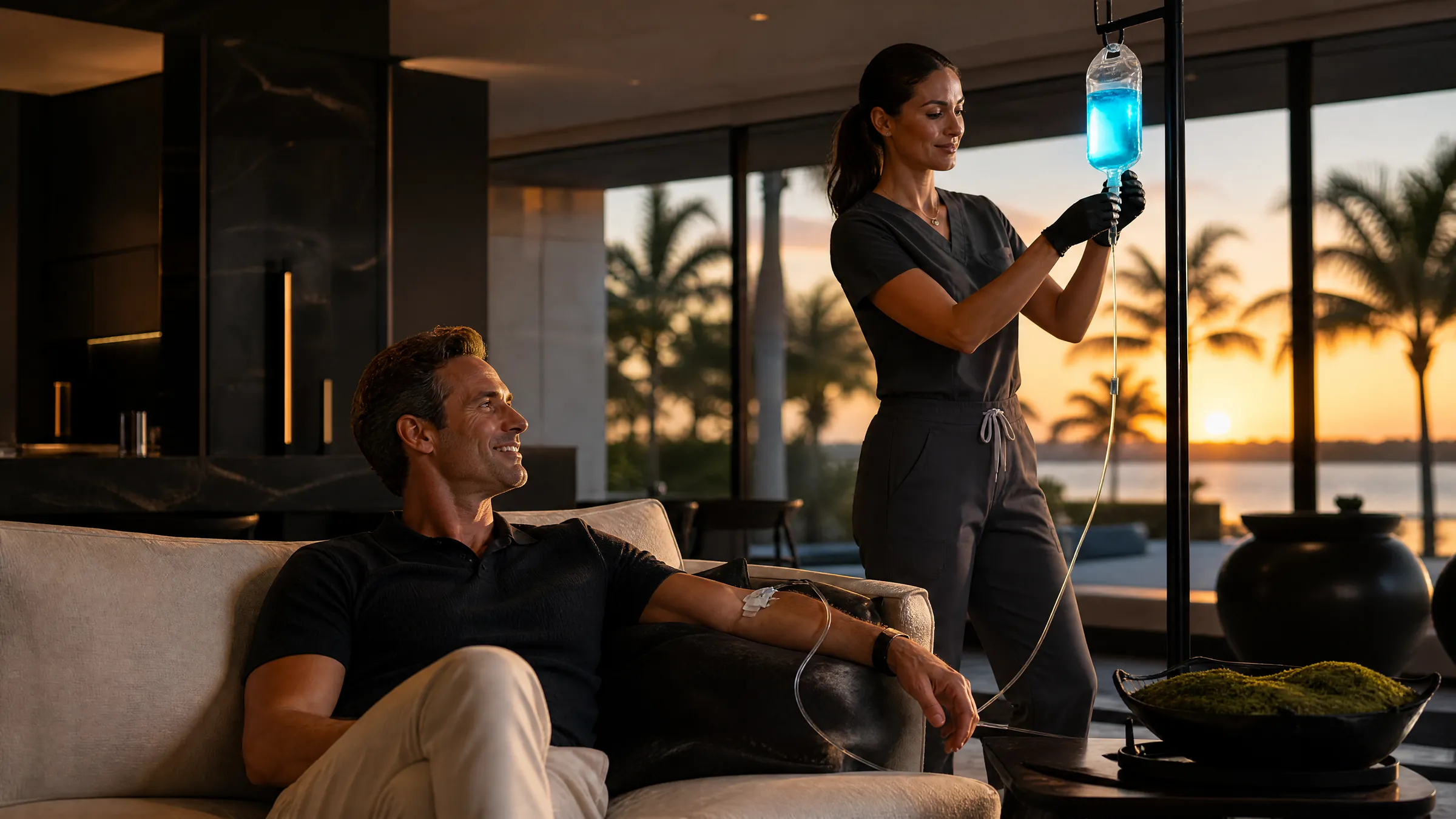
The standard advice — sip slowly, rest — collides with the standard problem: your stomach just spent four hours rejecting deliveries and hasn't fully reopened for business. Sips against a multi-liter hole through a still-queasy gut is a bailing-with-a-teaspoon afternoon, which is why the wrecked feeling typically lasts into the next morning. The shortcut is the same one that works for every closed-gut scenario: the Stomach Bug IV — a full liter with electrolytes delivered around the blockade, plus anti-nausea support that settles the stomach and reopens the oral route for the evening. Clients typically feel the turn before the bag's done: the hollow fills in, the head quiets, and the day's second half gets salvaged. (The wobble keeps its own schedule — but a rehydrated wobble is a far friendlier passenger.)
Next trip: the prevention stack that actually works
For the rematch — and there should be one; the ocean on a good day is worth it — the evidence-ranked stack: medication before departure (patch the night before or tablets an hour out — timing is everything, because once you're sick, oral meds board the same express your breakfast took), horizon eyes and midship seating, fresh air over cabin air, light non-greasy breakfast, and skipping the sunrise send-off beers (alcohol pre-loads every mechanism). Wristbands and ginger: modest helpers, fine as backup. And the veteran's last rule: hydrate before the trip — starting topped up means whatever the sea takes, it takes from surplus.
The post-voyage rebuild
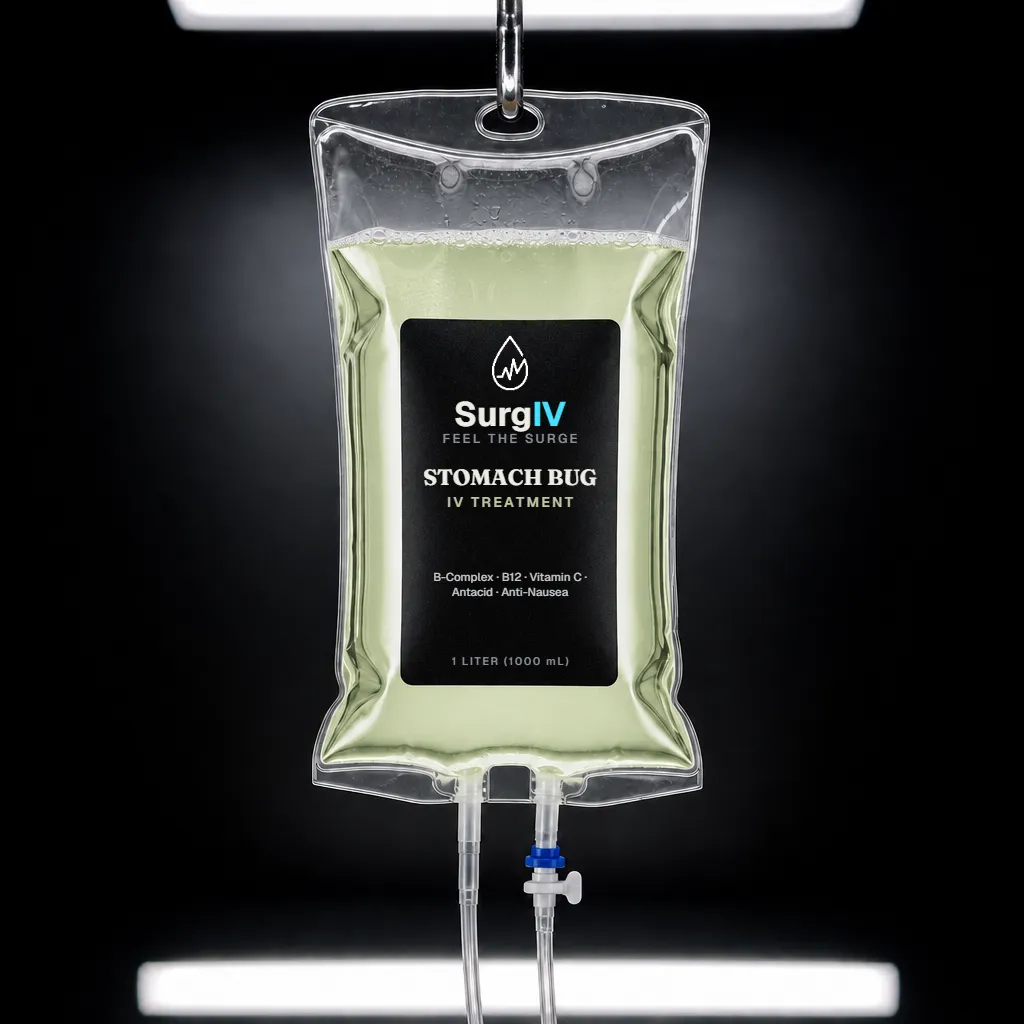
Stomach Bug $249
Fluids, electrolytes and anti-nausea support — for stomachs that gave everything to the Gulf Stream.
B-Complex · B12 · Vitamin C · Antacid · Anti-Nausea
Priya's rematch
Priya booked us from the truck at 1:30, was human by 4, and — this is the part we like — went back out in October with the patch on and flat seas, and caught the biggest mahi of the trip. Her review threaded the whole story into one line: "The ocean and I have an understanding now. I bring scopolamine; it brings fish; and if negotiations break down, there's a nurse."
This article is for general education and is not medical advice. IV therapy at SurgIV is administered by registered nurses under physician-written protocols, with a health screening before your first visit. Talk to your doctor about what is right for you.