9:20 PM, a bathroom in Boynton Beach, the night after a boat day that went two hours past the sunscreen's shift. A man we'll call Gary, 38, is inspecting his shoulders in the mirror — lobster-grade, radiating heat like a driveway at dusk — while experiencing a second, more confusing set of symptoms: chills, a temple headache, and a bone-tiredness that feels flu-adjacent. He's applied aloe with the diligence of a man doing penance. He has not had a glass of water since the dock. His wife, entering, delivers both diagnosis and title: "You know the burn isn't just on you, right? It's IN the budget now. You're being billed twice."
The withdrawal you can't see
Here's the mechanism the aloe aisle never mentions: a sunburn dehydrates you from the inside. Damaged skin launches an inflammatory response that pulls water out of circulation and into the injured tissue — the puffiness and any blistering literally are relocated fluid — and burned skin loses its barrier function, leaking extra moisture through the damaged area for days as it heals. So Gary's account took three hits: the day's sweat (standard boat-day export), the burn's inflammatory draw (ongoing, overnight, while he sleeps), and the leaky-barrier surcharge (all week). The flu-ish package — chills, headache, wipeout fatigue, the thing beach towns call sun poisoning — is the systemic inflammation and the compounding deficit working as a team. The aloe is treating the crime scene. The theft is still in progress.
The burn you see is the damage report. The dehydration is the ransom — and it keeps collecting for days after the sun goes down.
The two-front protocol
Surface front (the half everyone runs): cool showers — not ice; aloe or plain moisturizer on repeat; loose clothing; blisters left intact — they're sterile dressings your body built. Systemic front (the half everyone skips): aggressive fluids with electrolytes, starting tonight and continuing for days — the burn keeps drawing water throughout healing, so the repayment schedule outlasts the redness by design; salted food alongside; and the deep-deficit days — the big burns, the boat-day stacks, the flu-ish nights — respond fastest to direct rehydration, refilling from inside what the surface protocol can't reach. The sun-headache mechanism resolves with the deficit; the skin heals on its own calendar.
The short list that's beyond both fronts
Plainly: large-area blistering, persistent fever and chills, real-dehydration signs (dizziness, confusion, minimal urination), severe pain, or any significant burn on an infant — medical visit. Confusion with hot, dry skin is heat-stroke territory — 911, immediately, no articles. The Gary-grade burn — ugly, achy, flu-ish but lucid — is two-front territory, and the second front is the one that decides how the week goes.
The hidden half, handled
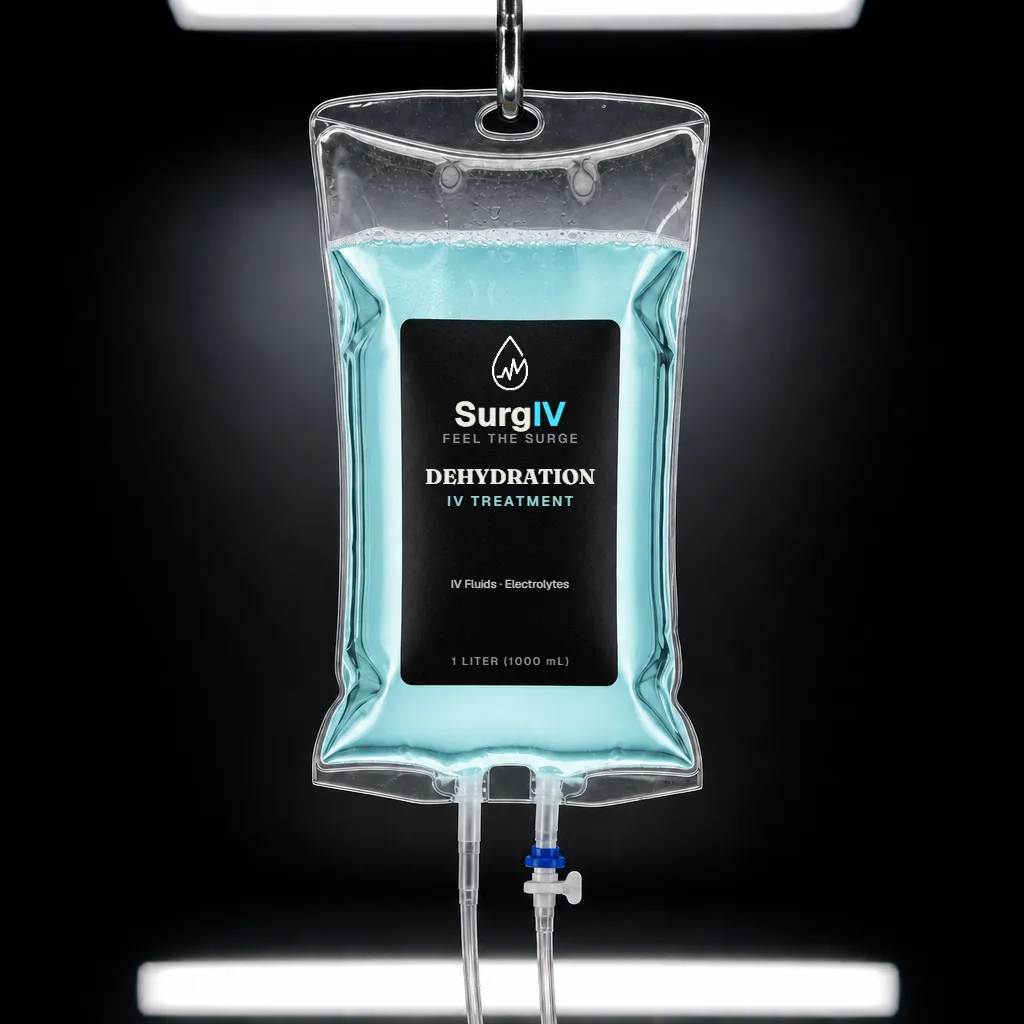
Dehydration $199
The aloe treats the surface. This treats everything under it.
IV Fluids · Electrolytes
Gary, both fronts funded
Electrolytes that night, a liter through the morning, a booked drip on day two when the flu-ish package lingered — gone by dinner. The peel proceeded on schedule ("majestic," per his kids), but the week's energy held. His new dock rule, announced to the boat group chat with a lobster emoji: "Sunscreen reapplies at every anchor. And if anyone burns anyway: the aloe's for the outside, the fluids are for the ransom. Pay both."
This article is for general education and is not medical advice. IV therapy at SurgIV is administered by registered nurses under physician-written protocols, with a health screening before your first visit. Talk to your doctor about what is right for you.