
6:20 AM, the parking lot at Juno Pier, a long-period swell finally arriving. A man we'll call Wade, 39, mortgage broker Monday through Friday, paddles out for what becomes a three-hour session — the best of his year. 2 PM, same man, couch: shoulders made of oak, headache assembling, an exhaustion he can't square with the morning's joy. His wife, observing: "You surfed. In water. How are you dehydrated?" Wade, staring at the ceiling: "I have no idea. I was LITERALLY in the ocean." The ocean, Wade, was never hydrating you. It was billing you the whole time — it just kept rinsing away the receipts.
The invisible invoice
Surfing dehydrates by stealth, three mechanisms deep: the rinsed sweat — you sweat throughout a session, and the ocean erases the evidence instantly, deleting the feedback loop that tells land athletes to drink; immersion diuresis — being in water itself increases urine production (pressure shifts fluid centrally and the kidneys respond by exporting), the same quiet tax swimmers pay; and the zero-intake design — nobody paddles a bottle into a lineup, so a three-hour session runs entirely on whatever you drank at dawn, which for the coffee-and-go crowd is a diuretic and vibes. Add reflected sun off the water — the burn-and-deficit double — and the best session of the year quietly runs the fluid bill of a summer half-marathon.
The ocean deletes your sweat receipts in real time. You come in feeling rinsed clean and walk to the car three liters in arrears.
The half-marathon nobody logs
The second half of Wade's oak shoulders: surfing is a paddling sport with a riding problem. Session time is overwhelmingly paddle time — a long day is a multi-mile upper-body interval swim, punctuated by duck-diving entire sets — which is why surf fatigue lives in the shoulders and upper back and why day two of a swell feels wooden in a way leg days never explain. The muscles spent the usual minerals at swim-team rates while the stoke hid the meter. Respect it as the workout it was: the post-session beer-at-the-car is a tradition, not a recovery plan.
The swell-week protocol
After every session: electrolytes and real food within the hour — the car cooler carries the packet and the sandwich, not just the celebration. The evening: genuine rehydration (the steady-sipping physics), salted dinner, shoulder mobility before bed. The swell week — when the forecast delivers and you're paddling four days straight: a between-days Recovery IV clears the compounding — fluids, the mineral panel, the reset that keeps Thursday's session from running on Monday's deficit. The swell doesn't wait for your recovery. With the right protocol, it doesn't have to.
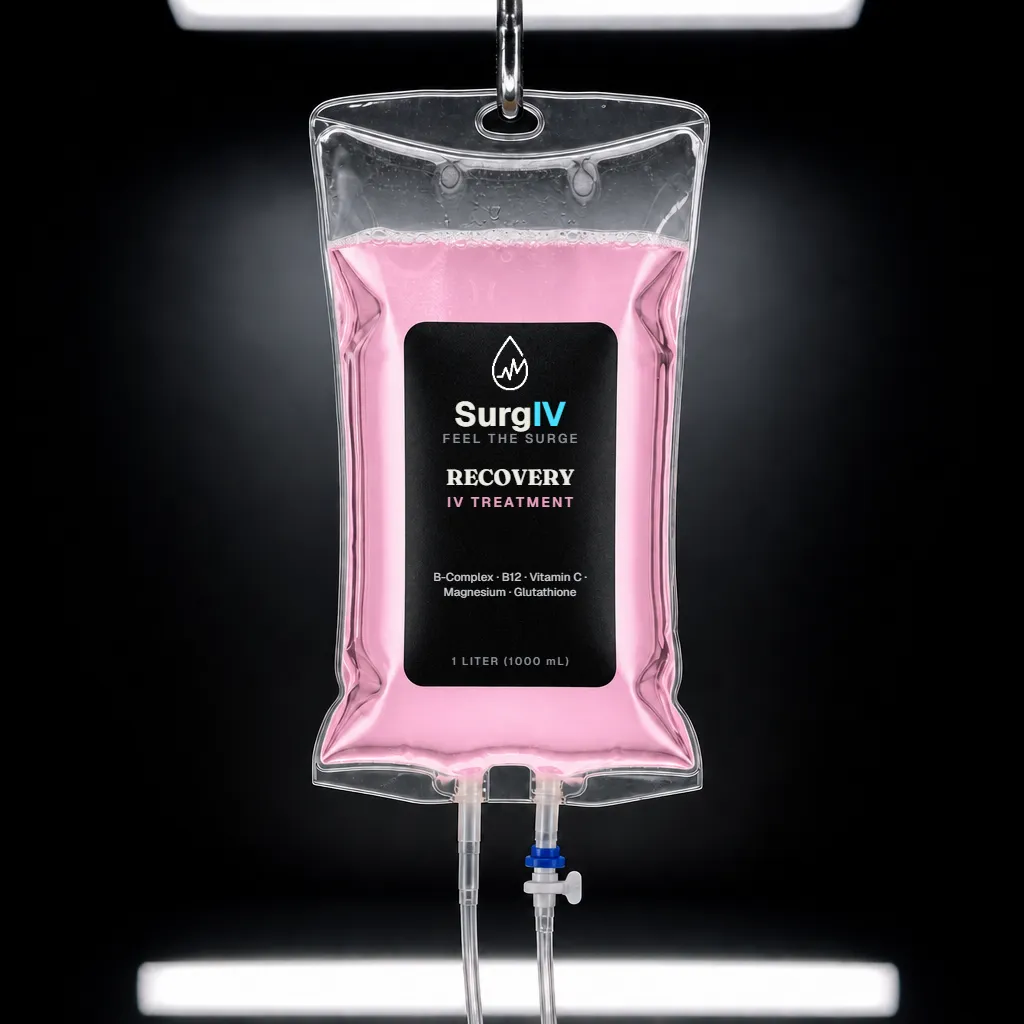
Between swells
Recovery $299
Paddle days compound. The Recovery IV settles them before tomorrow's session.
B-Complex · B12 · Vitamin C · Magnesium · Glutathione
Wade, next swell
Cooler stocked, packets in the console, a booked drip on day three of a four-day run. Day four, historically his wooden day, produced — his words, verifiable by two witnesses at the Pier — "the best backside wave of my adult life, on a Thursday, at 39." His new lineup doctrine, delivered to the dawn patrol: "The ocean hides the bill until you're on the couch. Pay it at the car instead. Swells are too rare to surf them tired."
This article is for general education and is not medical advice. IV therapy at SurgIV is administered by registered nurses under physician-written protocols, with a health screening before your first visit. Talk to your doctor about what is right for you.