Day three of a January sailfish tournament, 3:45 AM, a rental house near the Lake Worth Inlet. A mate we'll call Danny, 29, is standing in the kitchen assembling breakfast — a Publix sub purchased yesterday, eaten over the sink — while the rest of the crew moves through the house like the recently resurrected. Two days of double-digit bites, two evenings of weigh-in parties, maybe nine total hours of sleep. Lines in at 6:30. The calcutta is very much alive, and the captain's assessment from the doorway is the entire sport in one sentence: "Boys, the fish don't care that you're tired."
The event nobody calls an event
Nobody trains for tournament week, and yet look at it: four consecutive 14-hour days that begin in the 3s and end at a dock party. Offshore sun with open-water reflection. Continuous micro-balance work in a beam sea — core and legs firing all day, the reason "land-sick" exhaustion feels muscular. Adrenaline spikes with every knockdown, each one drawing on the same depleted adrenal budget. Hydration that's coffee till noon and whatever's cold after. Sleep windows that the social schedule — weigh-ins, calcutta drama, the party you can't fully skip — trims to five hours. It's a multi-day endurance event with prize money, run by crews who'd laugh at the word athlete while out-working most of them.
"The fish don't care that you're tired." — every captain, every day three, since the invention of the outrigger
Where tournaments are actually lost
Talk to enough serious crews and the pattern is consistent: tournaments are lost on day three, in the small stuff. The gaff shot a half-second late. The re-rig fumbled with clumsy fingers. The captain's read on the color change that came a beat slow. All of it is the fine-motor and decision degradation that accumulated dehydration and sleep debt produce on schedule — the same 2–3% deficit math that ruins third sets, except here it's compounding across four days and the third set is worth a calcutta. The crews cashing checks on Sunday aren't luckier. They're less depleted.
The program crews
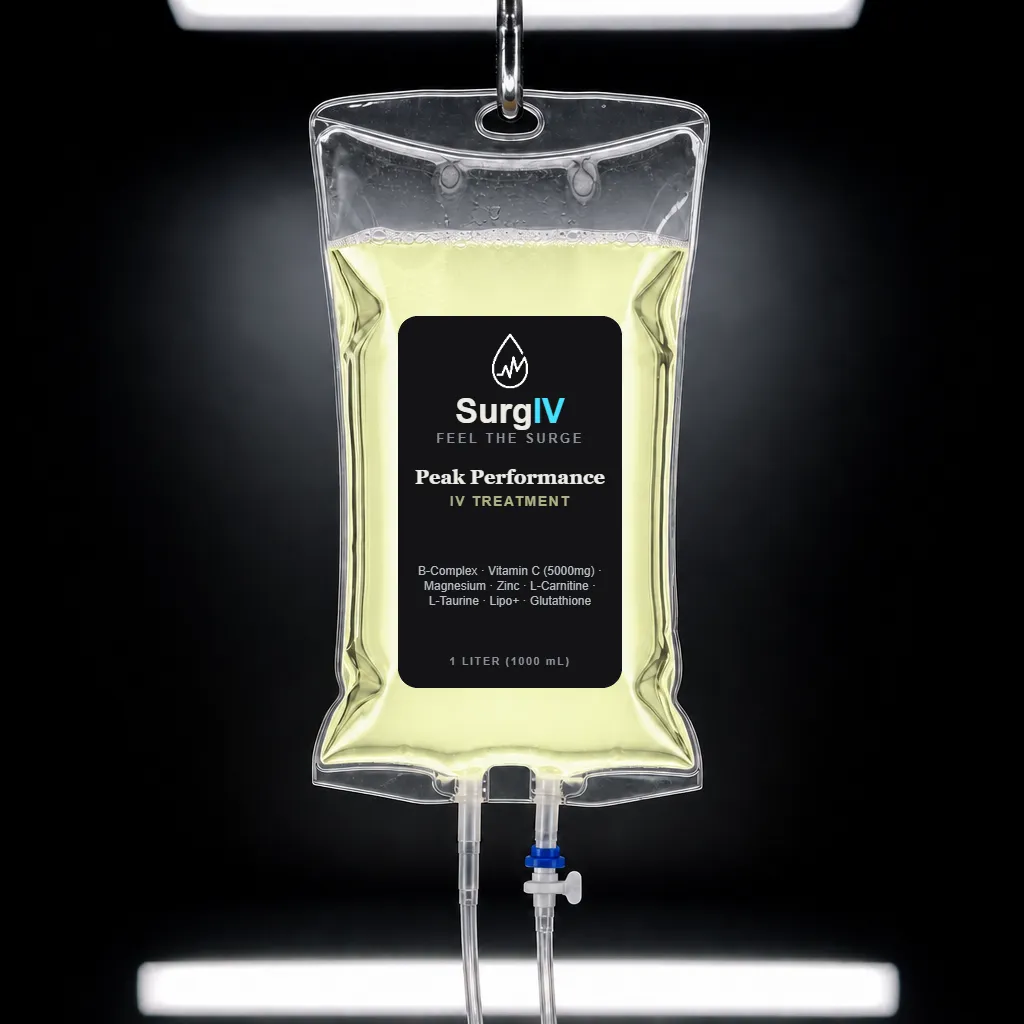
What the serious operations run, increasingly as policy: water aboard as a cooler rule (bottles counted, mate enforces), real provisioning instead of gas-station roulette, a hard sleep cutoff that sacrifices hour three of the dock party (the fish, again, don't care), and the mid-week reset — a nurse at the dock house on evening two or three, the whole crew through the Peak Performance IV back to back: fluids for the two-day hole, B vitamins for the 3:45 alarms, aminos for the seaway legs, everyone in bed by nine. Captains who book it for the crew describe it the way they describe good tackle: an edge you pay for once and feel all day.
The crew's edge
Peak Performance $499
Hydration, aminos and B vitamins between fishing days — the difference on day three.
IV Bag: B-Complex · Vitamin C (5000mg) · Zinc · Magnesium · L-Carnitine · L-Taurine · Lipo+ + more
Danny, Sunday evening
That tournament, Danny's boat released nine on day four — top-three money — with a gaff shot in the last hour that he describes with professional modesty as "not slow." The crew's mid-week drip is now line-itemed in the tournament budget between fuel and bait, which is exactly where it belongs. The fish still don't care that you're tired. So don't be.
This article is for general education and is not medical advice. IV therapy at SurgIV is administered by registered nurses under physician-written protocols, with a health screening before your first visit. Talk to your doctor about what is right for you.