The lab result that most reliably makes Palm Beach County patients argue with their doctors isn't cholesterol. It's vitamin D. A man we'll call Frank, 58 — golfer, boater, possessor of a tan line that could navigate ships — sat in his physician's office last year staring at a number in the deficient range and delivered the objection every Florida doctor has heard a thousand times: "Doc. I live in FLORIDA."
The doctor's reply is this article: "You live in Florida's air conditioning."
The paradox, explained in one commute
Vitamin D synthesis has requirements: bare skin, direct midday-ish sun, meaningful minutes. Now audit the actual Florida day — Frank's, yours, everyone's: garage to air-conditioned car to office parking to climate-controlled everything, repeat. The sun is experienced primarily through windshields (which block the UVB that makes vitamin D entirely). And the deliberate outdoor hours — the golf, the boat? Correctly slathered in SPF 50, which blocks synthesis by design, and should stay on, because the dermatologists win that argument without appeal. The result shows up in statewide data that would embarrass a brochure: Floridians run deficiency rates comparable to northern states. We moved to the sun and then, quite sensibly, hid from it. The tan line is from the ears down to the collar; the vitamin D system needed the parts under the shirt.
Florida sells sunshine. Floridians buy air conditioning. The lab results split the difference.
Why it matters (and how it hides)
Vitamin D functions more like a hormone than a vitamin — receptors for it sit in tissues everywhere, and its shortfall reads as the vaguest possible symptom cluster: persistent fatigue (it's a regular on the tired-after-8-hours checklist), flat mood, diffuse aches, frequent minor illnesses, slow recovery. Nothing dramatic; everything dimmed — which is exactly why it hides for years behind "getting older" and "busy season." The good news is the whole story is cheaply falsifiable: a 25-hydroxy-D lab costs less than lunch, and unlike most wellness mysteries, this one comes with a definitive number. If the number's low, the fix is famously effective; if it's fine, you've eliminated a suspect. Either way, stop guessing — this is the most testable fatigue cause on the board.
Fixing it without the sunburn
The sensible stack, in order: test first (know your number and involve your doctor at real deficiency levels). Supplement smart — D3 over D2, taken with a fatty meal (it's fat-soluble; the empty-stomach pill partially wastes itself), at doses guided by the lab rather than the influencer. Incidental sun without guilt — brief unprotected minutes here and there help; deliberate tanning-for-D remains a bad trade. And for the adherence-challenged — which the data says is most of us — the depot approach: a 50,000 IU D3 IM shot, the slow-release store that doesn't care whether you remembered Tuesday's pill. It's exactly why D3 rides in The Surge's IM trio alongside B12 and CoQ10 — the shot format exists for precisely these fat-soluble, consistency-dependent nutrients.
The D3 shot, included
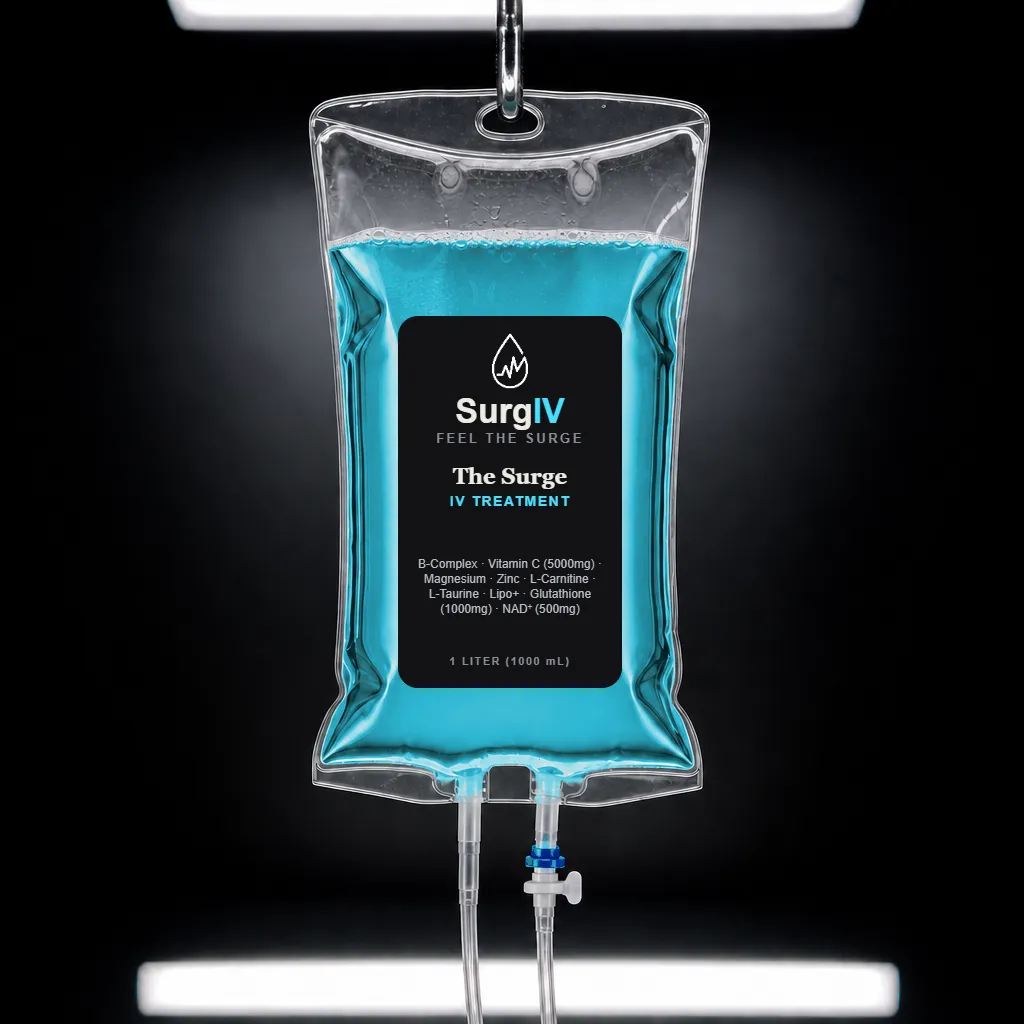
The Surge $899
The Surge's IM shot trio includes 50,000 IU of D3 — the depot dose for the paradox.
IV Bag: B-Complex · Vitamin C (5000mg) · Zinc · Magnesium · L-Carnitine · L-Taurine · Lipo+ + more
Frank's rematch
Frank re-tested this spring after six months of D3-with-dinner plus the quarterly Surge: mid-range, doctor satisfied, argument concluded. His summary belongs on the state's license plates: "Turns out the Sunshine State is a place, not a prescription." Get the number checked. The sun's doing its part; the windshield was the problem all along.
This article is for general education and is not medical advice. IV therapy at SurgIV is administered by registered nurses under physician-written protocols, with a health screening before your first visit. Talk to your doctor about what is right for you.