
January, 5:15 AM, a barn off Pierson Road in Wellington. The lights are on — they're always on by now in season. A groom we'll call Sofia has been up since 4:40, has eight horses to prepare, and is running on gas-station coffee and a granola bar. In the next barn over, the horses she cares for enjoyed a regimen last night that included therapeutic ice boots, a magnesium-balanced feed program, scheduled bodywork, and — she notes, not for the first time, with a dry laugh — better hydration monitoring than any human she knows.
Welcome to the Winter Equestrian Festival economy, where the athletes with four legs get sports medicine and the athletes with two get whatever's left. From January through April, Wellington hosts one of the most concentrated equestrian seasons on earth — riders, grooms, trainers, polo players, barn managers — and the physical ledger of that season is enormous, invisible, and almost entirely unserviced. This post is for the two-legged side of the barn.
What the season actually costs a human
- Riding is a real sport pretending to be sitting. Continuous isometric core and leg engagement, balance corrections against a half-ton of opinions, grip endurance — and competitive riders school five to eight horses a day, six days a week, for four months. That's endurance-athlete volume with no off-season within the season.
- Polo is sprinting in the sun. Chukkers are high-intensity intervals played in Florida heat with equipment on; the sweat and adrenaline math rivals any field sport, and the season's social obligations — which in polo are approximately contractual — add the alcohol ledger on top.
- Grooms run the hardest schedule in the sport. 4:30 AM starts, physical work through midday heat, evening care, six-plus days a week — the classic depletion profile: chronic under-sleep, chronic under-hydration, zero recovery windows, for people whose hands the entire operation depends on.
- The heat doesn't check credentials. Even a "winter" season here means midday sun, arena reflection, and the county's standing hydration tax — collected daily from anyone working outdoors in boots.
In Wellington, the horses have a hydration protocol, a mineral program, and a recovery team. The riders have coffee.
Borrowing the barn's playbook
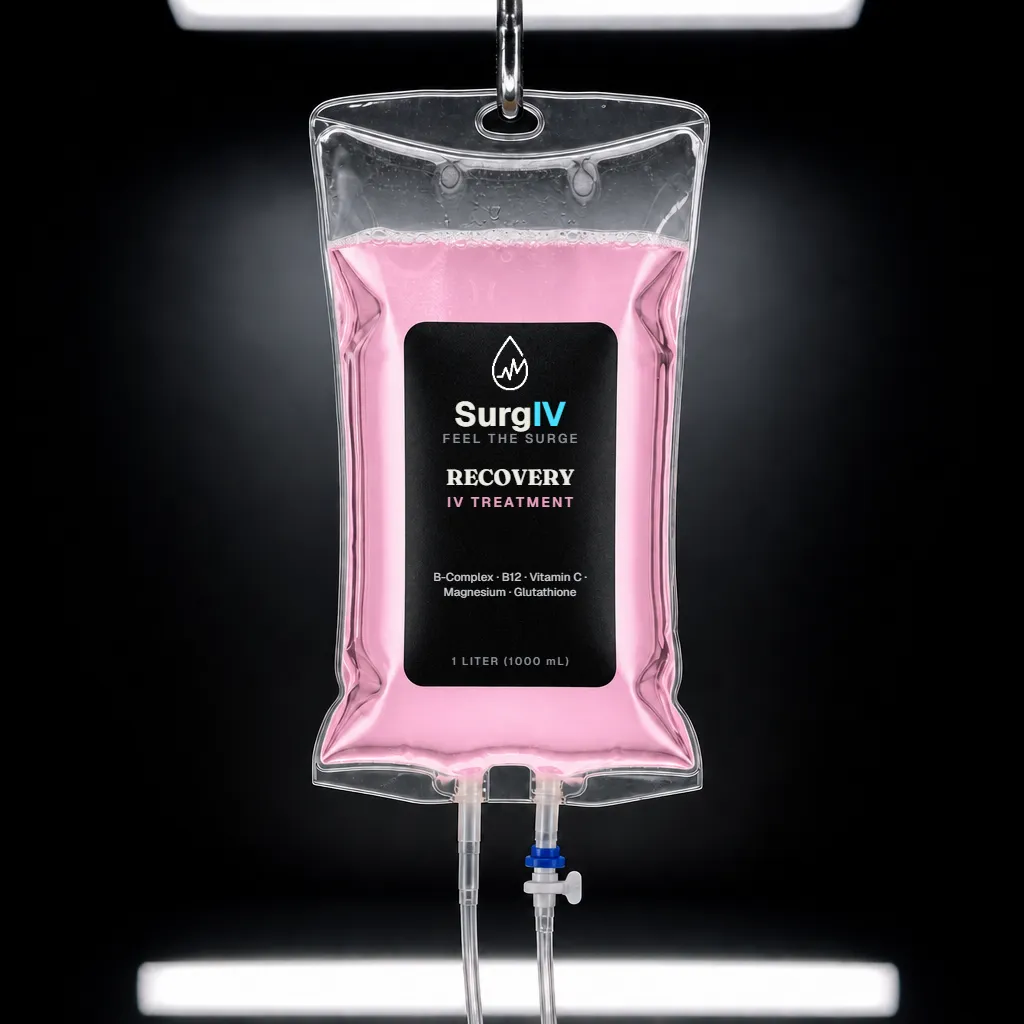
Here's the irony worth acting on: the equestrian world already believes in recovery science more than almost any community we serve — it just aims all of it at the horses. Electrolyte management, mineral repletion, scheduled rest, professional bodywork: the barn playbook, applied to the humans, is exactly right. Our Wellington members run it simply: real electrolyte hydration through the workday (not just coffee and a Celsius), and the Recovery IV as the weekly anchor — a liter of fluids, aminos for the riding load, magnesium for grip-cramped hands — delivered to the farm or home in the early-evening window after classes. Owners increasingly book group sessions for barn staff, which we'd note is both genuinely decent and extremely smart: Sofia's hands are the operation.
Season-grade recovery
Recovery $299
Fluids, aminos and minerals for the humans doing the riding — delivered to the barn, the farm, or home.
B-Complex · B12 · Vitamin C · Magnesium · Glutathione
Sofia's barn, this season
The barn Sofia runs now books a nurse every other Tuesday evening — staff first, riders after, in the tack room with the good chairs. The owner's explanation to a skeptical neighbor made it back to us intact, and it's the whole philosophy in one sentence: "I spend six figures keeping the horses' electrolytes perfect. The person who notices when a horse is off at 5 AM was running on coffee. That math was embarrassing." Season's long. Care for the whole barn.
This article is for general education and is not medical advice. IV therapy at SurgIV is administered by registered nurses under physician-written protocols, with a health screening before your first visit. Talk to your doctor about what is right for you.