
By the third cold since Labor Day, a client we'll call James, 41 — father of two elementary schoolers, sales job, gym when possible — had developed a theory he shared with our nurse in tones of genuine grievance: "My immune system has quit. Like, formally. I think I have a bad one. My college roommate never gets sick and he eats like a raccoon. Explain THAT."
The raccoon roommate comes up more than you'd think. So let's run the actual audit — the three-column accounting that explains nearly every "sick every month" story, including which column James's belongs to, and which rarer column belongs to a doctor.
Column one: exposure (the column everyone forgets)
Before assuming a broken defense, count the attackers. James's daily exposure load: two elementary schoolers (each classroom a viral stock exchange), a handshake-heavy sales role, gym equipment, airports monthly. His raccoon roommate: works from home, no kids, groceries delivered. They don't have different immune systems; they have different jobs. The baseline math surprises everyone: 2–3 colds a year is normal for average adults, and parents of small children run meaningfully higher — "sick every month" from October to March with a kindergartner in the house is, statistically, not a malfunction. It's an occupation.
"My roommate never gets sick and he eats like a raccoon" — exposure math, experienced as injustice
Column two: the defense budget (the fixable column)
Exposure decides how often you're attacked; this column decides how those attacks go. The evidence-ranked levers: sleep, towering over everything — adults under six hours catch infections at multiples of the well-slept rate, and James's 11:30-to-6 schedule was his audit's loudest line; chronic stress, which suppresses immune function on exactly the timeline of a brutal sales quarter; and the supply layer — the vitamin C his immune cells hoard like ammunition, the zinc the response machinery requires, the hydration everything runs in — accounts that James's depleted-parent lifestyle (see: the whole genre) was draining faster than his diet refilled. This column is where the Immune Boost earns its audit line: it can't reduce the kindergarten exposure or sleep for you, but it guarantees the defense that answers each attack is fully equipped — which members experience as fights that run shorter and shallower, and fewer of the lingering two-week tails that made every cold feel like a month.
Column three: the medical column (rare, real, non-negotiable)
And the audit's escalation clause, stated without softening: some patterns are beyond lifestyle. Infections that run unusually severe, keep requiring antibiotics, or recur in the same site (pneumonias, sinus infections); illness with weight loss, drenching night sweats, or persistently swollen nodes; or frequency that ignores months of genuine column-two fixes — those earn a physician's workup, because true immunodeficiency and other medical causes are rare but findable, and finding them early matters. A wellness audit that never mentions this column is malpractice with a smoothie menu.
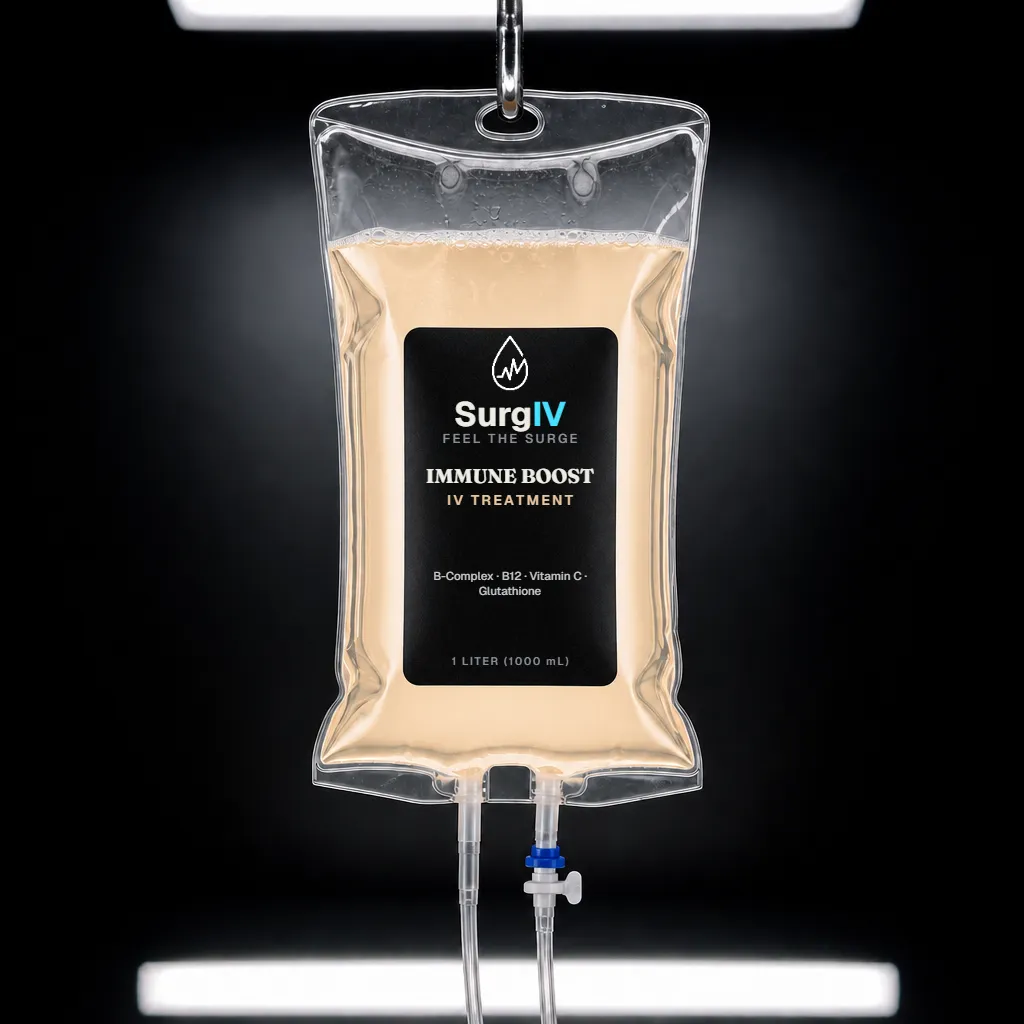
Fund the defense budget
Immune Boost $299
High-dose C, zinc and hydration — the supply half of the audit, handled.
B-Complex · B12 · Vitamin C · Glutathione
James, audited
The verdict: columns one and two — occupational exposure (unfixable, his kids are keepers) plus a defense budget running on 6.5 hours and empty accounts (fixable, fixed). His winter protocol: sleep guarded to 7+, the pre-season and January Immune Boost sessions, and the早-warning booking at first tickle. February's report: one cold all season, "duration: a weekend, not an era." The raccoon roommate remains unexplained by science and unbothered by it. Some audits just have a control group.
This article is for general education and is not medical advice. IV therapy at SurgIV is administered by registered nurses under physician-written protocols, with a health screening before your first visit. Talk to your doctor about what is right for you.