
10:50 PM, December 27th, a kitchen in Palm Beach Gardens. A hostess we'll call Marisol — the eleven-balms Marisol; her console drawer recovered, her guest rooms did not — loads the dishwasher's third cycle of the day while laughter rolls in from the lanai, where her brother-in-law is opening another bottle and beginning, again, the story about the rental car in Naples. Day five of nine. Her in-laws rise at 6:15. The lanai contingent retires at 1. Marisol has begun doing sleep arithmetic that has no solution, and her reflection in the kitchen window has started to look like staff. "I love them," she tells the dishwasher, meaning it. "I also understand hotels now. Spiritually."
The innkeeper's load
Hosting is a hospitality shift with no clock-out, and the load has structure: sustained low-grade performance — attention, logistics, the emotional air-traffic control of relatives — with no off-stage anywhere in your own home; bracketed sleep — early risers claim the mornings, late talkers claim the nights, and the host's window is the intersection; routine collapse — the workout, the quiet coffee, the normal meals that maintain your baseline all suspended for the duration; and the season's signature pattern, cocktail creep — wine at dinner because company, a nightcap because conversation, until the week has quietly run seven consecutive drinking nights that no single evening justified flagging. It's the same depletion arc Thanksgiving's hosts run, stretched to ten days — and it's precisely the December accumulation the January 1st ledger later itemizes.
Guests are on vacation. Hosts are on shift. The house holds both at once, and only one group gets to nap.
The minimum viable routine
The host's survival system is small and non-negotiable: one guarded morning hour — the walk, the solo coffee, announced once as "when I do my thing" and then simply done (guests adapt to structure faster than hosts believe); a fixed wake time regardless of the lanai's closing hour — the anchor that keeps the week from becoming ten days of social jet lag; two or three dry evenings, declared without ceremony ("I'm on water tonight" requires no summit); and water running interference at every cocktail hour that remains. None of it reads as rude. All of it reads, by day nine, as the difference between a host and a casualty.
The mid-week reset and the day-after crash
Two scheduled interventions complete the system: the mid-week quiet hour — engineered by dispatching guests to a beach morning, and increasingly, in the county's host households, spent on the innkeeper's drip: fluids, B vitamins, a full restock taken sitting down, the week's account settled at halftime. And the post-departure crash, named in advance so it doesn't surprise: when the last car leaves, the hosting adrenaline withdraws and the accumulated debt presents at once — repay it over several honest nights, not one comatose afternoon, because the next holiday is already inbound.
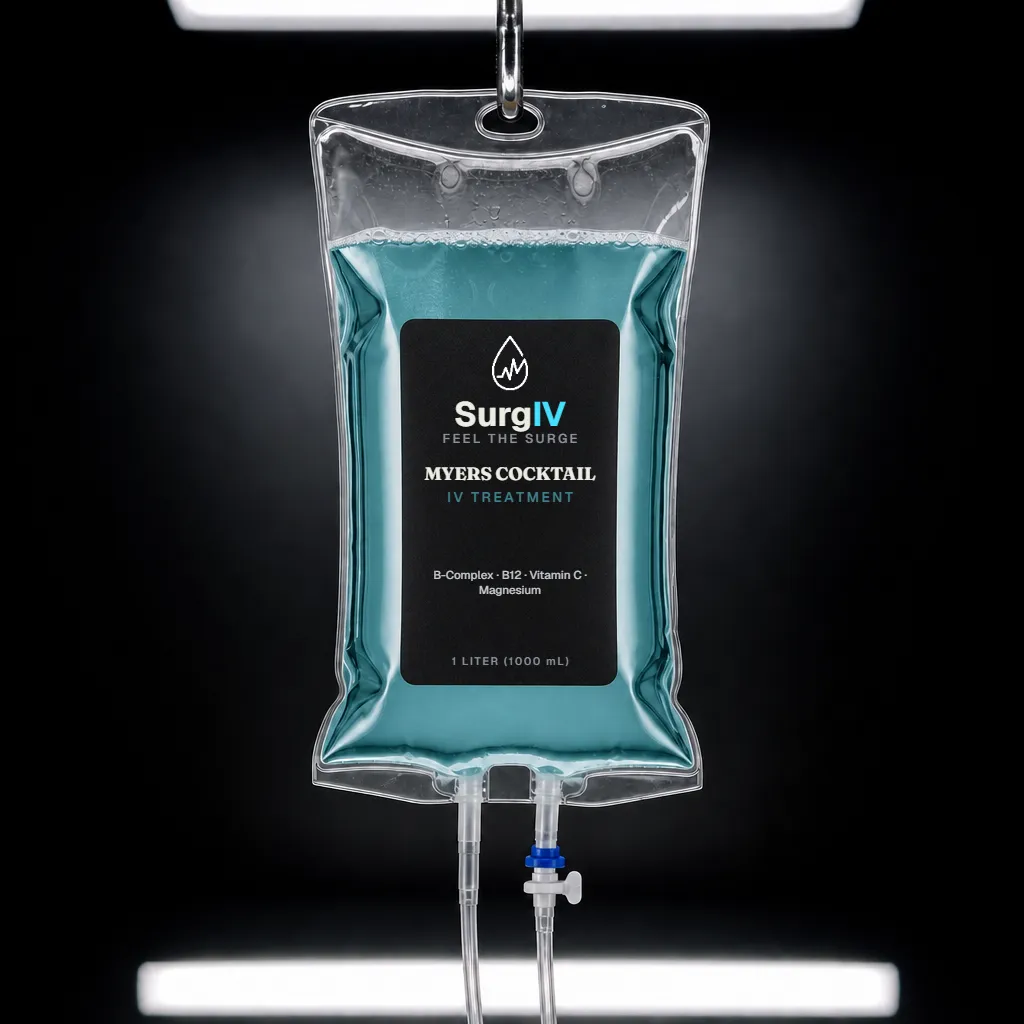
Innkeeper's relief
Myers Cocktail $249
A quiet hour, a full restock — the host's mid-week reset.
B-Complex · B12 · Vitamin C · Magnesium
Marisol, day nine, checkout complete
She ran the system from day six: morning hour claimed, wake time held, two dry nights ("nobody noticed, which was the entire point"), the halftime drip during Wednesday's beach dispatch. The last car left Sunday; Marisol crashed gently, on schedule, and was human by Tuesday. Her review, filed to the group chat beside a photo of the empty guest room: "I love this inn. Occupancy: closed until Easter. Innkeeper: restocked. Would host again — with the system."
This article is for general education and is not medical advice. IV therapy at SurgIV is administered by registered nurses under physician-written protocols, with a health screening before your first visit. Talk to your doctor about what is right for you.