
3:05 PM, a phone call to our booking line, a request we field most weeks. A caller we'll call Andrea, 44, exhausted for months, has done her research and arrives with a specific ask: "I want the energy IV — but can you add iron? My friend takes iron pills and she says it changed her life. I'll pay extra." The nurse's answer is the one this article exists to explain, and it disappoints roughly half the people who hear it: "We can't — and no wellness provider should. But I can tell you exactly what to do next, and it's a better answer than the one you called for."
The asymmetry at the center
Iron is different from everything else on a wellness menu because of one fact of physiology: your body has no efficient way to get rid of excess iron. Surplus vitamin C? Largely excreted — the transporters ration it and the rest exits. Surplus B vitamins? Famously, visibly excreted. Surplus iron? Stored — in the liver, heart, and pancreas, where chronic overload causes real organ damage. There's no honest way to hand out a substance with no exit route on the basis of "I'm tired and my friend liked it." That asymmetry is the entire argument, and it's why every legitimate protocol requires lab-confirmed deficiency plus physician oversight before a milligram moves.
Vitamins your body doesn't need, it discards. Iron it doesn't need, it keeps — in your organs, for years. That's not a nutrient; that's a commitment.
IV iron is real medicine — in a real setting
To be clear, since half the point is respect for the therapy: IV iron is an important treatment for confirmed iron-deficiency anemia, used routinely when oral iron fails or absorption is impaired. It's given in clinical settings with monitoring because the formulations carry a small but genuine risk of infusion reactions, including rare anaphylaxis. Real indication, real supervision, real emergency preparedness. A living-room wellness session satisfies none of those three conditions — and a provider willing to add it anyway has told you everything about how they'd handle the rest of your care. Requests we decline are, unglamorously, the actual product.
The better answer Andrea got
Get tested, then treat what's found. Fatigue, pallor, fog and restless legs overlap with a dozen causes — labs, not symptoms, decide: ferritin (stores), CBC, often full iron studies. And the step people skip: in adults, a physician investigates why iron is low, because the cause — blood loss, absorption problems — can matter far more than the number itself. If deficiency is confirmed, the plan is theirs to write (usually oral first, IV where indicated). If it isn't, the fatigue has another explanation worth finding — frequently one this catalog covers. What no one should do, ever: self-supplement iron blind. It's one of the more common causes of supplement-related harm, particularly in men and post-menopausal women who rarely have a reason to be low in the first place.
What we do offer
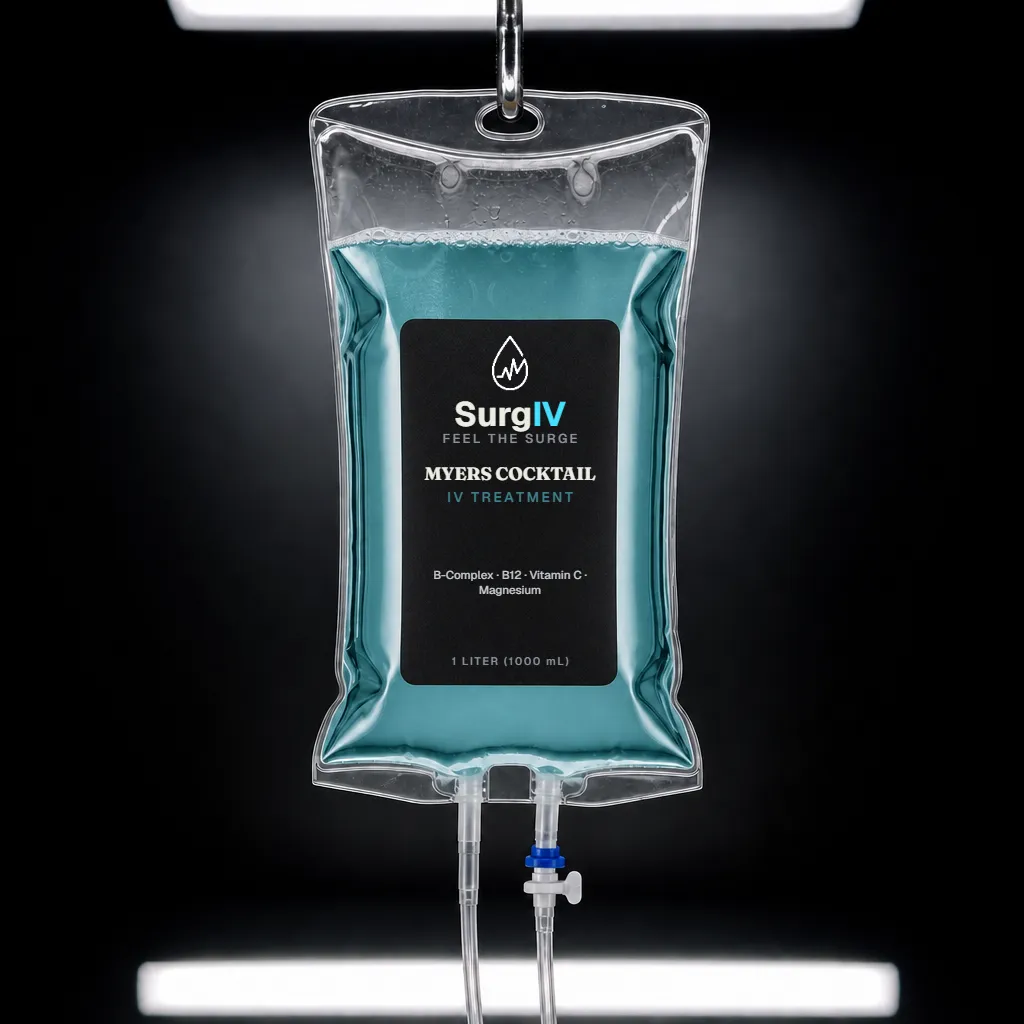
Myers Cocktail $249
The full micronutrient panel — with the boundaries a real provider keeps.
B-Complex · B12 · Vitamin C · Magnesium
Andrea, six weeks later
Ferritin came back genuinely low — she'd been right about the deficiency and wrong about the venue. Her physician found the cause, wrote the plan, and Andrea's energy came back on treatment that was actually indicated and actually monitored. Her follow-up call to our line, which the staff still quotes: "You turned down my money and sent me to a doctor who found the real thing. I've told six friends. That's how you got a client for the OTHER stuff — forever."
This article is for general education and is not medical advice. IV therapy at SurgIV is administered by registered nurses under physician-written protocols, with a health screening before your first visit. Talk to your doctor about what is right for you.