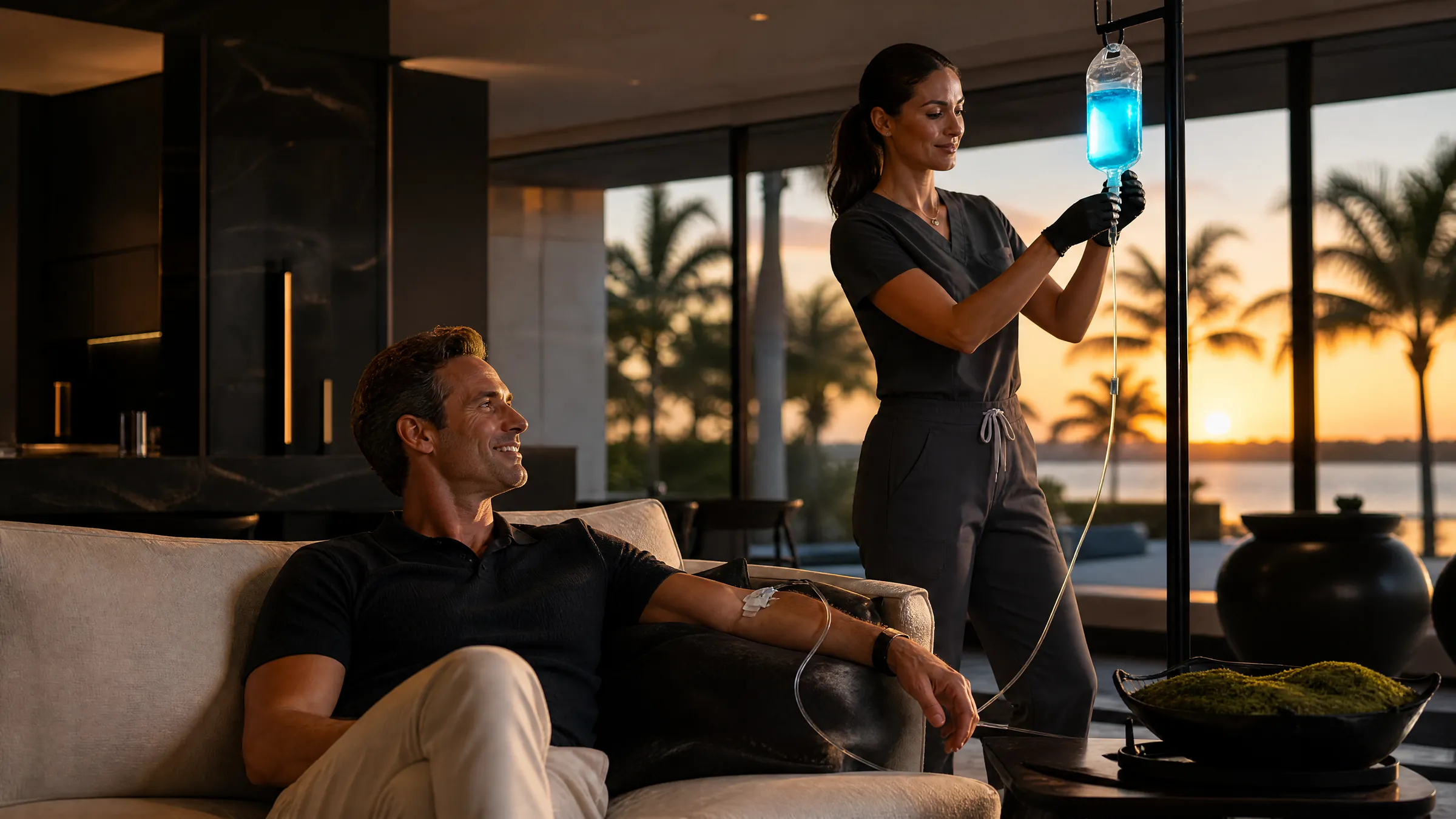
7:15 AM, Monday, a kitchen in Royal Palm. A man we'll call Dustin, 42, reaches for his coffee mug and discovers his forearms have resigned. Both of them. Effective immediately. Yesterday: six hours on the new jet ski — his midlife purchase, zero regrets — carving the intracoastal with his kids trading the back seat. Nothing about it felt like exercise; it felt like throttle. Yet here he stands, gripping a mug like it weighs forty pounds, texting his brother with his thumbs at reduced capacity: "why do my arms feel like I moved a piano. i sat on a boat that goes fast"
The gym you didn't know you attended
Because, Dustin, you didn't sit — you held on, for six hours, and holding on is a workout category with a name: isometric loading. Riding is sustained static contraction head to toe — grip locked on the bars (forearms), core braced against every slap of chop, quads absorbing shock through bent legs like a six-hour wall-sit with scenery. Isometric work is notorious for exactly this morning: it never feels like exercise while it's happening (no reps, no burn, just riding) and files its full report 18 hours later. The wake crowd gets the rope-and-crash edition — lats and low back loaded through every pull, plus each fall at speed absorbed as a small collision — which is why a day of sets out-sores most gym weeks. The throttle sports are strength training in a swimsuit. The soreness is the receipt.
Six hours of throttle is a six-hour wall-sit holding a pull-up bar. The jet ski just made it feel like freedom.
The spray-cooled deficit
Underneath the muscle bill runs the standard water-day account, amplified: spray and wind run the immersion illusion at highway speed — you feel cool and misted while direct-plus-reflected sun and continuous exertion drain the tank — and throttle culture compounds it, because nobody idles back to the cooler mid-carve. Swim breaks add the immersion-diuresis tax. The result is the classic profile: zero perceived sweat all day, then the evening headache and a morning that starts with forearm resignations and an amber report. Same invoice as every water sport — the jet ski just delivers it faster and with better wind in your hair.
The day-after protocol
Sunday evening, not Monday morning: electrolytes with dinner — the settlement starts the same day. Monday: gentle movement over couch-time (isometric soreness clears with circulation; walking is the medicine), protein at every meal for the repair bill, easy stretching for the gripped-up forearms and hips. The big weekends — new-toy season, holiday flotillas, the birthday where everyone wanted a turn: the full recovery session clears fluids, minerals, and the general wreckage in one sitting, and pairs naturally with the boat-day framework the household already runs. Ride hard; settle same-day; walk normal Monday.
The morning-after fix
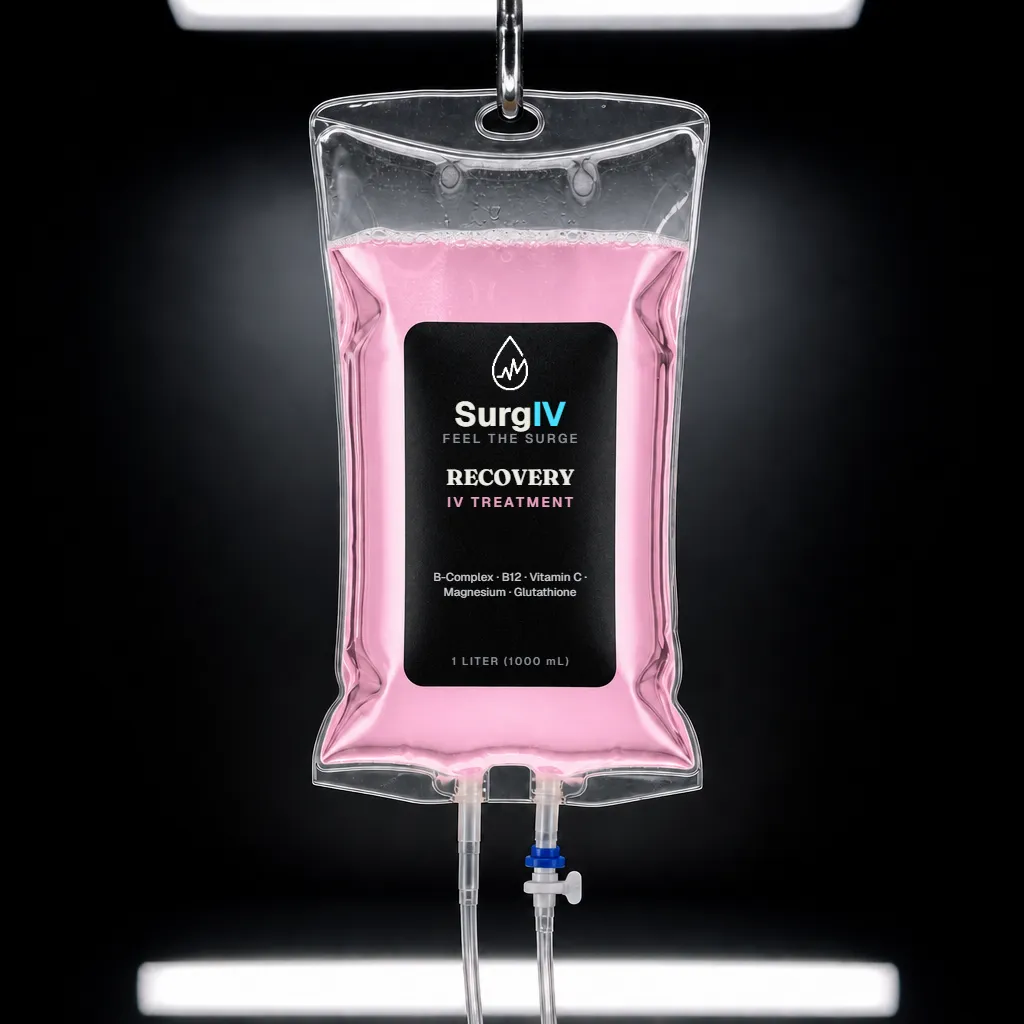
Recovery $299
Fluids and minerals for the workout you didn't count.
B-Complex · B12 · Vitamin C · Magnesium · Glutathione
Dustin, second weekend
Electrolytes in the cooler, a real lunch stop instituted ("the kids negotiated for burgers; physiology endorsed them"), evening settlement executed, one recovery drip after the three-day July weekend. Monday's mug lifted without incident. His revised ownership doctrine, delivered to the brother now shopping for his own ski: "Budget for the trailer, the cover, and the fact that it's secretly a gym. The throttle bills the forearms. Pay it Sunday night."
This article is for general education and is not medical advice. IV therapy at SurgIV is administered by registered nurses under physician-written protocols, with a health screening before your first visit. Talk to your doctor about what is right for you.