
The conversion of a client we'll call Rick, 51 — recovering CrossFit maximalist, owner of the local record for 'most workouts ended lying on the floor' — began with an insult. His new cardiologist-recommended trainer prescribed him Zone 2: forty-five minutes, four days a week, at a pace Rick described as "aggressive strolling." Rick's response, verbatim: "I don't do easy. Easy is for warm-ups." The trainer's reply, which Rick now quotes with religious fervor: "It's not easy. It's quiet. You've spent ten years revving an engine you never built."
The quiet zone, defined
Zone 2 is the effort band just below conversational strain — roughly 60–70% of max heart rate, operationally: you can speak in full sentences but wouldn't sing. (The talk test outperforms gadget math for most people; if chat dies, you've left the zone.) What makes this unglamorous band the rare consensus of every longevity camp — the podcasts, the exercise physiologists, the cardiologists — is what sustained low-intensity work uniquely signals: mitochondrial biogenesis — your cells building more and better power plants — plus improved fat-oxidation metabolism, the base-layer engine capacity that everything upstream (VO2max, metabolic health, the daily energy this blog obsesses over) draws against. High-intensity work spends the engine spectacularly; Zone 2 builds it. Rick had a decade of spending and no construction — the floor-lying record, explained.
"You've spent ten years revving an engine you never built." — the sentence that converts every intensity addict, eventually
The prescription (and the Florida amendment)
The working dose from the literature: 150–180+ weekly minutes, in 30–60 minute sessions — brisk walking, easy cycling, incline treadmill, swimming, the modality mattering far less than the consistency (three boring sessions beat one heroic one, permanently — the anti-CrossFit arithmetic that took Rick a month to forgive). The Florida amendment matters here more than any training article we've written: heat elevates heart rate at every pace, so the county's summer Zone 2 runs slower than ego tolerates — the dew point math can convert your winter Zone 2 pace into Zone 3 by June. Train by heart rate or talk test, never pace; take the pre-dawn or dusk windows per the furnace-hours doctrine; and hydrate the volume like real training — because 180 weekly minutes of anything outdoors here is a genuine fluid ledger, which is where the recovery support earns its slot under even the 'easy' training. Quiet doesn't mean free.
Where it fits the stack
Zone 2's position in the this-blog universe: it's the free-tier podium's cardio foundation, the engine-build that NAD⁺'s energy economy operates within (the molecule funds the power plants; Zone 2 builds more of them — complementary layers, not competitors), and the sustainable base that makes the intensity work Rick still loves productive instead of merely dramatic. The modern prescription most trainers land on: the 80/20 shape — most volume quiet, a little loud — which is how every endurance discipline trained for decades before the podcasts caught up.
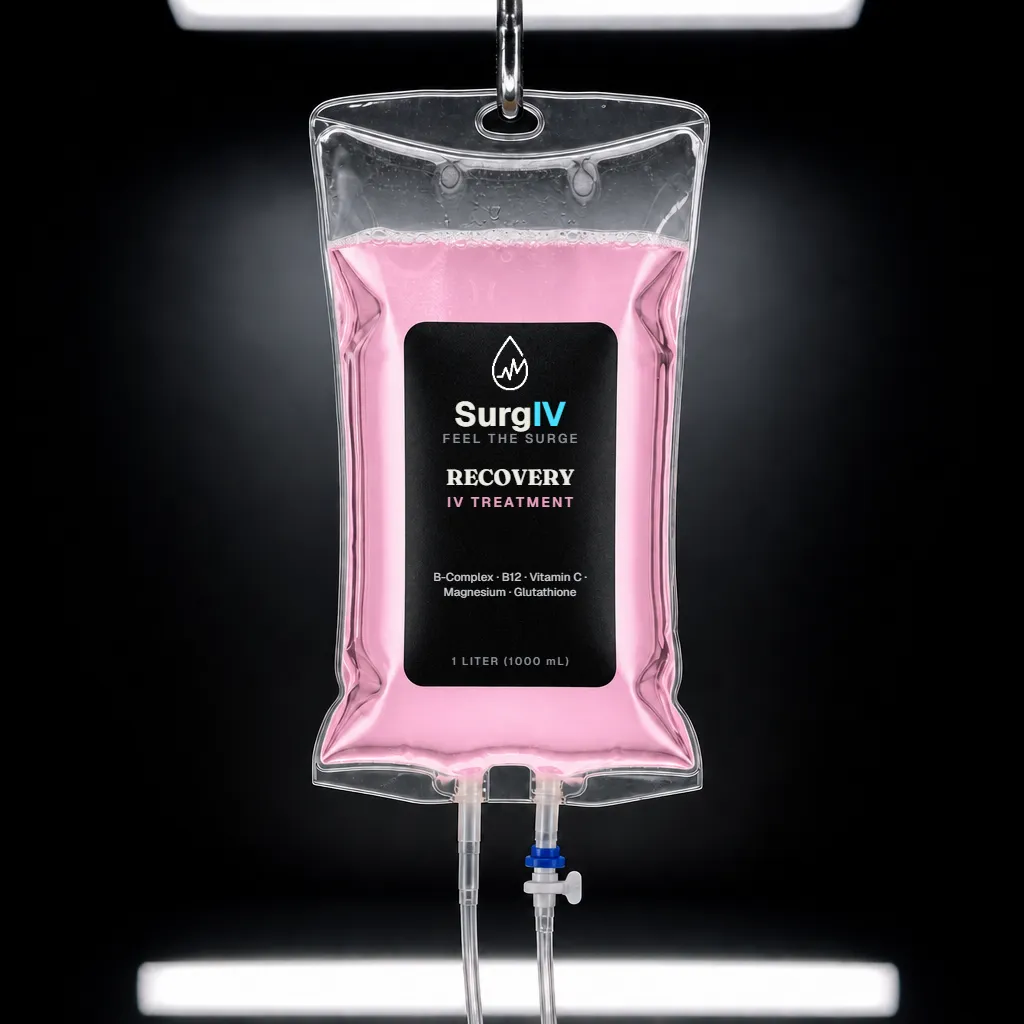
Support the engine build
Recovery $299
Hydration and recovery for the volume weeks — Zone 2 in Florida is still Florida.
B-Complex · B12 · Vitamin C · Magnesium · Glutathione
Rick, converted
Eight months of aggressive strolling later: resting heart rate down 11, his beloved metcons "suspiciously survivable," zero floor-lying incidents, and a conversion testimony delivered to every maximalist at his gym: "The boring cardio built the engine the fun stuff spends. I know. I KNOW. Don't make it weird." The quiet zone claims another. It always does — it just never posts about it.
This article is for general education and is not medical advice. IV therapy at SurgIV is administered by registered nurses under physician-written protocols, with a health screening before your first visit. Talk to your doctor about what is right for you.